
Dental Bone Graft Guide: Procedure, Cost, Recovery
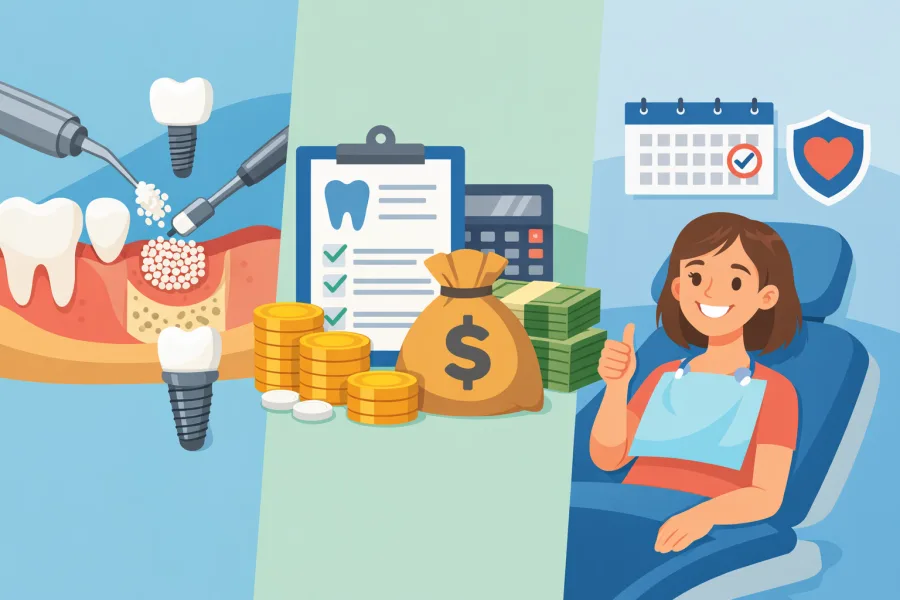
Hearing that you need a bone graft before getting a dental implant can trigger immediate concern. For many patients, the term sounds intensive, making them worry that their jawbone is deteriorating or that the procedure will involve complex hospital surgery.
Here is the clinical perspective that oral surgeons share every day: bone grafting is a routine, minimally invasive in-office procedure. In fact, nearly half of all dental implant patients require some degree of bone enhancement to ensure their new teeth remain stable for life. Bone grafting simply acts as a biological scaffold, encouraging your body to rebuild natural jaw volume right where you need it. Here is an honest, step-by-step look at why jawbone loss happens, how modern graft materials work, and what the recovery timeline really feels like.
Why Jawbone Loss Happens: The Biology of Disuse Atrophy
Your jawbone relies on continuous mechanical stimulation from natural tooth roots to maintain its density and volume. Every time you chew, force travels down through the periodontal ligament into the alveolar bone, signaling your body to deposit fresh mineral content.
When a tooth is extracted or lost, that essential stimulation stops instantly. Without it, the body initiates natural bone resorption (often called disuse atrophy). Within the first twelve months following an extraction, the surrounding socket can lose up to 25% to 40% of its horizontal width. Other common causes of bone depletion include:
- Chronic Periodontal Disease: Advanced gum infections harbor anaerobic bacteria that destroy the delicate crestal bone supporting your teeth.
- Long-Standing Missing Teeth: Wearing traditional dentures or bridges replaces visible crowns but does not replace roots, allowing the underlying ridge to gradually shrink over years.
- Facial Trauma or Cysts: Physical impact or chronic cysts associated with impacted teeth can create substantial localized bony hollows.
The Four Types of Bone Grafting Materials
Patients often wonder where the graft material comes from. Today, oral surgeons use thoroughly tested, highly biocompatible grafting materials tailored to the specific anatomical site:
- Allografts (Sterilized Human Donor Tissue): Sourced from accredited American tissue banks and sterilized through rigorous multi-stage protocols. Allografts are the most widely used material for routine socket preservation because they provide an exceptional osteoconductive scaffold without requiring a second surgical harvest site.
- Xenografts (Processed Bovine Mineral Matrix): Sourced from highly purified, mineral-only bovine bone. Xenografts resorb very slowly, which makes them ideal for maintaining long-term physical volume in areas prone to collapse, such as the upper maxillary sinus floor.
- Autografts (Your Own Bone): Harvested gently from another area within your mouth, such as the chin or posterior jaw. Because autografts contain living osteocytes and growth factors, they offer unmatched regenerative potency for complex reconstructive defects.
- Alloplasts (Synthetic Mineral Compounds): Lab-formulated compounds made of biocompatible calcium phosphates, such as beta-tricalcium phosphate, that encourage natural bone deposition.
What the In-Office Procedure Actually Feels Like
Routine bone grafting (including socket preservation performed immediately after a tooth extraction) is remarkably comfortable. In our surgical suite, the entire visit takes between 30 and 45 minutes:
- Targeted Anesthesia: The site is numbed completely with gentle local anesthetic. For patients who feel nervous about dental surgery, nitrous oxide or light intravenous sedation ensures complete calm throughout the appointment.
- Defect Cleaning and Graft Placement: The surgeon thoroughly cleans the socket or bony hollow, removing any residual inflammatory tissue, and carefully packs the mineral granules into the precise space requiring reinforcement.
- Collagen Barrier Membrane: A small, resorbable collagen membrane is placed over the graft. This membrane serves a vital protective purpose (Guided Bone Regeneration). It prevents fast-growing gum tissue cells from invading the socket before the slower-growing bone cells have time to organize.
- Dissolvable Sutures: Tiny resorbable stitches seal the gum edges cleanly over the membrane, eliminating the need to have sutures pulled out later.
Recovery Milestones and Implant Readiness
Post-operative recovery from a minor bone graft is surprisingly straightforward. Most patients experience mild gum tenderness and slight swelling for 2 to 3 days, easily managed with standard over-the-counter pain relievers like ibuprofen or acetaminophen.
Over the next 3 to 6 months, an incredible biological transformation takes place through a process called creeping substitution. Your body gradually absorbs the donor mineral scaffold and replaces it microscopic layer by layer with dense, living, vascularized bone.
Once this biological integration is confirmed via low-dose 3D cone-beam computed tomography (CBCT), your jaw is fully prepared to receive a titanium dental implant with maximum primary stability and lifelong support.
Expert Bone Grafting and Implant Surgery in Coral Gables
Rebuilding lost jawbone is the foundational secret to natural-looking, permanent dental restorations. At Oral & Facial Surgery of Miami, board-certified oral and maxillofacial surgeon Dr. Johanny Caceres combines advanced surgical techniques with a warm, gentle approach to ensure your implant journey is smooth and comfortable.
If you are planning for tooth replacement or have been told you have insufficient bone for dental implants, schedule a comprehensive consultation with our team. Call Oral and Facial Surgery of Miami today at (305) 552-1193 or request an appointment online to build a strong foundation for your smile.