
A well-defined facial skeletal architecture creates the fundamental highlights, shadows, and contours that define beauty and youthfulness. When midface hypoplasia, a recessed chin, or weak mandibular jaw angles diminish profile balance, facial implants offer a permanent, three-dimensional surgical enhancement. At Oral and Facial Surgery of Miami, board-certified oral and maxillofacial surgeon Dr. Johanny Caceres provides advanced facial implant surgery in Coral Gables, utilizing specialized anatomical prostheses to augment cheekbones, chin projection, and mandibular angles with natural symmetry.

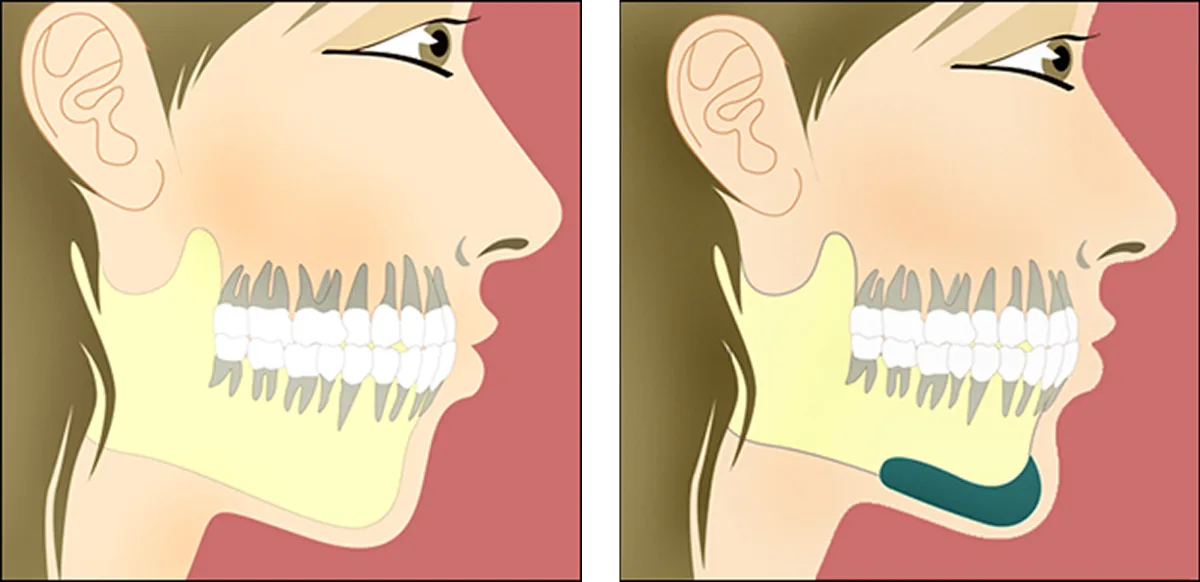
Facial Skeletal Contour Analysis and Midface Deficiencies
Facial harmony relies on the precise projection of underlying osseous convexities. Insufficient malar (cheek) projection causes a flat, tired midface appearance and accelerates premature lower eyelid bags and nasolabial fold sagging. Similarly, a narrow posterior mandibular ramus and gonial angle fail to separate the jawline cleanly from the neck, creating an undefined, rounded cervicofacial profile.
Temporary dermal fillers can temporarily camouflage minor soft tissue hollows, but they cannot replicate the crisp, structural support of rigid bone. Over-injecting viscous gels often produces an unnatural, doughy appearance. Facial implants reconstruct the underlying bony framework itself, providing crisp, sharp structural contours that lift overlying soft tissues naturally for decades.
Anatomical Implant Materials: Solid Silicone, Porous Polyethylene and PEEK
Contemporary facial surgery utilizes advanced biocompatible materials designed for permanent osseous contact. Solid medical-grade silicone implants remain popular due to their smooth, flexible contours, low infection rates, and complete reversibility. Because silicone forms a benign fibrous capsule without tissue ingrowth, implants can be removed or adjusted easily if aesthetic goals evolve.
Porous polyethylene (Medpor) and polyetheretherketone (PEEK) feature an interconnected pore matrix that allows host biological vascular and collagen ingrowth. This tissue integration locks the implant firmly to the underlying bone, preventing displacement or dead-space accumulation. Dr. Caceres selects the appropriate biomaterial and anatomical shape based on each patient’s bone density and surgical goals.
| Facial Region | Anatomical Target | Surgical Incision Route | Aesthetic Structural Outcome |
|---|---|---|---|
| Malar / Submalar (Cheek) | Zygomatic arch and midface maxilla | Intraoral upper vestibular incision | Creates defined cheekbone projection and suspends midface tissues |
| Mandibular Angle (Jaw) | Posterior gonial angle and lower ramus | Intraoral lower buccal vestibule | Broadens lower facial third, creating a defined masculine or feminine jawline |
| Pre-Jowl Sulcus | Anterior mandibular border hollows | Submental skin or intraoral sulcus | Smooths depression in front of jowls, straightening the jawline contour |
| Mentoplasty (Chin) | Anterior symphysis and pogonion | Submental crease or lower labial sulcus | Brings chin forward into profile harmony; improves neck line definition |
Surgical Subperiosteal Pocket Dissection and Rigid Fixation
Placement of facial implants requires an accurate, atraumatic surgical technique. For cheek and mandibular angle implants, incisions are made entirely inside the mouth through the oral mucosa, ensuring no visible external scars. Dr. Caceres develops a subperiosteal pocket positioned directly against the cortical bone, exactly matching the footprint of the prosthesis to prevent migration.
Careful preservation of vital neurovascular bundles, including the infraorbital nerve in the midface and the mental and marginal mandibular nerves along the jaw, protects natural facial sensation and motor function. Titanium micro-screws are positioned to fixate the implants rigidly to the facial skeleton, ensuring long-term positional stability.
Post-Operative Recovery, Nerve Protection and Natural Aesthetic Symmetry
Post-operative recovery following facial implant surgery is straightforward. External compression tape or supportive dressings are worn for three to five days to minimize dead space and reduce swelling. Patients maintain a soft diet and practice warm antibacterial mouth rinses for one week to protect intraoral suture lines. Mild bruising resolves within seven to ten days.
Most patients resume normal work and social routines after one week, with full athletic training resuming at four weeks. To explore whether cheek, chin, or jaw angle implants can elevate your facial balance, arrange a consultation with board-certified oral and facial surgeon Dr. Johanny Caceres at Oral and Facial Surgery of Miami by calling (305) 552-1193 or scheduling online through our patient booking form.
Ready for your visit?
Our surgical team performs all procedures under local anesthesia, nitrous oxide, or IV sedation in Coral Gables.