
Root canal therapy succeeds in saving teeth the vast majority of the time. However, complex anatomical root canal branching, hidden accessory canals, or calcified root tips can occasionally harbor persistent bacteria that conventional cleaning instruments cannot reach from above. When a tooth continues to exhibit symptoms or develops an abscess after root canal treatment, surgical apicoectomy provides an effective microsurgical pathway to eliminate infection without extracting your natural tooth. At Oral & Facial Surgery of Miami, board-certified oral and maxillofacial surgeon Dr. Johanny Caceres performs precision root-end resection in Coral Gables using surgical magnification and biocompatible retrofill materials to permanently salvage your smile.
Clinical Indications and Endodontic Failure Mechanisms
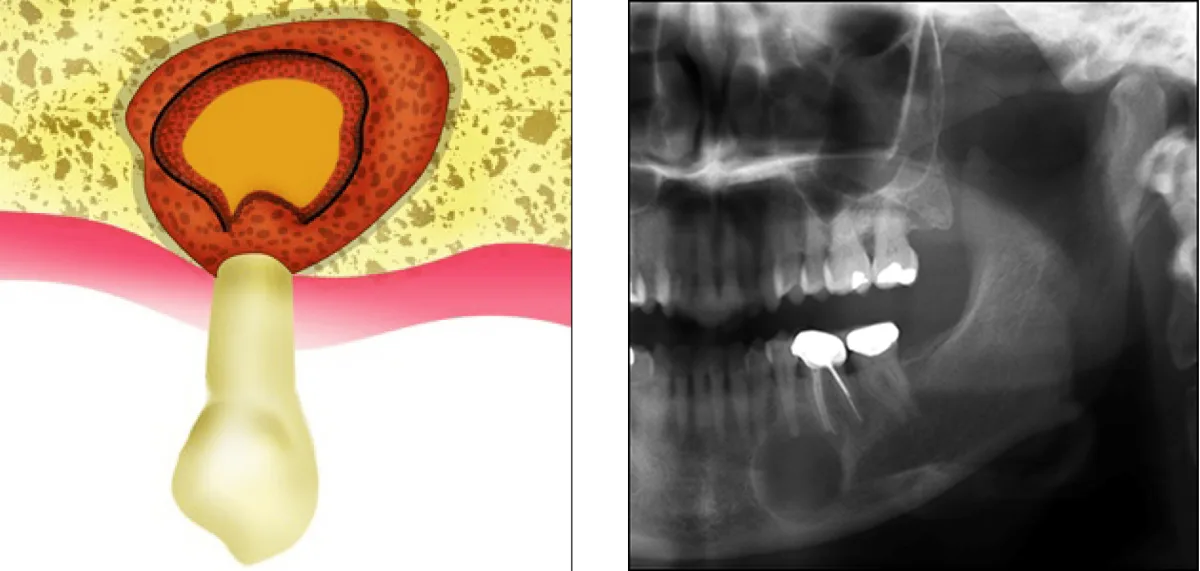
An apicoectomy, also termed periapical surgery or root-end resection, becomes necessary when inflammation or infection persists around the apex (tip) of a tooth root despite previous endodontic care. Patients frequently present with localized gum tenderness, dull throbbing pain when chewing, or a recurring gum pimple known as a cutaneous draining fistula that releases an unpleasant taste or odor. In other instances, a periapical cyst or granuloma is discovered during routine dental radiographs, silently eroding the surrounding alveolar bone. If a crown or post is already cemented in place, non-surgical root canal retreatment carries a high risk of fracturing the tooth, making surgical apicoectomy from the outside the safest, most conservative therapeutic choice.
Microsurgical Resection and Ultrasonic Retrograde Preparation
Under high-power surgical illumination and optical magnification, Dr. Caceres makes a delicate incision in the gum tissue over the affected root tip. A microscopic window in the bone is opened to access the root apex and meticulously curette away all infected granulomatous tissue. Dr. Caceres resects the terminal three millimeters of the root tip, which contains the dense apical delta of microscopic accessory canals where resistant bacteria reside. Using specialized ultrasonic micro-instruments, a clean three-millimeter retrograde cavity is prepared inside the root canal. This preparation is sealed with mineral trioxide aggregate (MTA), an advanced biocompatible bioceramic cement that forms an impervious hermetic seal, prevents bacterial re-entry, and actively stimulates surrounding osteoblast bone regeneration.
| Treatment Pathway | Clinical Approach & Invasiveness | Prognosis & Tooth Preservation |
|---|---|---|
| Surgical Apicoectomy | Direct microsurgical access to root apex; preserves existing porcelain crown and dental post | High success rate (85% to 90%+); saves natural tooth and stimulates local bone healing |
| Non-Surgical Retreatment | Drilling through existing crown to re-clean canals; risk of crown destruction or root fracture | Variable success if apical delta is blocked; replacement of expensive restoration required |
| Extraction & Implant | Complete tooth removal followed by socket bone grafting and titanium implant placement | Excellent permanence, but requires losing natural root; longer multi-month timeline |
Patient Comfort, Anesthesia and Chairside Experience
Patients are often surprised by how comfortable and swift an apicoectomy is. Most root-end surgeries take between 45 and 60 minutes to complete. Local long-acting anesthetics completely numb the tooth and surrounding tissues, ensuring you feel zero discomfort during the procedure. For patients with high dental anxiety, Dr. Caceres offers nitrous oxide analgesia or in-office intravenous twilight sedation in our surgical suite. Once the retrofill seal is confirmed with a digital x-ray, the gum tissue is gently re-approximated using fine microsurgical sutures that minimize post-operative tissue tension.
Post-Operative Healing and Bone Regeneration Milestones
Recovery from an apicoectomy is typically mild. You may experience minor swelling and slight localized gum bruising, which peak around day two before rapidly resolving. Applying cold ice packs to the cheek for the first 24 hours and using over-the-counter anti-inflammatory pain medications provide excellent comfort. Patients are advised to eat soft foods for several days and avoid brushing directly against the surgical incision line. Over the next six to twelve months, healthy trabecular bone fills the previous bony defect, permanently stabilizing the tooth for decades of continued function.
Schedule an Apicoectomy Consultation
Save your infected tooth with expert microsurgical root-end resection in Coral Gables. Board-certified oral surgeon Dr. Johanny Caceres provides advanced periapical care and comfortable sedation options.