
Laser Oral Surgery: Is It Right for You?
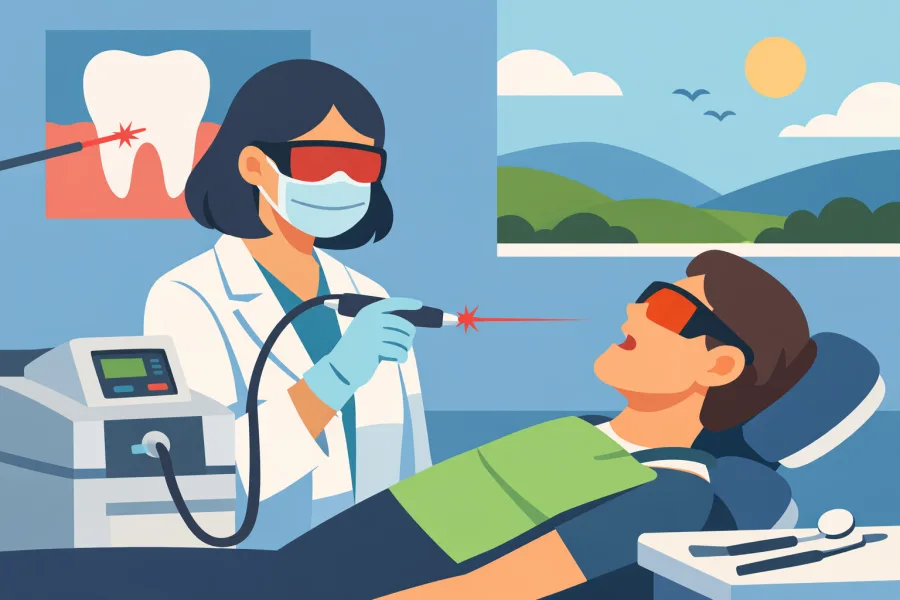
Surgical advancements have continuously revolutionized modern oral and maxillofacial care, making clinical procedures more comfortable and significantly less invasive. Among these advancements, dental laser technology has emerged as an indispensable instrument for a wide range of soft and hard tissue interventions. By replacing traditional scalpels and electrosurgery units with concentrated beams of thermal light energy, oral surgeons can treat complex oral conditions with unmatched clinical accuracy and minimal patient downtime.
At Oral and Facial Surgery of Miami, board-certified oral and maxillofacial surgeon Dr. Johanny Caceres incorporates advanced surgical techniques to optimize patient recovery and surgical outcomes. Understanding the clinical applications of laser surgery, comparing its benefits against conventional methods, and knowing when it represents the best treatment modality helps South Florida patients make informed decisions about their care.
How Dental Lasers Function in Oral Surgery
Dental lasers operate by emitting focused coherent light beams tuned to specific wavelengths absorbed by targeted oral chromophores, such as water, hemoglobin, and melanin. Soft tissue lasers, including carbon dioxide and diode systems, excel at cutting, vaporizing, and coagulating mucosal tissues. Hard tissue lasers, such as erbium systems, interact directly with water molecules inside bone and hydroxyapatite crystals to ablate calcified tissues without generating excessive thermal friction.
As the focused laser energy incises the oral mucosa, it instantly seals microscopic blood vessels and lymphatic capillaries. This instant coagulation creates a virtually bloodless surgical field, providing the surgeon with exceptional visual clarity. Simultaneously, the energy sterilizes the surgical margin on contact, vaporizing surface pathogens and significantly lowering the risk of secondary postoperative bacteremia or wound infection.
Primary Clinical Applications of Laser Surgery
Laser technology is widely utilized across both functional oral surgery and aesthetic facial procedures. One common soft tissue application is the frenectomy, which releases restrictive labial or lingual frenum attachments responsible for tongue-tie or midline diastemas. In pediatric and adult patients alike, laser frenectomies require minimal local anesthesia, produce zero intraoperative bleeding, and eliminate the need for cumbersome sutures.
Other major applications include gingivectomies and crown lengthening, where excess gingival tissue is sculpted to reveal healthy tooth structure for restorative crowns or aesthetic harmony. Oral surgeons also employ lasers for oral biopsy procedures and the excision of benign pathological lesions, such as fibromas, papillomas, and mucoceles. The precise margins ensure complete lesion removal while preserving surrounding healthy architecture.
| Procedure Type | Clinical Indication | Laser Advantage | Suture Requirement |
|---|---|---|---|
| Soft Tissue Frenectomy | Ankyloglossia (tongue-tie) or tight labial frenum | Instant coagulation, zero bleeding, painless recovery | Rarely required |
| Aesthetic Gingivectomy | Gummy smile or asymmetrical gingival contours | Micrometric margin precision without thermal scarring | None |
| Oral Pathological Biopsy | Excision of fibromas, mucoceles, or oral lesions | Sealed margins, clear specimen margins, low infection | Optional / minimal |
| Peri-Implantitis Therapy | Bacterial infection surrounding dental implants | Decontaminates titanium threads without damaging metal | Dependent on flap design |
Recovery Experience and Post-Surgical Care
One of the greatest benefits of laser surgery is the remarkably gentle postoperative phase. Because lasers seal severed nerve endings during tissue ablation, patients experience far less immediate inflammatory pain compared to scalpel incisions. Most individuals require only mild analgesics such as acetaminophen or ibuprofen, avoiding the need for strong narcotic medications.
Postoperative swelling is minimal because lymphatic channels are sealed instantly. Patients can typically return to work, school, and normal light activities the following day. To protect healing tissues, surgeons recommend avoiding spicy, acidic, or crunchy foods for three to five days and rinsing gently with a warm saline solution to keep the treated area clean and comfortable.
Consulting with Dr. Johanny Caceres in Coral Gables
While laser surgery offers clear advantages, it is not universally appropriate for every surgical procedure. Complex bony impactions, deep jaw reconstructions, and multi-stage bone grafting often require specialized mechanical surgical instrumentation. A thorough consultation with a board-certified specialist is essential to determine whether laser treatment matches your unique clinical needs.
At Oral and Facial Surgery of Miami, Dr. Johanny Caceres evaluates your oral anatomy, diagnostic imaging, and health history to select the most effective, gentle surgical techniques available. To explore whether laser surgery is right for your smile, contact our office at (305) 552-1193 or request your consultation online.