
Keeping Wisdom Teeth: Long-Term Effects on Your Oral Health
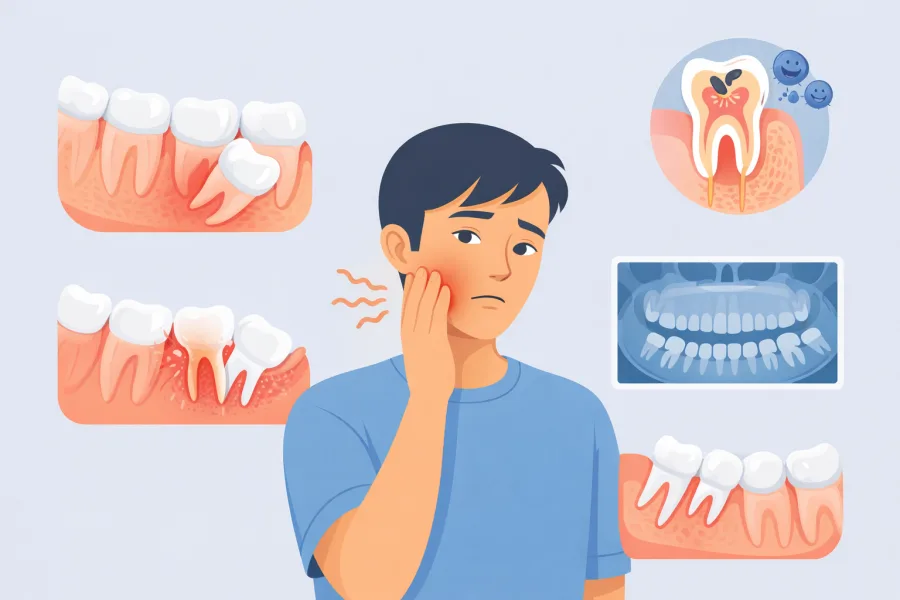
If your wisdom teeth are not actively aching, it is tempting to adopt a wait-and-see attitude. Many adults wonder why they should undergo surgical extraction if their third molars seem harmless. However, in oral and maxillofacial surgery, the absence of pain does not equate to the absence of disease. Research shows that more than 60 percent of retained wisdom teeth eventually develop significant dental pathology over a patient's lifetime.
At Oral and Facial Surgery of Miami, board-certified oral and maxillofacial surgeon Dr. Johanny Caceres frequently treats older adults suffering from severe dental complications caused by decades of retained wisdom teeth. Examining the progressive biological consequences of keeping these teeth empowers you to make proactive, protective decisions for your long-term wellness.
The Biological Reality of Asymptomatic Third Molars
A common dental myth is that symptom-free wisdom teeth are healthy wisdom teeth. The reality is that third molars are positioned at the extreme rear boundary of the mouth where hygiene access is severely restricted. Even with diligent electric brushing and daily flossing, effectively debriding the narrow crevices and gum margins around third molars is nearly impossible.
Over years, microscopic bacterial biofilm accumulates undisturbed around retained teeth. Longitudinal dental studies have demonstrated that even completely asymptomatic wisdom teeth frequently harbor chronic pathogenic anaerobic bacteria, triggering persistent, low-grade periodontal inflammation that gradually spreads across the entire dental arch without causing acute pain.
| Perceived Benefit of Keeping | Clinical Reality Over Time | Long-Term Health Consequence |
|---|---|---|
| Avoids Surgery Now | Bone density increases; roots curve and anchor deeper with age | Future surgery becomes technically complex with longer recovery times |
| No Pain Present | Chronic subgingival plaque creates deep 6mm+ periodontal pockets | Irreversible alveolar bone loss behind the functional second molar |
| Extra Chewing Surface | Third molars rarely occlude evenly with opposing teeth | Supra-eruption, cheek biting, and temporomandibular joint strain |
| Harmlessly Trapped in Bone | Un-erupted dental follicles can undergo cystic degeneration | Dentigerous cysts hollow out jawbone, increasing fracture risks |
Long-Term Periodontal Deterioration and Adjacent Molar Loss
The most devastating collateral effect of keeping compromised wisdom teeth is the loss of healthy, functional second molars. Because an impacted or partially erupted third molar presses against the second molar root trunk, an un-cleanable biological trap is established.
Over ten to twenty years, periodontal pocketing behind the second molar deepens past six millimeters, dissolving the interdental alveolar bone crest. In addition, bacteria trapped at the cementoenamel junction rot the root of the second molar from the outside in. By the time the patient develops a toothache in their forties or fifties, the second molar root is often too destroyed to salvage with root canal therapy, forcing the extraction of both teeth.
Late-Life Complications: Bone Resorption, Cysts, and Systemic Vulnerability
As the years pass, retaining problem-prone wisdom teeth becomes increasingly risky. In older adults, un-erupted teeth can form expanding dentigerous cysts that silently hollow out mandibular bone, predisposing the jaw to spontaneous fractures.
In addition, undergoing oral surgery later in life is significantly more demanding than during youth. Older adults frequently take systemic medications such as blood thinners or bisphosphonates, possess denser bone, and heal more slowly. Waiting until an infected wisdom tooth triggers an emergency in your sixties or seventies turns a routine outpatient extraction into a medically complex event.
Lifelong Monitoring and Proactive Extraction at OFS Miami
If you have chosen to keep your wisdom teeth, lifelong monitoring with 3D Cone Beam CT (CBCT) imaging is non-negotiable. At our practice, Dr. Johanny Caceres monitors bone levels, periodontal pocket depths, and follicular margins to detect silent changes before irreversible damage occurs.
If extraction is warranted, our surgical center provides advanced outpatient IV sedation, delivering gentle, precise care that safeguards your surrounding teeth and restores long-term oral stability.
Make an informed choice for your future smile. Contact Oral and Facial Surgery of Miami today at (305) 552-1193 or reserve your consultation online today.