
Mouthwash and Wisdom Teeth: What Really Works
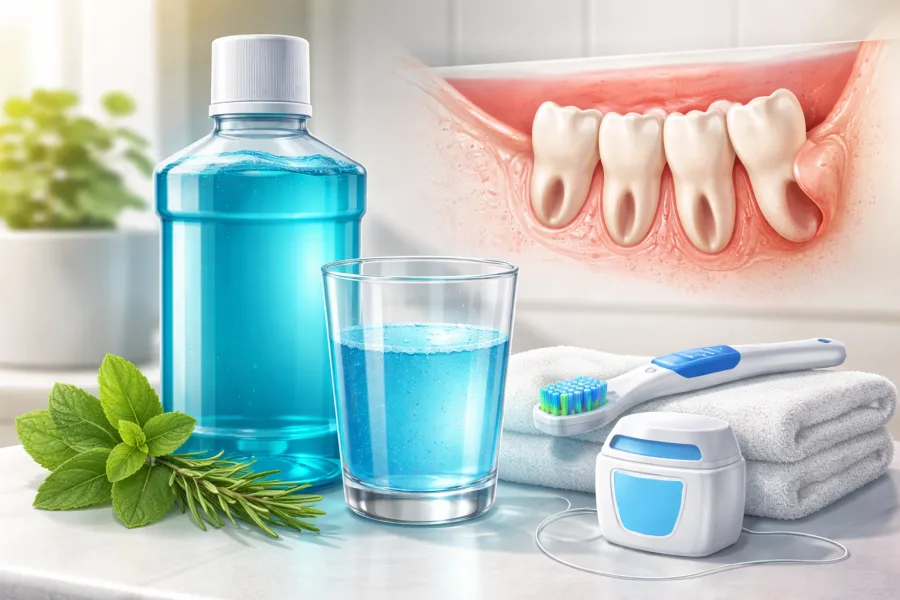
When wisdom teeth cause discomfort or undergo surgical removal, patients frequently reach for over-the-counter mouthwashes to cleanse the area. While oral hygiene is essential for preventing bacterial complications, using the wrong mouthwash or rinsing at the wrong time can disrupt fragile healing tissues and trigger severe pain. Understanding which solutions provide therapeutic benefits and which introduce hazards is key to smooth recovery.
At Oral and Facial Surgery of Miami, board-certified oral and maxillofacial surgeon Dr. Johanny Caceres guides patients through safe, evidence-based post-operative protocols. Learning how to properly cleanse the posterior jaw protects your surgical sites and promotes rapid tissue regeneration.
Chemical Agents vs Saline Solutions: What Works and What Harms
Commercial mouthwashes line supermarket shelves, but their chemical formulations vary drastically. Standard cosmetic rinses contain high concentrations of alcohol, artificial dyes, and harsh flavorings designed to mask breath odor. In an open extraction socket or inflamed operculum, alcohol-based solutions act as caustic irritants that desiccate vulnerable mucosal cells and delay tissue repair.
In contrast, isotonic warm salt water (one-half teaspoon of table salt dissolved in eight ounces of warm water) is the safest and most effective natural rinse. Saline gently draws out fluids from swollen tissues through mild osmotic action while creating an environment unfavorable to bacterial proliferation. When advanced antibacterial therapy is needed, Dr. Caceres prescribes chlorhexidine gluconate (0.12%), a clinical antimicrobial that binds to oral surfaces to inhibit bacterial colonization without burning healing tissues.
| Rinse Category | Active Mechanism | Post-Op Timing | Clinical Recommendation |
|---|---|---|---|
| Warm Salt Water | Gentle osmotic balance, cleanses food particles | After 24 hours (Day 2 onward) | Primary recommended rinse 4 to 5 times daily |
| Chlorhexidine 0.12% | Broad-spectrum bactericidal substantivity | As prescribed by surgeon | Use gently twice daily for high-risk surgical sites |
| Alcohol-Based OTC Rinse | Denatures proteins, causes tissue dehydration | Avoid for at least 14 days | Contraindicated due to mucosal burning and clot damage |
| Hydrogen Peroxide (Diluted) | Oxygen-releasing mechanical bubbling | Only if instructed by doctor | Use short-term only to avoid cytotoxic irritation |
Critical Timing: Why Swishing Too Early Causes Dry Socket
The technique and timing of mouth rinsing matter just as much as the solution you select. During the first 24 hours following wisdom tooth extraction, the body establishes a primary blood clot within the socket. This clot serves as an indispensable biological seal that shields exposed jawbone and sensitive nerve endings from the oral environment.
Vigorous swishing, bubbling, or spitting generates hydraulic negative pressure inside the oral cavity. Even gentle swishing on day one can dislodge the fragile clot, leading to alveolar osteitis, commonly known as dry socket. Starting on day two, patients should introduce warm salt water rinses using passive bathing: tilting the head gently from side to side and allowing the liquid to fall passively into the sink without active spitting.
Managing Pericoronitis Before Wisdom Tooth Surgery
If your wisdom tooth has not yet been removed and is causing localized throbbing beneath an inflamed gum flap, warm salt water rinses provide substantial temporary relief. Swishing gently with warm saline four to five times a day reduces edema and washes away trapped food particles that sustain the infection.
However, topical rinses cannot resolve the underlying anatomical defect. As long as the partially erupted crown sits partially covered by the operculum, bacteria will repeatedly colonize the space. While antimicrobial washes manage flare-ups temporarily, permanent resolution requires definitive surgical removal of the wisdom tooth.
Surgical Extraction and Post-Operative Protocols at OFS Miami
At our practice, Dr. Johanny Caceres equips every patient with clear surgical guidelines and individualized recovery materials. From specialized curved irrigation syringes to prescribed rinses, we ensure you have exact instructions for every phase of healing.
our modern surgical facility provides gentle outpatient IV sedation, ensuring your procedure is relaxed and comfortable. By combining precise surgical technique with structured post-operative home care, we help you achieve a smooth, complication-free recovery.
Take the guesswork out of your oral health care. Contact Oral and Facial Surgery of Miami today at (305) 552-1193 or request an appointment online today.