
Scarring After Eyelid Surgery: What to Expect and Minimize It
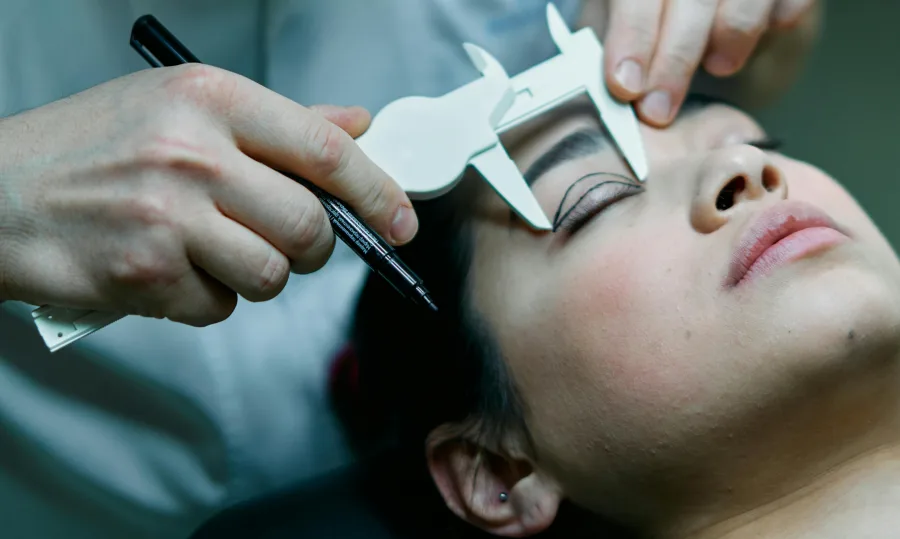
Eyelid rejuvenation surgery, clinically known as blepharoplasty, is one of the most rewarding facial cosmetic procedures. By gently removing redundant, sagging skin and repositioning herniated fat deposits around the eyes, blepharoplasty restores a refreshed, youthful, and well-rested appearance. Yet for many prospective patients, apprehension about visible facial scars remains a primary concern.
At Oral and Facial Surgery of Miami, board-certified facial and oral surgeon Dr. Johanny Caceres utilizes specialized surgical techniques designed to render eyelid incisions virtually imperceptible once fully healed. Understanding eyelid anatomy and post-operative scar management helps you approach your cosmetic procedure with complete confidence.
Eyelid Anatomy and Natural Incision Concealment
The eyelids possess distinct biological characteristics that make them one of the best-healing regions of the entire human body. Eyelid skin is the thinnest dermal tissue on the face, containing an abundant microvascular blood supply that accelerates cell turnover and reduces fibrous collagen deposition.
In upper blepharoplasty, Dr. Caceres strategically places incisions directly within the natural supratarsal eyelid crease. When your eyes are open, the delicate incision line folds naturally into the skin crease, remaining entirely hidden. For lower eyelid surgery, incisions can be placed just beneath the lower eyelash line (subciliary approach) or made completely inside the inner surface of the eyelid (transconjunctival approach), leaving zero external skin scars whatsoever.
| Healing Phase | Visual Appearance | Biological Process | Recommended Patient Action |
|---|---|---|---|
| Weeks 1 to 2 | Thin pink line with mild local swelling | Epithelial bridging, suture line sealing | Cold compresses, head elevation, suture removal |
| Months 1 to 3 | Slightly firm, raised pinkish line | Active collagen synthesis and vascular remodeling | Medical-grade silicone gel, strict UV sun protection |
| Months 3 to 6 | Fading to pale rose or flesh tone, softening | Capillary regression, collagen alignment along creases | Gentle scar massage, UV-blocking sunglasses |
| Months 6 to 12 | Nearly invisible, flat, pale hair-thin line | Final dermal maturation and complete tissue stability | Routine skin hydration and aesthetic maintenance |
The Biological Phases of Scar Maturation
Scar healing is a progressive biological sequence that unfolds over an entire year. During the first two weeks, epithelial cells close the incision, held gently by micro-sutures. When sutures are removed around day five to seven, the incision looks like a faint pink scratch.
Between weeks four and twelve, scars enter the proliferative and remodeling phase. Blood vessels proliferate to feed repairing tissues, causing the incision line to appear slightly redder and feel slightly firmer. This hypervascularity is a normal, healthy phase of repair. Over months six through twelve, excess micro-vessels naturally regress, collagen bundles organize parallel to natural skin tension lines, and the incision fades into an imperceptible, soft pale line.
Proven Scar Minimization Techniques and Sun Protection
While meticulous surgical technique establishes the foundation for invisible scars, your post-operative home habits dictate final cosmetic refinement. Once incisions have closed, Dr. Caceres recommends applying medical-grade topical silicone scar gel. Silicone creates an occlusive barrier that hydrates the stratum corneum, modulating fibroblast activity to prevent raised or hypertrophic scarring.
Sun protection is equally critical, especially in South Florida's intense subtropical climate. Ultraviolet (UV) radiation triggers melanocyte hyperactivity in fresh scar tissue, producing permanent dark hyperpigmentation. Protect your healing eyelids by wearing broad-spectrum zinc oxide sunscreen (SPF 50+) and UV-blocking sunglasses whenever you are outdoors during the first six months.
Expert Aesthetic Blepharoplasty Care at OFS Miami
At our practice, Dr. Johanny Caceres blends surgical precision with refined aesthetic judgment. We prioritize gentle tissue handling, sub-millimeter wound closure using microscopic sutures, and structured post-operative scar management.
Whether you are seeking to eliminate heavy upper eyelid hooding or smooth tired under-eye bags, our team delivers natural, revitalized results that let your eyes shine without detectable signs of surgery.
Ready to refresh your eyes with expert facial surgery? Contact Oral and Facial Surgery of Miami today at (305) 552-1193 or book your blepharoplasty consultation online today.