
Signs Your Wisdom Tooth Needs to Come Out
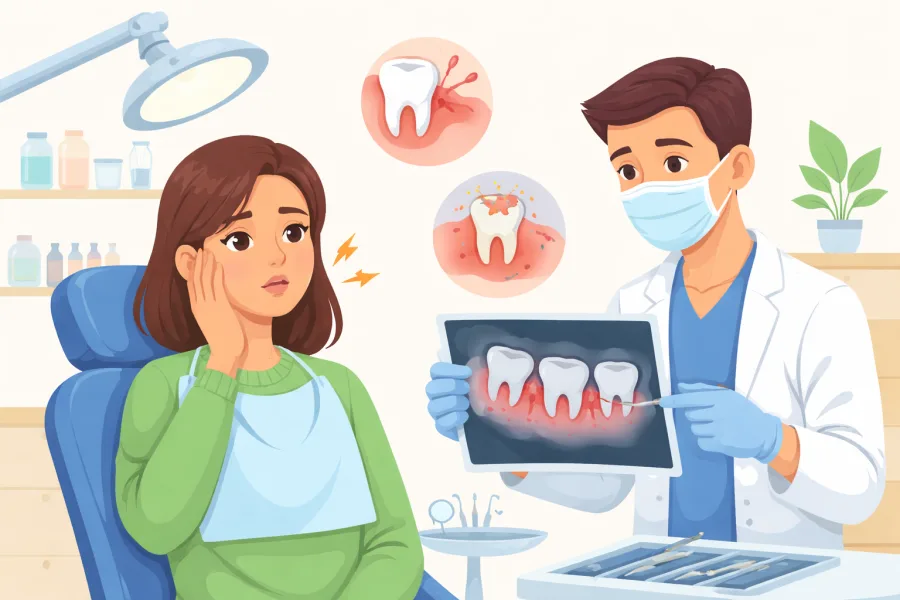
Not every wisdom tooth requires immediate removal, but when third molars lack adequate space or erupt at irregular angles, they quickly transform into active oral health liabilities. Knowing the telltale warning signs that an extraction is clinically necessary helps you take decisive action before minor discomfort escalates into severe bone damage or dangerous facial infections.
At Oral and Facial Surgery of Miami, board-certified oral and maxillofacial surgeon Dr. Johanny Caceres diagnoses and treats complex wisdom tooth conditions. Recognizing the physical symptoms that signal it is time for removal allows you to safeguard your smile and maintain long-term dental health.
Acute Pain, Swelling, and Signs of Pericoronal Infection
The most undeniable signal that a wisdom tooth needs to come out is recurrent acute inflammation. When a third molar only partially pushes through the gumline, it creates a persistent flap of tissue termed an operculum. Food particles, saliva, and bacteria lodge beneath this shelf, creating an un-cleanable pocket.
This causes pericoronitis, characterized by intense localized pain, swollen gums, foul breath, and restricted jaw mobility (trismus). When the infection spreads to the surrounding masseter muscles or deep neck spaces, patients experience severe swelling that impairs swallowing. If you experience repeated flare-ups of back gum swelling, the tooth must be surgically removed to resolve the infection permanently.
| Clinical Symptom | Underlying Cause | Consequence If Ignored | Surgical Solution |
|---|---|---|---|
| Recurrent Gum Swelling | Food entrapment under operculum | Spreading fascial space infection, trismus | Surgical extraction with irrigation |
| Pain in Neighboring Molar | Horizontal pressure and cervical caries | Irreversible second molar root resorption | Early extraction to salvage second molar |
| Persistent Jaw Aches | Bony impaction inside ramus | Cortical bone erosion, cyst enlargement | Minimally invasive tooth sectioning |
| Sinus Pressure & Pain | Upper third molar pushing sinus floor | Chronic maxillary sinusitis and nasal congestion | Careful upper molar elevation |
Damage to Neighboring Teeth: Cavities and Root Resorption
A major reason to extract wisdom teeth is to safeguard your functional second molars. When a third molar angles forward into the second molar, it creates a tight, inaccessible crevice below the gumline. Even meticulous flossing cannot clean this interdental contact.
Bacteria trapped in this space produce rampant decay at the root level of the second molar. Even more concerning is pressure-induced external root resorption, where the body gradually dissolves the structural root of the adjacent tooth. By the time this damage causes noticeable toothaches, the second molar is often non-restorable, resulting in the loss of both teeth.
Structural Jawbone Complications and Expanding Cysts
Completely un-erupted wisdom teeth trapped within the jawbone are not necessarily dormant. Every developing tooth crown is surrounded by a dental follicle. Over time, this microscopic membrane can fill with fluid, expanding into a dentigerous cyst or keratocyst.
As cysts expand, they hollow out the dense jawbone, weakening mandibular strength and predisposing the jaw to spontaneous fractures from minor impacts. Cysts also displace nearby roots and press against the inferior alveolar nerve canal, risking sensory deficits. Detecting and removing the impacted tooth before cyst formation preserves bone volume and neural integrity.
Definitive Surgical Extraction and Comfort at OFS Miami
If your wisdom teeth exhibit any of these clinical indicators, delay only increases surgical complexity. At our practice, Dr. Johanny Caceres uses advanced 3D Cone Beam CT imaging to map root anatomy with sub-millimeter precision, planning a gentle, bone-preserving procedure.
our modern surgical center provides outpatient IV sedation, allowing you to rest peacefully throughout your care. By addressing problem teeth promptly, you eliminate chronic pain, protect your adjacent molars, and restore lasting oral stability.
Recognize the signs and take action before pain worsens. Call Oral and Facial Surgery of Miami today at (305) 552-1193 or book your surgical evaluation online today.