
The Difference Between Cosmetic and Medical Skin Surgery
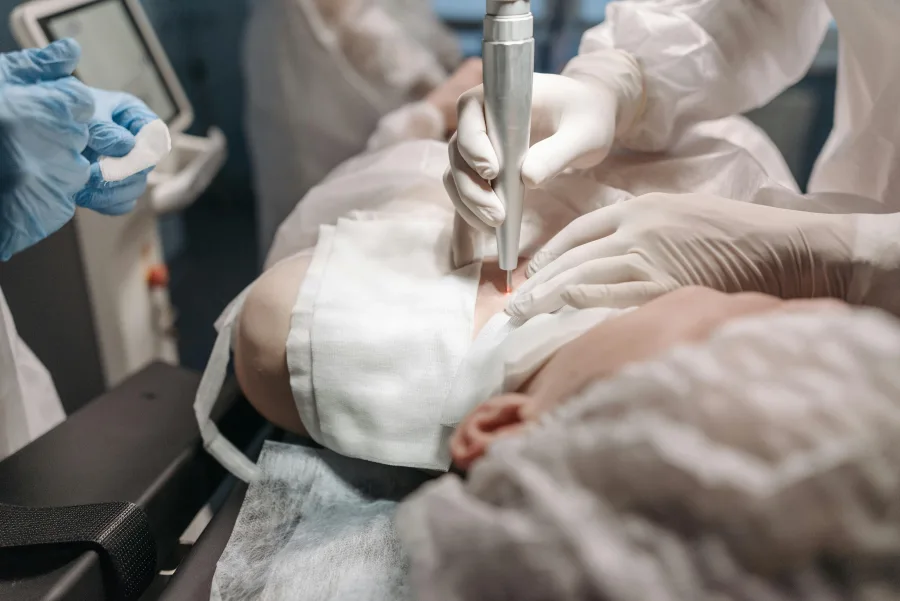
When patients hear the phrase "skin surgery," they often picture elective cosmetic enhancements designed to smooth wrinkles, refine contours, or remove small imperfections. While facial aesthetics play an important role, skin surgery also encompasses vital, life-saving medical procedures. Every week, dermatologic and facial lesions are evaluated, biopsied, and excised to eradicate malignant skin cancers, relieve chronic pain, or prevent dangerous systemic spread.
Understanding whether a skin procedure is classified as cosmetic or medically necessary influences everything from the surgical technique used to whether your medical insurance covers the treatment. When lesions appear on the delicate contours of the face, eyelids, lips, or neck, having the procedure performed by an oral and maxillofacial surgeon bridges the gap between oncologic safety and aesthetic excellence.
1. Clinical Objectives: Oncologic Pathology vs. Aesthetic Enhancement
The fundamental distinction between medical and cosmetic skin surgery lies in the primary clinical objective:
- Medical Skin Surgery (Diagnostic & Therapeutic): The goal is to diagnose, excise, and cure disease. This includes excisional biopsy of suspicious or changing pigmented lesions, removal of non-melanoma skin cancers (such as basal cell carcinoma and squamous cell carcinoma), excision of symptomatic epidermal inclusion cysts, and drainage of severe facial abscesses. The surgeon's primary mandate is complete eradication of the pathological entity with clear histological margins.
- Cosmetic Skin Surgery (Elective Aesthetic): The objective is improving appearance, restoring youthfulness, or enhancing facial balance. Procedures include elective excision of benign cosmetic moles, keloid or hypertrophic scar revision, lip augmentation, and non-surgical facial rejuvenation. Because no active disease is present, these procedures are chosen voluntarily by the patient.
2. Surgical Margins and Wound Reconstruction: Function Meets Aesthetics
When a lesion is located on the face, surgical technique must balance oncologic cure with aesthetic preservation. The skin of the face is unforgiving; poor incisions can distort the lower eyelid (ectropion), pull the corner of the lip, or leave visible track marks.
| Surgical Dimension | Medical Skin Surgery | Cosmetic Skin Surgery |
|---|---|---|
| Surgical Margins | Pre-planned 3mm to 5mm margin of healthy tissue surrounding the tumor to guarantee clear microscopic borders. | Ultra-conservative margin directly hugging the border of the benign lesion to minimize incision size. |
| Pathology & Biopsy | Mandatory submission of entire specimen for histopathologic examination to verify cellular diagnosis and depth of invasion. | Specimens may be submitted for baseline safety, but the diagnosis of a benign condition is typically pre-established. |
| Incision Placement | Dictated first by tumor boundaries, then oriented along natural skin tension lines whenever possible. | Strictly concealed along relaxed skin tension lines (RSTLs), cosmetic subunit borders, or hairline creases. |
| Defect Reconstruction | May require local rotational flaps, advancement flaps, or full-thickness skin grafting to close substantial tissue deficits. | Primary layered closure with fine micro-sutures designed for minimal visible scar formation. |
Board-certified oral and maxillofacial surgeons undergo rigorous hospital training in both head and neck tumor extirpation and facial cosmetic reconstruction. This unique dual background ensures that even extensive cancer removals are paired with meticulous reconstructive flap design, preserving normal facial expression and symmetry.
3. Medical Necessity, Insurance Coverage, and Clinical Triage
A common source of confusion for patients is determining whether insurance will pay for their skin procedure. Insurance companies adhere to strict guidelines:
- Documented Medical Necessity: If a mole or skin growth bleeds, ulcerates, exhibits rapid changes in size or color (the ABCDE criteria: Asymmetry, Border irregularity, Color variation, Diameter over 6mm, Evolving nature), or causes chronic irritation from eyeglasses or clothing, medical insurers routinely cover biopsy and excision.
- Reconstructive Coverage: Under federal and state health mandates, surgical reconstruction following trauma or cancer removal is recognized as medically necessary rather than cosmetic. If a large defect remains after malignant skin cancer excision, the flap repair or grafting is covered.
- Purely Cosmetic Procedures: Removing completely benign, asymptomatic seborrheic keratoses, flat freckles, or stable skin tags solely to improve personal appearance is considered elective and is handled on a self-pay basis.
4. Expert Facial Skin Surgery at Oral & Facial Surgery of Miami
Your face is your identity. When facing a suspicious mole, a confirmed skin malignancy, or an unsightly facial scar, you should never have to choose between oncologic safety and aesthetic excellence.
At our practice, board-certified oral and maxillofacial surgeon Dr. Johanny Caceres provides comprehensive diagnostic and surgical skin care in our modern surgical center in Coral Gables:
- Punch and Excisional Biopsies: Rapid, minimally invasive tissue sampling sent to premier dermatopathologists for precise cellular identification.
- Advanced Facial Reconstruction: Expertise in local skin flap mobilization, z-plasty, and geometric broken line closure to minimize scarring across critical aesthetic zones.
- Comfortable In-Office Twilight Sedation: Perform procedures safely under gentle local anesthesia or IV sedation, eliminating anxiety and discomfort.
Whether you need a changing facial lesion evaluated for medical safety or wish to explore scar revision, early expert assessment provides peace of mind. Contact Oral and Facial Surgery of Miami at (305) 552-1193 or schedule your skin surgery consultation online.