
Why Your Tooth Hurts When You Bite Down
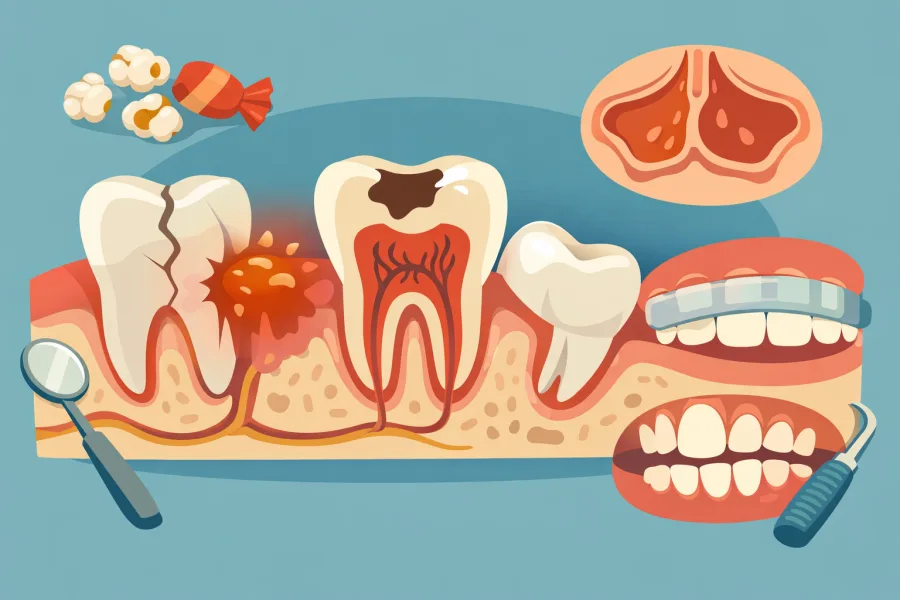
Experiencing sharp, sudden pain when chewing or biting down on food is an alarming symptom that should never be ignored. Unlike a generalized, dull toothache that throbs continuously in the background, pain triggered specifically by occlusal pressure indicates localized mechanical or biological distress. The forces generated during chewing exert immense pressure on enamel, dentin, and supporting periodontal ligament fibers. When biting pain develops, it signals that one of these protective barriers has been compromised.
At Oral and Facial Surgery of Miami, board-certified oral and maxillofacial surgeon Dr. Johanny Caceres evaluates patients suffering from severe bite pain caused by structural cracks, failing restorations, and periapical infections. Understanding the common causes of biting discomfort and knowing when symptoms require specialized surgical intervention helps South Florida patients preserve their natural teeth and protect overall jaw stability.
Cracked Tooth Syndrome and Rebound Pain Mechanics
One of the most elusive causes of biting discomfort is cracked tooth syndrome. This condition occurs when a microscopic fracture develops within the coronal tooth structure, frequently beneath a large existing amalgam or composite filling. Because microscopic cracks rarely show up on standard two-dimensional dental X-rays, diagnosis requires specialized transillumination, bite stick testing, and 3D imaging.
A classic clinical hallmark of a cracked tooth is rebound pain. As you bite down, pressure temporarily splays the cracked segments apart, causing fluid movement inside dentinal tubules that irritates the internal pulp. When you release the biting pressure, the crack snaps shut instantly, triggering a sharp, shooting jolt of pain. If a crack remains confined to the enamel and dentin above the bone, placing a full-coverage crown binds the fragments together and saves the tooth. However, if the crack extends subgingivally into the root, the tooth cannot be saved and requires extraction.
Periapical Abscesses and Periodontal Ligament Strain
Another common origin of bite pain is acute inflammation of the periodontal ligament surrounding the tooth root. Every tooth sits inside its bony socket suspended by thousands of collagenous fibers called the periodontal ligament. When pulpal necrosis spreads through the root apex into the bone, purulent exudate accumulates, creating a localized periapical abscess.
This expanding fluid buildup physically pushes the tooth slightly upward out of its socket by a fraction of a millimeter. When you bite down, the elevated tooth strikes the opposing arch first, bearing the full, unbuffered force of your masticatory muscles. This concentrates severe pressure directly onto the inflamed periodontal ligament, producing excruciating, localized pain upon any contact.
| Cause of Bite Pain | Characteristic Pain Pattern | Underlying Pathology | Primary Clinical Treatment |
|---|---|---|---|
| Cracked Tooth Syndrome | Sharp jolt upon releasing biting pressure (rebound pain) | Microscopic fracture flexing into the pulp chamber | Protective dental crown or surgical extraction |
| Periapical Abscess | Severe ache whenever tooth makes contact with food | Pus accumulation lifting tooth root within bone socket | Endodontic root canal or surgical drainage |
| High Dental Restoration | Soreness emerging shortly after a new filling or crown | Occlusal prematurity overloading periodontal fibers | Minor occlusal adjustment with articulating paper |
| Nocturnal Bruxism | Generalized morning jaw ache and bilateral molar soreness | Chronic muscular clenching and grinding during sleep | Custom occlusal night guard and muscle relaxation |
High Restorations and Bruxism-Induced Trauma
Not all biting pain stems from severe infection or structural fractures. Sometimes, the problem is mechanical. If you recently received a new composite filling, inlay, or crown, the restoration may sit just a fraction of a millimeter too high. Even microscopic discrepancies in occlusal height cause the restored tooth to absorb excessive biting forces, bruising the periodontal ligament within days. A quick clinical adjustment to smooth down the premature contact brings immediate relief.
Similarly, chronic nighttime bruxism subjects molars to extreme lateral and vertical forces during sleep. When chewing muscles clench uninterrupted for hours, the surrounding periodontal ligaments become acutely bruised and inflamed. Patients wake up with generalized tooth tenderness when eating breakfast, accompanied by sore masseter muscles and temple tension headaches. A custom-fitted night guard cushions teeth and resolves the strain.
Comprehensive Diagnostic Solutions in Coral Gables
Ignoring biting pain often allows minor cracks to propagate vertically into non-restorable root fractures, or permits localized bacterial abscesses to resorb supporting alveolar bone. If you experience persistent or worsening discomfort when chewing, a comprehensive diagnostic evaluation is essential to identify the underlying cause and protect your tooth.
At Oral and Facial Surgery of Miami, Dr. Johanny Caceres uses state-of-the-art 3D cone beam CT scanning to examine root structures, detect hidden fractures, and evaluate periapical bone health. If a cracked or infected tooth cannot be saved, our surgical facility provides gentle extractions, socket preservation grafting, and permanent dental implants under comfortable IV twilight sedation. Contact our team at (305) 552-1193 or book your consultation online.