
What Dentists Don’t Tell You About Wisdom Tooth Surgery
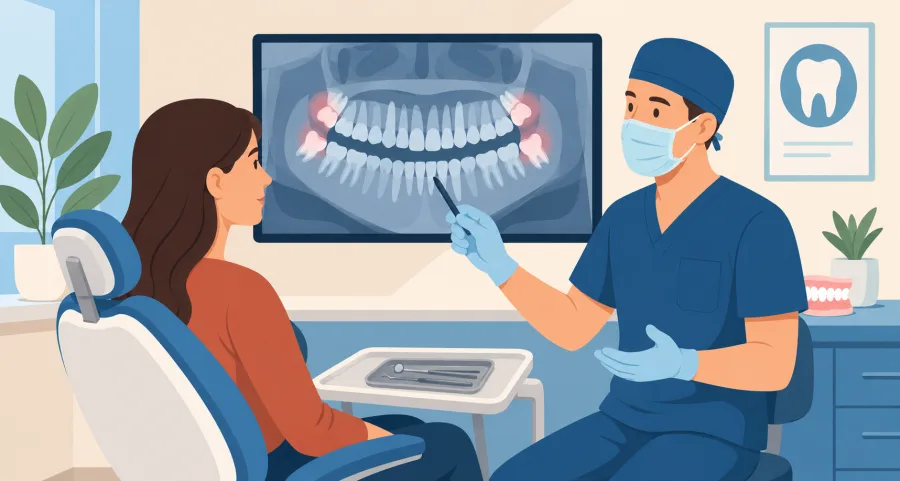
When general dentists bring up wisdom teeth, the conversation is often brief: a quick mention that your third molars are coming in and a suggestion to have them pulled. However, wisdom tooth extraction is a genuine surgical procedure involving bone biology, nerve pathways, and post-operative physiology. Patients deserve complete transparency regarding the nuances that general dental checkups often skip.
At Oral and Facial Surgery of Miami, board-certified oral and maxillofacial surgeon Dr. Johanny Caceres prioritizes detailed patient education. Exploring the key surgical facts that routine checkups leave out equips you to make empowered, proactive decisions for your long-term oral stability.
The Truth About Age: Why Waiting Past 25 Multiplies Complications
Many people are told that if their wisdom teeth are not causing acute pain, they can safely wait and see. While this sounds comforting, surgical reality is far different. In teenagers and adults under 24, third molar roots are only one-half to two-thirds formed, with blunted tips that sit safely away from deep sensory nerve canals. Additionally, the surrounding jawbone is supple and elastic.
By age 25, complete root apex closure occurs, often curving into complex hooks anchored firmly in dense cortical bone. Removing wisdom teeth in your thirties or forties involves denser bone, higher surgical resistance, longer operative times, and significantly extended recovery periods. Waiting until an asymptomatic tooth causes an emergency later in life makes surgery substantially more demanding.
| Common Misconception | Clinical Surgical Reality | Biological Reason |
|---|---|---|
| No pain means teeth are healthy | Over 60% of painless third molars harbor silent pathology | Chronic bacteria create deep periodontal bone loss without nerve pain |
| Waiting until later in life is fine | Complication rates rise dramatically after age 25 | Root apices fully develop, bone mineralizes, healing slows |
| All wisdom teeth must be pulled whole | Coronectomy safely leaves high-risk roots in place | Removes the crown to stop infection while preserving the nerve |
| All extractions feel identical | Surgical expertise drastically reduces swelling and trauma | Atraumatic sectioning spares cortical bone and soft tissue |
Nerve Proximity and the Coronectomy Alternative
Lower third molar roots often sit in close anatomical proximity to the inferior alveolar nerve (IAN), the sensory nerve trunk that supplies feeling to your lower lip, chin, and front teeth. In traditional 2D panoramic X-rays, the nerve and tooth roots appear superimposed, making it impossible to evaluate true three-dimensional clearance.
What many patients are not told is that when 3D Cone Beam CT scans show a root physically touching or grooving the nerve canal, full extraction is not the only option. An oral surgeon can perform a coronectomy: an intentional surgical procedure where the crown of the tooth is sectioned and removed to eliminate bacterial traps, while the non-infected root tips are left undisturbed in the bone. This eliminates the risk of permanent nerve paresthesia while permanently preventing pericoronitis.
The Difference Between General Dentistry and Oral Surgery
While some general dentists attempt wisdom tooth extractions in their general practice, oral and maxillofacial surgeons are dedicated specialists. Oral surgeons complete four to six years of intensive hospital-based residency after dental school, focusing exclusively on complex facial surgery, bone preservation, and anesthesia administration.
This specialist training makes a profound clinical difference during surgery. Oral surgeons use specialized high-speed surgical sectioning techniques that minimize bone removal, resulting in drastically less post-operative swelling and faster socket healing. In addition, oral surgeons are fully credentialed to provide deep intravenous twilight sedation, ensuring you rest comfortably without experiencing surgical stress.
Transparent Surgical Consultations at OFS Miami
At our practice, Dr. Johanny Caceres believes every patient deserves clear, honest medical facts. We take the time to review your 3D digital scans with you, explaining the exact position of your teeth, potential nerve proximity, and individualized anesthesia choices.
our modern surgical facility provides gentle outpatient IV sedation in a calm, welcoming environment. We walk you through realistic recovery expectations and structured home care plans, ensuring you have complete confidence at every step.
Get the clear, expert guidance you deserve. Call Oral and Facial Surgery of Miami today at (305) 552-1193 or schedule your 3D consultation online today.