
Can Diabetics Safely Undergo Oral Surgery?
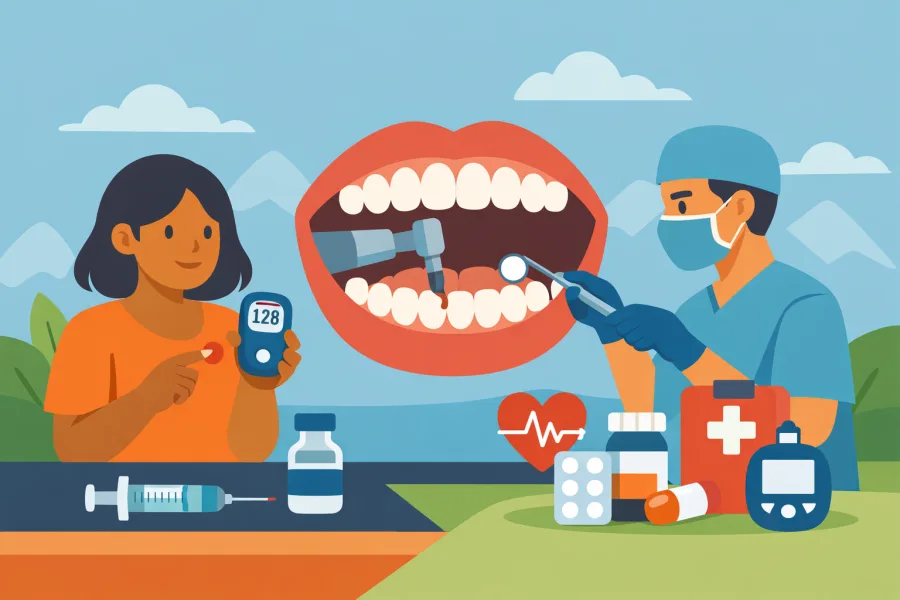
Living with type 1 or type 2 diabetes requires daily vigilance regarding diet, blood glucose monitoring, and medication regimens. When the need for oral surgery arises (whether for impacted wisdom teeth, surgical dental extractions, bone grafting, or dental implants), diabetic patients often feel intense anxiety about surgical risks, delayed wound healing, and post-operative infections. The clinical answer is definitive: diabetic patients can undergo oral surgery safely, comfortably, and predictably when proper perioperative medical protocols are enforced.
At Oral & Facial Surgery of Miami, board-certified oral and maxillofacial surgeon Dr. Johanny Caceres routinely manages surgical procedures for patients with metabolic conditions. Through close medical coordination, advanced monitoring, and tailored surgical protocols, our surgical team ensures optimal healing and blood sugar stability.
1. Pathophysiology: How Hyperglycemia Impacts Microvascular Perfusion and Immune Defense
To understand why diabetes requires specialized surgical protocols, one must understand how sustained elevated blood glucose (hyperglycemia) alters tissue physiology. Chronic high glucose levels lead to the accumulation of advanced glycation end-products (AGEs), which stiffen collagen matrices and thicken capillary basement membranes. This microvascular disease (microangiopathy) restricts localized arterial blood flow, depriving healing surgical sockets of oxygen, essential amino acids, and repair enzymes.
In addition, hyperglycemia directly impairs cellular immune defenses. It causes polymorphonuclear leukocyte (neutrophil) dysfunction, blunting their chemotaxis (ability to migrate toward bacteria) and phagocytosis (ability to ingest and destroy pathogens). Consequently, an uncontrolled diabetic patient has a significantly diminished capacity to clear normal oral bacterial flora, increasing the risk of post-surgical alveolar osteitis (dry socket), surgical site infection, and soft tissue breakdown. When blood glucose is well controlled, however, these cellular defenses function normally.
2. Preoperative Optimization: HbA1c Thresholds, Fasting Glucose, and Physician Coordination
Safe surgical outcomes depend on thorough preoperative medical evaluation. The most important metric in assessing diabetic surgical readiness is the hemoglobin A1c (HbA1c) level, which reflects average blood sugar control over the previous 90 days. For elective oral surgical procedures (such as dental implants, bone grafting, and elective third molar extractions), an HbA1c under 7.0 percent indicates excellent control, while levels between 7.0 and 8.0 percent represent acceptable control with mild modifications.
If an HbA1c reading exceeds 8.5 to 9.0 percent, elective procedures are generally postponed until the patient's endocrinologist or primary care physician can optimize medical management. Performing elective surgery during profound hyperglycemia significantly increases failure rates in bone grafts and dental implants. On the morning of surgery, an immediate fingerstick capillary blood glucose test is performed; fasting readings between 100 mg/dL and 180 mg/dL are ideal for proceeding with outpatient surgical care.
| Clinical Parameter | Well-Controlled Diabetes (Safe for Surgery) | Uncontrolled Diabetes (Requires Optimization) |
|---|---|---|
| HbA1c Target | Under 7.0% to 7.5% (predictable, normal tissue repair) | Over 8.5% (high risk of microvascular failure and infection) |
| Day-of-Surgery Blood Glucose | 100 mg/dL to 180 mg/dL | Greater than 200 to 250 mg/dL (surgery delayed for safety) |
| Appointment Scheduling | Early morning; aligned with breakfast and insulin timing | Late afternoon (risks hypoglycemia from prolonged fasting) |
| Infection Prophylaxis | Standard sterile surgical protocol; targeted chlorhexidine rinses | Prophylactic systemic antibiotics often indicated |
| Implant Osseointegration | Comparable success rates to non-diabetic cohorts (95%+) | Compromised bone-to-implant contact and delayed healing |
3. Perioperative Protocols: Morning Appointments, Sedation Safety, and Medication Timing
The timing of oral surgery is critical for diabetic patients. We schedule diabetic surgical visits for the early morning. Morning appointments minimize preoperative fasting disruption, capitalize on peak endogenous cortisol levels, and allow the patient to return home early to resume regular meals and insulin administration.
If intravenous (IV) sedation is chosen, specific fasting instructions are customized in coordination with the patient's physician. For patients taking oral hypoglycemics (such as metformin or sulfonylureas) or long-acting basal insulin, dosages may be adjusted on the morning of surgery to prevent intraoperative hypoglycemia. Throughout the procedure, our surgical suite maintains continuous electronic monitoring of vital signs, including pulse oximetry, blood pressure, and heart rate, with immediate glucose gel and intravenous dextrose readily on hand.
4. Accelerated Post-Operative Healing and Specialist Care at OFS Miami
After surgery, the primary clinical objective is preventing nutritional disruption and surgical site infection. Post-operative pain and jaw stiffness can make eating difficult, which poses a serious risk if a diabetic patient takes insulin without sufficient carbohydrate intake. Dr. Caceres provides detailed dietary recovery guidelines featuring nutrient-dense, soft-food options that deliver stable carbohydrates (such as pureed oatmeal, Greek yogurt, blended vegetable soups, and protein smoothies) to ensure consistent glycemic control.
To accelerate healing, our practice frequently utilizes Platelet-Rich Fibrin (PRF). By drawing a small sample of the patient's own blood at the start of surgery and centrifuging it, we isolate a concentrated matrix of autologous growth factors and white blood cells. Placing this biocompatible PRF membrane directly into extraction sockets or graft sites supercharges localized tissue regeneration, seals the surgical wound, and shields diabetic bone from bacterial contamination.
If you have diabetes and require wisdom tooth extraction, dental implants, or facial surgery, trust your care to a specialist who understands the interplay between surgical technique and metabolic health. Contact Oral & Facial Surgery of Miami today at (305) 552-1193 or book your consultation online for safe, expert surgical care.