
Plaque vs. Tartar: What’s the Difference?
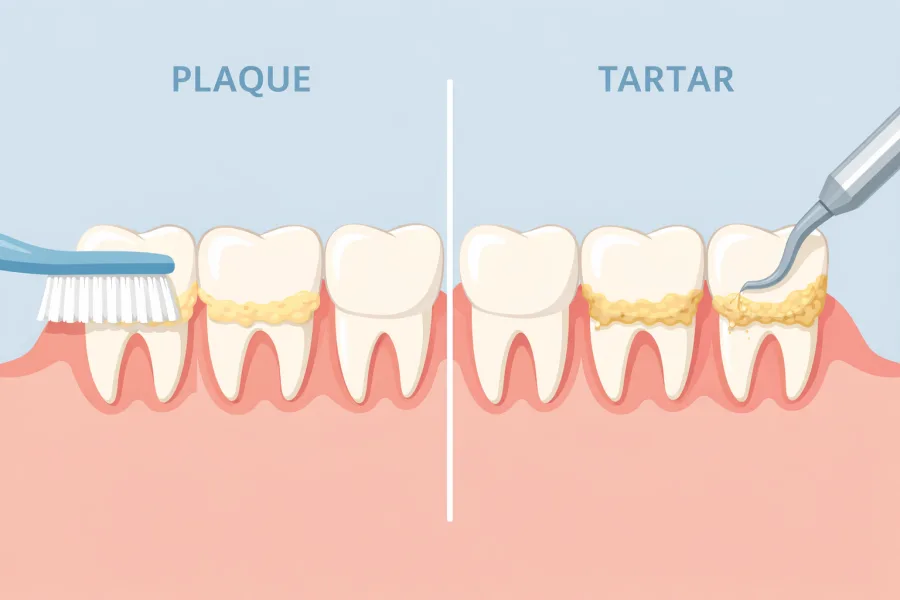
Maintaining a healthy, long-lasting smile requires understanding the continuous biological processes occurring across the surfaces of your teeth. Two terms frequently mentioned during dental hygiene appointments are dental plaque and dental tartar. While patients often use these terms interchangeably, they represent two completely distinct stages of microbial colonization and mineral deposition. Failing to understand their differences often leads to undetected oral disease, progressive jawbone loss, and eventual surgical intervention.
At Oral and Facial Surgery of Miami, board-certified oral and maxillofacial surgeon Dr. Johanny Caceres routinely treats severe periodontal complications, extensive alveolar bone resorption, and compromised tooth roots resulting from long-standing calculus accumulation. Exploring the transformation from soft bacterial plaque into calcified tartar highlights why daily home hygiene and regular professional cleanings are essential for preventing surgical tooth extractions.
The Nature of Dental Plaque: A Dynamic Bacterial Biofilm
Dental plaque is a soft, sticky, virtually colorless biofilm that forms continuously on teeth, restorations, and gingival margins. Within minutes following a professional cleaning or home brushing, salivary glycoproteins adhere to tooth enamel, forming an acquired pellicle. This thin protein coating acts as a biological landing pad for colonizing oral bacteria, particularly Streptococcus mutans and various Actinomyces species.
As these bacteria multiply, they secrete an extracellular matrix of polysaccharides that shields the colony from oral fluids and antimicrobial rinses. The primary clinical danger of plaque lies in its metabolic activity. When you consume fermentable carbohydrates, bacteria inside the plaque metabolize sugars and excrete lactic acid within minutes. This localized acid drops the oral pH below 5.5, dissolving hydroxyapatite enamel crystals and initiating dental decay. Fortunately, because plaque remains soft and pliable, diligent daily brushing and flossing effectively disrupt and remove it.
The Transition to Tartar: Irreversible Mineralization
When dental plaque is neglected and remains undisturbed on tooth surfaces for more than twenty-four to seventy-two hours, a profound chemical transition begins. Saliva contains natural supersaturated concentrations of calcium, phosphate, and carbonate minerals intended to remineralize enamel. However, when these minerals interact with stagnant, alkaline-shifting bacterial plaque, they precipitate directly into the bacterial matrix.
Through this process of calcification, soft plaque transforms into hard dental calculus, commonly known as tartar. Tartar forms a concrete-like bond with enamel, cementum, and dental implants. Once plaque calcifies into calculus, no amount of home toothbrushing, flossing, or consumer dental picks can remove it. Its rough, porous surface creates an ideal scaffold that accelerates the adhesion of fresh layers of living bacterial plaque, compounding tissue irritation.
| Characteristic | Dental Plaque | Dental Tartar (Calculus) |
|---|---|---|
| Physical Texture | Soft, sticky, gelatinous bacterial biofilm | Hard, porous, rock-like calcified mineral deposit |
| Visual Appearance | Clear to pale yellow, difficult to see without dye | Yellow, brown, or black subgingival deposits |
| Removal Method | Daily manual or electric brushing and flossing | Professional ultrasonic scalers and hand curettes |
| Primary Clinical Hazard | Enamel demineralization, cavities, gingivitis | Deep periodontal pockets, alveolar bone resorption |
Subgingival Calculus and Periodontal Bone Destruction
While supragingival calculus above the gumline poses aesthetic concerns, subgingival calculus hidden below the gingival margin represents a severe threat to dental longevity. As calculus accumulates subgingivally, it absorbs blood breakdown products, turning dark brown or black. The presence of this rough foreign material acts as a mechanical and microbiological irritant, triggering a sustained chronic immune response.
The host immune system produces osteolytic enzymes that break down periodontal ligament fibers and resorb crestal alveolar bone in an attempt to distance itself from the bacterial front. As bone retreats, periodontal pockets deepen, trapping more calculus in an aggressive feedback loop. Left untreated, teeth lose their structural support, become mobile, and ultimately require surgical extraction followed by extensive bone grafting to prepare for dental implants.
Preventative and Surgical Solutions in Coral Gables
Preventing the progression from plaque to calculus demands disciplined daily home care combined with routine professional dental prophylaxis every six months. If periodontal disease has already advanced to the point of structural tooth loosening, failing restorations, or severe localized bone defects, specialized surgical evaluation is required to stabilize your oral foundation.
At Oral and Facial Surgery of Miami, Dr. Johanny Caceres works collaboratively with general dental practitioners to manage advanced dental complications resulting from chronic periodontal deterioration. Our surgical suite offers precision extractions, socket preservation grafting, and dental implant placement under comfortable IV twilight sedation. To discuss your treatment options or evaluate compromised teeth, contact our office at (305) 552-1193 or schedule an appointment online.