
Can Wisdom Teeth Cause Neck Pain and Stiffness?
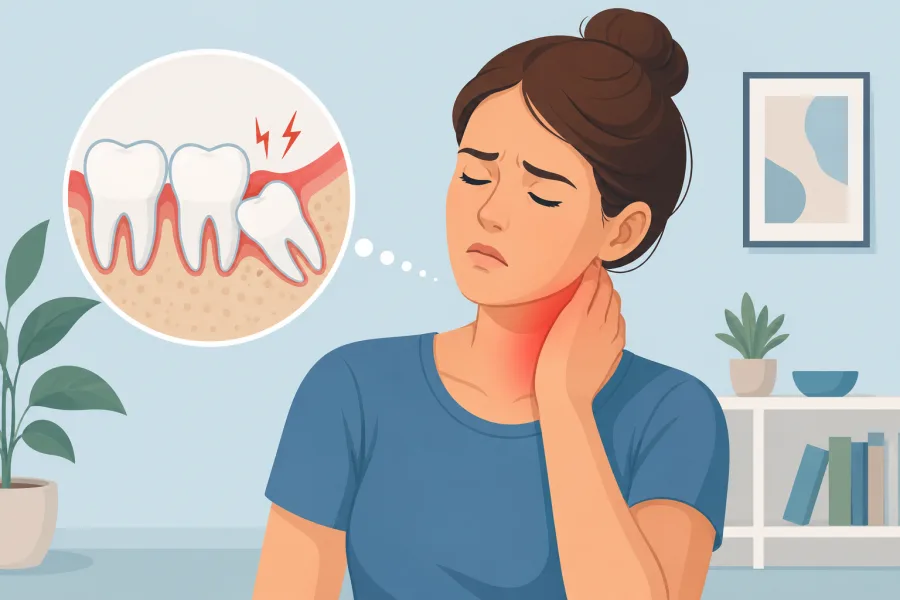
When neck pain and stiffness develop, most people assume they slept at an awkward angle, strained a muscle during a workout, or spent too many hours hunched over a laptop screen. However, when neck stiffness is accompanied by a dull ache at the back of the jaw or difficulty opening your mouth, the true origin is often dental. Lower third molars (wisdom teeth) sit in close anatomical proximity to major cervical muscles, deep fascial spaces, and regional lymphatic networks.
Understanding the neurological and musculoskeletal connections between your teeth and neck, recognizing the difference between muscle strain and spreading infection, and knowing when oral surgical evaluation is required can prevent dangerous complications and restore lasting comfort.
1. Anatomical Connections: The Trigeminocervical Complex and Neck Muscles
Your jaws and cervical spine do not function in isolation; they are bound together by an intricate web of shared nerves, fascia, and musculature:
- The Trigeminocervical Complex: Sensory input from the lower teeth travels along the mandibular division (V3) of the trigeminal nerve. These nerve fibers descend into the upper spinal cord, where they overlap directly with the sensory roots of the upper cervical spine (nerves C1, C2, and C3). Because these signals converge in the same neurological nucleus, intense irritation from an impacted lower wisdom tooth frequently radiates down the side of the neck and into the upper shoulder.
- Muscular Splinting and Postural Guarding: The mandible connects to your neck and clavicle through the suprahyoid and infrahyoid muscle groups, while the masseter and pterygoid muscles work in tandem with the sternocleidomastoid (SCM) and trapezius. When an impacted wisdom tooth causes localized pain or makes chewing uncomfortable, you instinctively alter your head posture or hold your jaw clenched to avoid pressure. This subconscious splinting locks neck muscles in continuous tension, resulting in severe stiffness and restricted range of motion.
- Reactive Lymphatic Drainage: Infections around lower wisdom teeth drain directly into the submandibular and deep superior cervical lymph nodes located beneath the jawline and along the side of the neck. When your immune system fights local bacteria, these lymph nodes swell into tender, palpable nodules that make neck flexion and swallowing uncomfortable.
2. Emergency vs. Non-Urgent: Recognizing Spreading Infections
While many instances of neck stiffness stem from benign muscular strain, bacterial infections surrounding lower wisdom teeth can rapidly escalate into severe surgical emergencies. The roots of lower wisdom teeth sit directly adjacent to the thin inner lingual plate of the mandible:
| Clinical Presentation | Underlying Mechanism | Key Symptoms & Location | Urgency Level & Action |
|---|---|---|---|
| Muscular Guarding | Compensatory clenching and altered chewing from tooth pressure. | Dull muscle ache along the side of the neck; worse after meals or upon waking; full mobility preserved. | Non-urgent; schedule an oral surgical consultation for third molar evaluation. |
| Reactive Lymphadenitis | Immune activation from pericoronitis filtering into cervical lymph nodes. | Small, tender, movable swellings beneath the angle of the jaw; sore when turning the head. | Semi-urgent; requires professional clinical debridement, antibiotic evaluation, and planned extraction. |
| Submandibular Cellulitis | Bacterial spread through the lingual cortical plate into the submandibular space. | Firm, painful swelling beneath the jawline; moderate fever; restricted mouth opening (trismus). | Urgent; contact an oral and maxillofacial surgeon immediately for incision, drainage, and IV/oral antibiotics. |
| Ludwig's Angina | Bilateral multi-space fascial infection elevating the tongue and compressing the airway. | Board-like woody firmness of the anterior neck; high fever; inability to swallow saliva; shortness of breath. | Critical emergency; call 911 or proceed immediately to the nearest hospital emergency room. |
If an infection penetrates through the inner cortical bone of the lower jaw, it can access the submandibular, sublingual, and lateral pharyngeal fascial spaces. Unlike soft tissue swelling that feels squishy, deep fascial infections create a firm, board-like hardness under the chin and along the front of the neck. If you ever develop difficulty swallowing saliva (dysphagia), shortness of breath, or an elevated tongue, treat this as a medical emergency requiring immediate surgical attention.
3. Chronic Impaction and Musculoskeletal Strain
In the absence of acute bacterial infection, chronic neck stiffness frequently arises from low-grade mechanical irritation:
- Chronic Pericoronitis: Partially erupted wisdom teeth are covered by an operculum (a small flap of gum tissue). Food debris and oral bacteria easily become trapped underneath, creating an environment that cannot be kept clean with normal brushing. The resulting low-grade inflammation causes constant discomfort that radiates into the neck and ear.
- Trismus and Chewing Muscle Fatigue: As the pterygomandibular raphe and masseter muscles become inflamed, opening your mouth wider than two fingers becomes painful. To compensate, the deep stabilizing muscles of the neck work overtime during speaking and eating, leading to severe cervical muscle fatigue.
- Sleep Bruxism: Dental discomfort acts as a powerful central nervous system stimulant during sleep, triggering heavy nocturnal teeth grinding. You wake up with stiff cervical muscles and tender jaw joints every morning.
4. Surgical Resolution and Comprehensive Care with Dr. Johanny Caceres
Physical therapy, chiropractic adjustments, and neck stretches provide only temporary relief if the underlying trigger is an impacted or infected wisdom tooth. Once the tooth is professionally evaluated and removed, pressure on the mandibular nerve resolves, the regional lymph nodes return to their normal size, and the chronic muscular guarding in your neck subsides within days.
At our practice, Dr. Johanny Caceres, a board-certified oral and maxillofacial surgeon, utilizes high-resolution 3D Cone-Beam CT (CBCT) imaging to evaluate the exact relationship between your third molar roots, the lingual cortical plate, and the submandibular fascial space. In our comfortable Coral Gables surgical facility, we perform gentle, computer-guided extractions under IV sedation, ensuring you remain completely relaxed and free from discomfort.
If you are dealing with unexplained neck soreness alongside dental symptoms, review our guides on evaluating facial swelling emergencies, learning how oral infections spread, and recognizing when wisdom tooth pain cannot wait.
Do not ignore neck tightness that may stem from your wisdom teeth. contact Oral and Facial Surgery of Miami today at (305) 552-1193 or schedule your comprehensive consultation online through our online booking portal.