
Can Wisdom Teeth Grow in Your 30s? Here’s Why
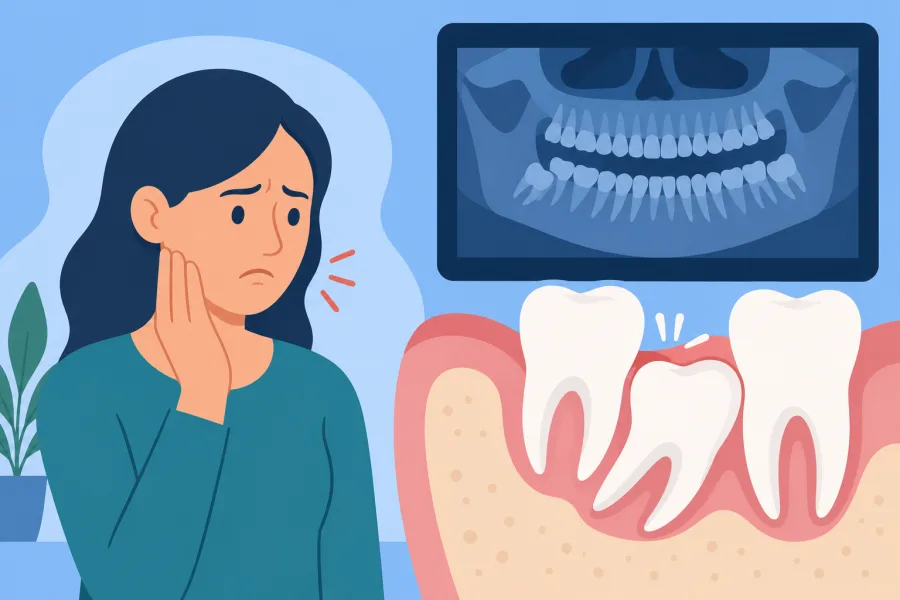
Most adults believe that once they pass their mid-twenties, the chapter on wisdom teeth has permanently closed. So when individuals in their thirties or forties suddenly experience throbbing posterior jaw pain, gum swelling, or notice a sharp white cusp piercing through their gums, the discovery can be shocking. Many patients ask whether new teeth can spontaneously form in adulthood. In reality, while teeth do not magically generate after age 25, previously dormant, impacted third molars can remain hidden for decades before becoming active.
At Oral and Facial Surgery of Miami, board-certified oral and maxillofacial surgeon Dr. Johanny Caceres frequently evaluates adult patients dealing with late-blooming wisdom teeth. Understanding why third molars suddenly cause trouble in your thirties and how adult extraction differs from teenage surgery empowers you to seek effective, proactive care.
The Late Eruption Mystery: Why Wisdom Teeth Emerge After Age 30
Third molar tooth buds develop in early childhood and complete their mineralization by age 20. If they do not erupt during the late teens, it is almost always because dense jawbone or neighboring second molars physically block their path, locking them into an impacted state. Why, then, do these dormant teeth suddenly begin moving ten or fifteen years later?
Several adult physiological events trigger late movement:
- Physiological Mesial Drift: As we age, natural chewing forces cause human teeth to slowly migrate forward toward the midline. Over decades, this subtle shift can open up just enough space for a trapped third molar to begin moving.
- Loss of Adjacent Dentition: If a patient has a damaged second molar extracted or treated for extensive decay, the physical barrier blocking the wisdom tooth vanishes, allowing the dormant tooth to tip forward into the newly created space.
- Expanding Follicular Cysts: Fluid accumulating within the un-erupted dental follicle can create slow cystic expansion, physically displacing the tooth toward the gum surface.
- Adult Periodontal Bone Recession: Normal physiological bone thinning associated with aging can expose the crown of a tooth that was previously submerged deep under bone.
| Clinical Factor | Teen Eruption (Ages 16 to 22) | Adult Eruption (Ages 30 and Older) |
|---|---|---|
| Root Development | Incomplete roots with blunt, open tips | Fully matured, elongated, often divergent or hooked roots |
| Jawbone Density | Elastic, cancellous, flexible alveolar bone | Dense, rigid cortical bone with zero natural flexibility |
| Nerve Proximity | Root apices sit well above the mandibular canal | Root tips frequently border or intimately wrap around nerve |
| Recovery Duration | 3 to 5 days with minimal swelling | 7 to 10 days with marked trismus and slower bone remodeling |
Adult Bone Density and Root Maturation Challenges
Extracting a wisdom tooth in a thirty- or forty-year-old patient requires a very different surgical approach than removing a tooth in a high school senior. By your thirties, jawbone density has reached its lifetime peak. Cortical bone is hard, rigid, and tightly fused to the tooth roots.
In addition, adult third molar roots are fully formed and frequently feature sharp apical curves or divergent hooks that anchor deep in the jaw. Attempting to pull an adult tooth with simple forceps pressure risks fracturing the root or placing excessive stress on the mandible. To ensure safety, Dr. Caceres utilizes micro-surgical troughing and divides the tooth into distinct pieces, elevating each section gently without traumatizing dense surrounding bone.
Common Triggers and Clinical Pathology in Adults Over 30
When dormant wisdom teeth reactivate in adulthood, they frequently trigger acute oral complications:
- Adult Pericoronitis: As the tooth partially breaches the gumline, a flap of tissue forms, trapping bacteria. Adult immune shifts during periods of high career stress or illness can provoke sudden, severe swelling, throbbing pain, and trismus.
- Hidden Second Molar Cavities: Decades of food trapping between the third molar and second molar can silently rot the back surface of the second molar root below the gumline.
- Cystic Expansion: Un-erupted follicular sacs can enlarge into dentigerous cysts, hollowing out sections of the lower jawbone.
Advanced Adult Surgical Care and Sedation at OFS Miami
At Oral and Facial Surgery of Miami, treating adult impactions begins with low-dose 3D Cone Beam CT (CBCT) diagnostics to evaluate root architecture and nerve proximity. In cases where mature roots are dangerously close to the mandibular canal, Dr. Caceres offers specialized coronectomy procedures to remove only the crown, eliminating nerve risks entirely.
our practice provides comforting outpatient IV sedation, allowing adult patients to complete their surgery peacefully, safely, and with zero memory of the visit.
Do not let late-blooming wisdom teeth jeopardize your oral health. Contact Oral and Facial Surgery of Miami today at (305) 552-1193 or schedule your consultation online today.