
Alcohol After Wisdom Teeth Removal: When Is It Safe to Drink?
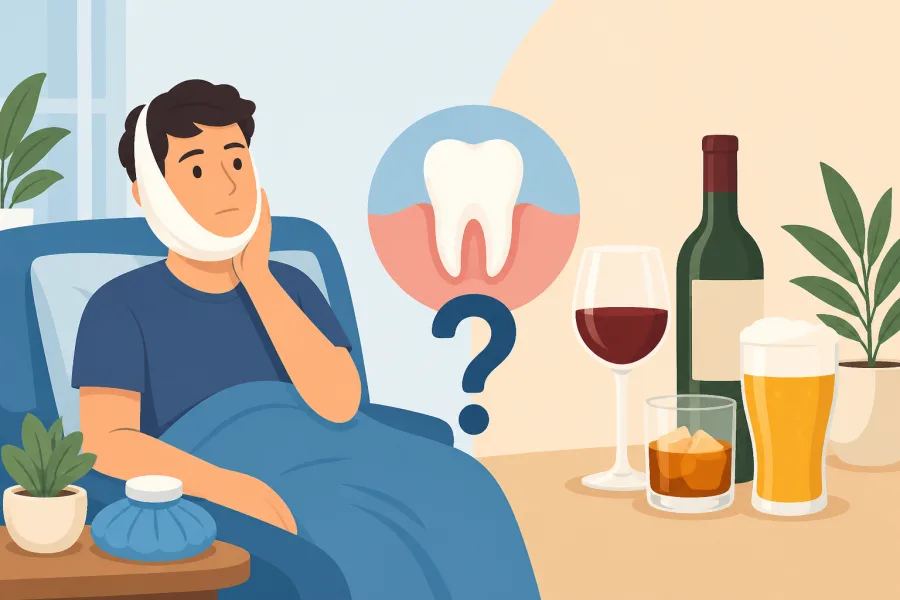
Following wisdom tooth surgery, patients frequently look ahead to returning to their normal routines, social calendars, and weekend plans. A very common question asked chairside is: when is it actually safe to have a beer, a glass of wine, or a cocktail after an extraction? Whether you are attending a celebratory dinner or simply unwinding after work, consuming alcohol too soon poses severe physiological risks to your surgical recovery.
The core clinical rule is strict: you must avoid all alcohol for a minimum of 72 hours, and ideally for seven to ten days following surgical extractions. At Oral and Facial Surgery of Miami in Coral Gables, Dr. Johanny Caceres guides patients through every phase of post-operative healing to ensure rapid, complication-free recovery without painful setbacks.
1. The First 72 Hours: Vasodilation, Hemostasis, and Clot Disruption
The moment an oral surgeon extracts a third molar, your body initiates a delicate cascade of cellular hemostasis. Platelets aggregate at the surgical site, synthesizing a dense fibrin meshwork that forms a protective blood clot within the alveolar socket. This primary clot serves as an indispensable biological seal. It isolates the exposed alveolar bone and sensory nerve endings from oral bacteria, saliva, and ambient air while providing a scaffolding for osteoblasts to deposit new bone.
Ethanol directly undermines this critical biological defense through multiple mechanisms:
- Systemic Vasodilation: Alcohol acts as a peripheral vasodilator, expanding blood vessels throughout the body and raising capillary pressure in the head and neck. In a fresh surgical site, this surge in localized blood flow frequently dissolves or blows out the delicate early clot, restarting active hemorrhage.
- Anti-Platelet Effects: Ethanol impairs platelet aggregation and inhibits thromboxane synthesis, essentially functioning as a mild systemic anticoagulant during the precise window when your body requires optimal clotting capability.
- High Risk of Alveolar Osteitis (Dry Socket): When ethanol dissolves or dislodges the blood clot, the underlying jawbone is left completely bare. Alveolar osteitis produces an excruciating, throbbing pain that radiates across the jawline, neck, and ear, requiring emergency in-office medicated dressings to alleviate.
- Mucosal Dehydration: Alcohol dehydrates the delicate oral mucosa, slowing cellular mitosis and depriving granulating tissue of necessary hydration.
2. Dangerous Pharmacological Collisions: Pain Medications, Sedatives, and Antibiotics
Beyond the direct physiological damage to the extraction socket, mixing alcohol with post-operative prescription medications can produce life-threatening pharmacological interactions:
- Prescription Opioid Analgesics (Hydrocodone, Oxycodone, Codeine): Combining alcohol with narcotic pain relievers creates profound central nervous system depression. Both substances suppress the brain's respiratory centers, dramatically elevating the risk of severe respiratory depression, coma, and accidental fatal overdose.
- High-Dose NSAIDs (Ibuprofen 600mg to 800mg, Ketorolac): Both non-steroidal anti-inflammatory drugs and alcohol irritate the gastric lining and inhibit platelet clotting. Taken together, they multiply the risk of acute gastritis and upper gastrointestinal bleeding.
- Acetaminophen (Tylenol): When liver enzymes are forced to metabolize high doses of acetaminophen and alcohol simultaneously, toxic intermediate metabolites (NAPQI) accumulate rapidly, creating acute hepatotoxic strain.
- Antibiotics and Disulfiram-Like Reactions: Certain prophylactic antibiotics, particularly metronidazole (Flagyl) and select cephalosporins, react violently with alcohol. Ingestion triggers intense nausea, projectile vomiting, severe abdominal cramping, facial flushing, and tachycardia.
3. Post-Extraction Timeline and Alcohol Reintroduction: Clinical Comparison Table
Navigating the recovery timeline safely requires understanding how your body heals week by week before you reintroduce alcoholic beverages:
| Recovery Phase | Socket Healing Status | Alcohol Safety Level | Clinical Rationale |
|---|---|---|---|
| Phase 1: Hours 0 to 72 | Primary fibrin clot formation; peak tissue swelling | Strictly Prohibited | Maximum risk of secondary hemorrhage, dry socket, and medication overdose |
| Phase 2: Days 4 to 7 | Immature granulation tissue; active vascularization | High Risk (Avoid) | Fragile capillaries; alcohol dehydrates mucosa and impedes collagen deposition |
| Phase 3: Days 8 to 14 | Epithelial bridge across socket; stitches dissolving | Low Risk (Cautious) | Permissible in moderate amounts if completely off all prescription analgesics |
| Phase 4: Week 3 and Beyond | Mature soft tissue closure; ongoing trabecular osteogenesis | Fully Safe | Socket floor is fully epithelialized; zero risk of dry socket |
4. Chairside Guidance with Dr. Johanny Caceres in Coral Gables
During your recovery, prioritize optimal tissue hydration. Replace cocktails and beer with chilled coconut water, room-temperature spring water, or diluted electrolyte drinks. Remember that when drinking any beverage during the first two weeks, you must never use a straw. The negative atmospheric pressure generated by oral suction pulls directly against the extraction socket, instantly dislodging the blood clot regardless of whether the liquid is alcohol or water.
If you accidentally consumed alcohol too soon and notice sudden, throbbing pain, an unpleasant taste in your mouth, or renewed bleeding, do not wait for the condition to escalate. Dr. Johanny Caceres and the specialized surgical team at Oral and Facial Surgery of Miami provide prompt chairside evaluation, soothing antiseptic dry socket dressings, and precise post-operative management.
Your long-term oral health and comfort are our top priorities. If you have questions about your surgical recovery or need to schedule an evaluation, contact Oral and Facial Surgery of Miami at (305) 552-1193 or book your consultation online today.