
Cavities Explained: Causes, Prevention, and Treatment
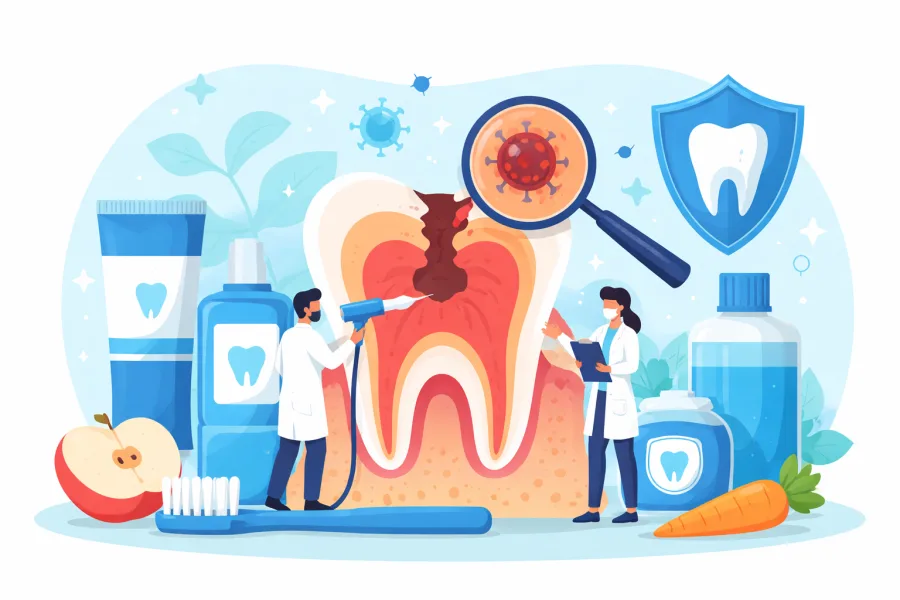
Dental cavities, clinically known as dental caries, are among the most widespread chronic health conditions affecting children and adults worldwide. While frequently viewed as simple inconveniences resolved with quick fillings, untreated tooth decay represents an active bacterial disease process. If allowed to progress unchecked, minor surface enamel erosion can develop into debilitating pulpal infections, facial cellulitis, and permanent tooth loss.
At Oral and Facial Surgery of Miami, board-certified oral and maxillofacial surgeon Dr. Johanny Caceres treats advanced dental breakdown and complex odontogenic infections. Understanding the biological cascade of tooth decay empowers you to prevent cavities early and know when advanced surgical care is necessary.
The Biofilm Cascade: How Cavities Develop in Enamel and Dentin
A cavity is not an overnight occurrence; it is the structural culmination of a dynamic microbial process. The human mouth is populated by diverse bacterial flora, including Streptococcus mutans and Lactobacillus species. These bacteria organize on tooth surfaces into a sticky biofilm called dental plaque.
Every time you consume fermentable carbohydrates, such as refined sugars, bread, or soda, plaque bacteria metabolize the glucose and secrete acidic byproducts. This drops the pH at the tooth surface below 5.5, the critical threshold where protective hydroxyapatite minerals begin dissolving from enamel. When acid attacks outpace natural salivary remineralization, the outer enamel shell weakens, breaks down, and allows bacteria to penetrate into softer dentin underneath.
| Stage of Decay | Anatomical Layer Affected | Typical Patient Symptoms | Standard Clinical Treatment |
|---|---|---|---|
| Stage 1: Incipient Lesion | Superficial enamel surface | Chalky white spot; zero physical discomfort | Topical fluoride varnish, nano-hydroxyapatite paste |
| Stage 2: Dentin Infiltration | Inner dentin layer with microscopic tubules | Mild sensitivity to sweet foods, cold drinks, or air | Direct composite resin or porcelain dental filling |
| Stage 3: Pulpal Involvement | Living vascular and nerve tissue chamber | Spontaneous throbbing, sharp heat pain, night ache | Root canal therapy or full-coverage dental crown |
| Stage 4: Apical Abscess | Periapical jawbone beyond root tips | Severe biting pain, localized gum boil, facial edema | Surgical extraction and dental implant restoration |
Clinical Stages of Tooth Decay and Pulpal Infection
Tooth decay progresses through distinct clinical stages. In its earliest manifestation, known as an incipient white-spot lesion, demineralization is confined to enamel. At this stage, no physical hole exists, and the lesion can be completely reversed through targeted remineralization therapies.
Once bacteria breach the dentinoenamel junction (DEJ), progression accelerates. Dentin is softer and porous, containing thousands of microscopic fluid-filled tubules that communicate directly with the dental pulp. Patients begin noticing brief twinges when drinking iced water or eating sweets. If left untreated, bacteria reach the central pulp chamber, causing irreversible pulpitis, tissue necrosis, and acute periapical abscesses that expand into surrounding mandibular or maxillary bone.
Evidence-Based Preventative and Remineralization Strategies
Preventing decay requires disrupting bacterial biofilm mechanically and biochemically. Brushing twice daily with a soft-bristled sonic toothbrush and fluoridated toothpaste removes plaque while delivering bioavailable fluoride ions to strengthen the enamel crystal lattice.
Interdental cleaning with waxed floss or water irrigators is equally vital to clear plaque from between teeth where more than half of all adult cavities originate. In addition, limiting the frequency of sugary snacks, drinking fluoridated water, and using xylitol products help maintain neutral oral pH levels and starve cariogenic bacteria.
Restorative and Surgical Tooth Replacement at OFS Miami
When deep cavities destroy tooth structure below the gumline or trigger recurrent bone infections, saving the natural tooth may no longer be clinically feasible. Attempting to restore a fractured, non-restorable tooth root often leads to repeated structural failures and ongoing bone loss.
At our practice, Dr. Johanny Caceres provides advanced surgical extractions with simultaneous socket bone preservation. In our accredited surgical center, lost teeth are replaced with state-of-the-art dental implants under comfortable outpatient IV twilight sedation. Implants permanently halt bone loss, restore chewing function, and provide a lasting foundation for a radiant smile.
Do not let untreated decay compromise your health. Contact Oral and Facial Surgery of Miami at (305) 552-1193 or book your consultation online today.