
Do Seniors Need Wisdom Tooth Removal Later in Life?
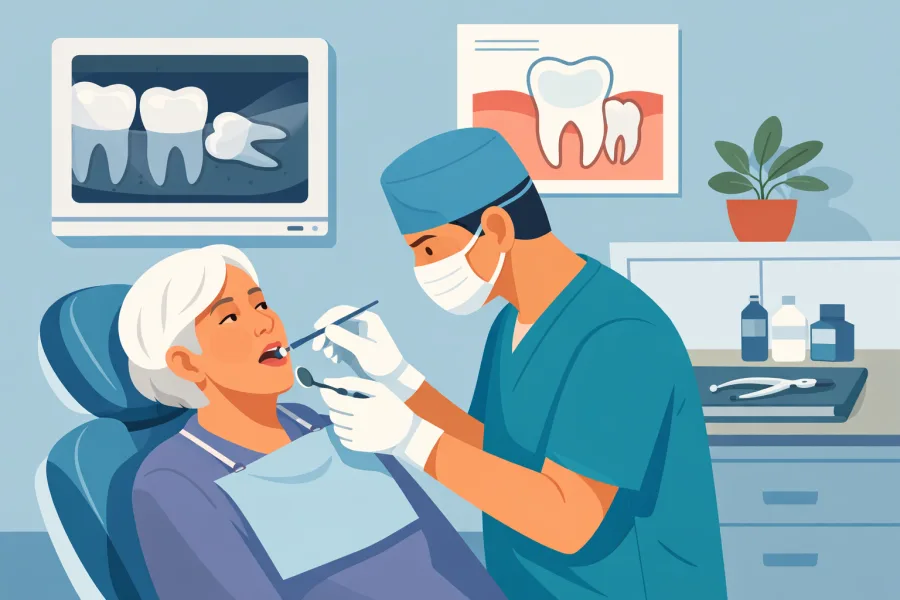
A widespread assumption among mature adults and seniors is that if third molars have survived into your sixties, seventies, or beyond without severe pain, they are permanently safe to ignore. Many older patients believe wisdom tooth extraction is exclusively a concern for teenagers and young adults. However, oral physiology continues to evolve throughout life, and dormant wisdom teeth can quietly transform into serious clinical threats during your senior years.
While prophylactic extraction is rarely recommended for asymptomatic seniors, active pathology such as deep periodontal pockets, root cavities on adjacent molars, and expanding jaw cysts often make surgical treatment medically essential. At Oral and Facial Surgery of Miami in Coral Gables, board-certified oral and maxillofacial surgeon Dr. Johanny Caceres specializes in geriatric surgical protocols, balancing medical comorbidities, bone density, and nerve safety to protect our senior patients.
1. The Aging Jaw: Sclerotic Bone, Ankylosis, and Nerve Proximity
Extracting a third molar in a senior patient involves anatomical and physiological realities that differ fundamentally from operating on an adolescent:
- Hyperdense Sclerotic Bone: Over decades, the alveolar jawbone loses vascularity and elasticity, transforming into dense, rigid cortical bone. Unlike flexible teenage bone that yields easily during elevation, senior bone provides zero flex, requiring delicate microscopic sectioning.
- Root Ankylosis and Hypercementosis: Chronic low-grade pressure and cellular aging often cause the periodontal ligament to calcify completely. The tooth root can physically fuse directly to the surrounding jawbone (ankylosis) or develop bulbous cementum deposits (hypercementosis) that lock the tooth securely in place.
- Sensory Nerve Intimacy: Because adult roots are fully developed, their tips frequently abut, indent, or encircle the inferior alveolar nerve canal, elevating the risk of temporary or prolonged sensory numbness in the lower lip and chin if extracted with standard forceps leverage.
2. Clinical Indications in Older Adults: When Leaving Them Alone Is Dangerous
Why do wisdom teeth that remained quiet for forty years suddenly cause severe emergencies in later life? The intersection of aging oral tissues and systemic health factors triggers distinct clinical hazards:
Many seniors take prescription medications for cardiovascular health, hypertension, or arthritis that induce chronic dry mouth (xerostomia). Without the natural cleansing, buffering, and antimicrobial action of robust salivary flow, aggressive bacteria proliferate around hard-to-reach third molars. This leads to rampant root caries at the cervical margin of the second molar, deep below the gumline. By the time a senior experiences toothache pain, both the wisdom tooth and the essential functional second molar may be decayed beyond repair.
In addition, chronic periodontal bone loss behind the second molar creates deep, un-cleanable pockets that harbor virulent anaerobic pathogens. These localized infections introduce systemic bacterial burdens that complicate diabetes management and elevate cardiovascular risks. In other cases, asymptomatic impacted teeth develop slowly expanding dentigerous cysts that silently hollow out the mandible, predisposing elderly patients to pathological jaw fractures.
3. Senior Wisdom Tooth Care Strategy: Clinical Comparison Table
Evaluating third molar treatment options for older adults requires balancing surgical benefits against systemic medical factors:
| Clinical Scenario | Diagnostic Presentation | Recommended Strategy | Primary Clinical Goal |
|---|---|---|---|
| Deep Asymptomatic Bony Impaction | Completely encased in bone; intact follicle; zero symptoms | Annual 3D CBCT Surveillance | Avoid unnecessary surgical trauma and nerve risk in medically fragile patients |
| High Nerve-Risk Impaction with Infection | Roots wrap around nerve; pericoronitis or food trapping | Surgical Coronectomy (Partial Odontectomy) | Remove diseased crown while leaving stable root tips in bone to prevent nerve damage |
| Severe Caries or Cystic Destruction | Active radiolucency; mobility; irreversible second molar decay | Targeted Surgical Extraction | Eliminate chronic oral sepsis and prevent pathological jaw fractures |
| Interference with Prosthetics | Erupted molar compromises partial denture fit or implant site | Planned Pre-Prosthetic Surgery | Establish stable alveolar ridge architecture for functional prosthodontic chewing |
4. Medical Co-Management and Gentle Surgery with Dr. Johanny Caceres
Performing oral surgery on seniors requires advanced medical co-management. Dr. Johanny Caceres coordinates closely with your primary care physician, cardiologist, or endocrinologist before scheduling any surgical procedure. Our team conducts a thorough evaluation of:
- Anticoagulant and Antiplatelet Therapy: Patients taking medications such as Eliquis, Xarelto, Plavix, or Coumadin are managed through precise clinical protocols and localized hemostatic agents (such as collagen plugs and surgical sutures) without needlessly discontinuing vital blood thinners.
- Bone Density and Antiresorptive Medications: Seniors receiving bisphosphonates or Prolia for osteoporosis undergo specialized risk stratification to prevent medication-related osteonecrosis of the jaw (MRONJ).
- Tailored Outpatient Sedation: Anesthesia protocols are customized for cardiovascular stability, utilizing short-acting agents and continuous multi-parameter ECG, blood pressure, and oxygen saturation monitoring.
If you or an elderly loved one is experiencing jaw tenderness, gum swelling, or difficulty eating comfortably, schedule a specialized evaluation. Call Oral and Facial Surgery of Miami at (305) 552-1193 or book your consultation online at our surgical facility today.