
Emergency Wisdom Tooth Removal: What to Do Fast
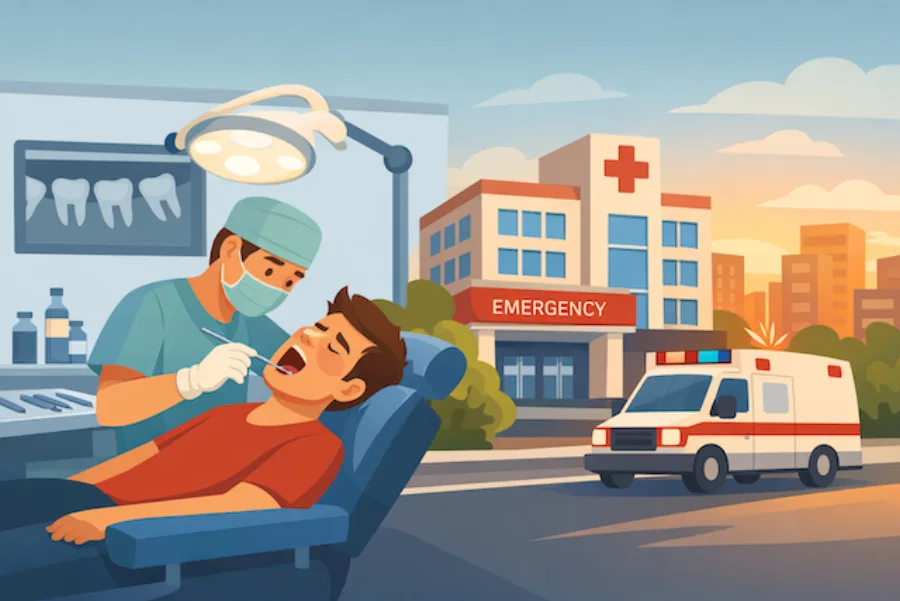
Few dental symptoms escalate with the alarming speed of an infected or severely impacted wisdom tooth. What begins as a dull ache behind your second molars on a Friday morning can evolve into throbbing jaw pain, noticeable facial swelling, and an inability to open your mouth by Saturday night. When over-the-counter pain relievers stop providing relief and swallowing feels agonizing, patients urgently search for emergency wisdom tooth removal.
Navigating a wisdom tooth crisis requires understanding what symptoms indicate a localized problem versus a dangerous spreading infection, what immediate steps reduce inflammation safely, and how an oral and maxillofacial surgeon rapidly halts the emergency under complete sedation.
What Qualifies as a Wisdom Tooth Emergency: Acute Infection and Airway Risks
Not every painful wisdom tooth requires an immediate midnight extraction, but specific clinical presentations represent true surgical emergencies that demand rapid intervention:
- Acute Purulent Pericoronitis: When a wisdom tooth partially erupts through the gum line, a small flap of tissue called an operculum covers part of the crown. Food debris and oral bacteria easily become trapped in this dark, warm crevice. As bacteria multiply anaerobically, the area turns into a painful, purulent abscess accompanied by a foul taste, bad breath, and severe localized tenderness.
- Progressive Trismus (Lockjaw): If you cannot open your mouth more than two fingers wide, the infection has migrated into the adjacent masseter or pterygoid muscles of mastication. Trismus is an objective sign that infection is spreading through deep fascial planes.
- Facial Swelling and Asymmetry: Swelling that extends past your gum line into your cheek, down toward the lower border of your jawline, or beneath your tongue represents an escalating cellulitis. If swelling spreads down your neck or interferes with swallowing or breathing, this can develop into Ludwig angina, a life-threatening airway emergency requiring immediate hospital emergency department care.
- Systemic Warning Signs: The presence of a fever, chills, rapid heart rate, or tender lymph nodes beneath your jaw indicates that bacteria are overwhelming local immune defenses and entering your bloodstream.
Immediate First Aid: What to Do (and What to Avoid) Before Your Appointment
While you arrange emergency surgical evaluation, following proper first-aid protocols helps stabilize your discomfort and prevents accidental tissue injury:
- Warm Salt Water Rinses: Dissolve one-half teaspoon of salt in eight ounces of warm water. Gently hold the warm solution over the affected molar area and tilt your head without spitting forcefully. Warm saline cleanses food debris from beneath the gum flap and draws out inflammatory fluid.
- Anti-Inflammatory Medication Protocol: Unless medically contraindicated, non-steroidal anti-inflammatory drugs such as ibuprofen (400 to 600 mg every six hours) directly reduce prostaglandins causing the swelling. For severe pain, your clinician may recommend alternating ibuprofen with acetaminophen every three to four hours.
- External Cold Compresses Only: Apply an ice pack wrapped in a cloth to your cheek for 15 minutes on, followed by 15 minutes off. Never apply hot compresses or heating pads to your cheek during an active dental infection; heat increases blood flow and can accelerate the spread of bacteria into facial tissue spaces.
- Never Place Aspirin Directly on Gums: A dangerous old folk remedy suggests crushing an aspirin tablet against the painful gum tissue. Aspirin is acetylsalicylic acid; placing it against oral mucosa causes severe chemical acid burns and tissue necrosis, worsening your pain without delivering any topical anesthesia.
The Emergency Visit: Same-Day Evaluation, Advanced 3D Imaging, and IV Sedation
Visiting an oral and maxillofacial surgeon for emergency removal is far calmer and more comfortable than patients anticipate. Because oral surgeons specialize in surgical extractions and advanced anesthesia, the procedure is optimized for immediate pain relief:
First, the surgeon captures low-dose 3D cone beam computed tomography (CBCT) imaging to visualize the root anatomy, check the distance to the inferior alveolar nerve canal, and evaluate any associated bone loss or cysts.
Second, because active infection produces an acidic tissue environment that can make standard dental injections less effective, oral surgeons administer intravenous (IV) sedation. Through IV anesthesia, you fall asleep peacefully within seconds, experiencing zero pain, pressure, or anxiety while the surgeon performs the extraction.
During surgery, the doctor carefully reflects the inflamed gum tissue, divides the tooth into small sections for gentle removal without stressing your jawbone, irrigates the socket with copious sterile saline, evacuates infected tissue, and places dissolvable sutures. You wake up rested with the source of your agony completely eliminated.
Urgent Surgical Care with Dr. Johanny Caceres in Coral Gables
When a wisdom tooth emergency strikes, you do not have to endure days of agony or risk dangerous systemic infection. Board-certified oral and maxillofacial surgeon Dr. Johanny Caceres and the team at Oral and Facial Surgery of Miami maintain dedicated capacity in their schedule for emergency wisdom teeth consultations, acute infection management, and urgent extractions under IV sedation.
Located conveniently in Coral Gables, our modern surgical facility is equipped with hospital-grade monitoring and advanced diagnostic tools to resolve your dental crisis safely and swiftly.
Do not wait for a wisdom tooth infection to spread into your neck or facial tissues. Contact our Coral Gables surgical office immediately at (305) 552-1193 or request an emergency evaluation online.