
How Stress Affects Your Teeth and Jaw Health
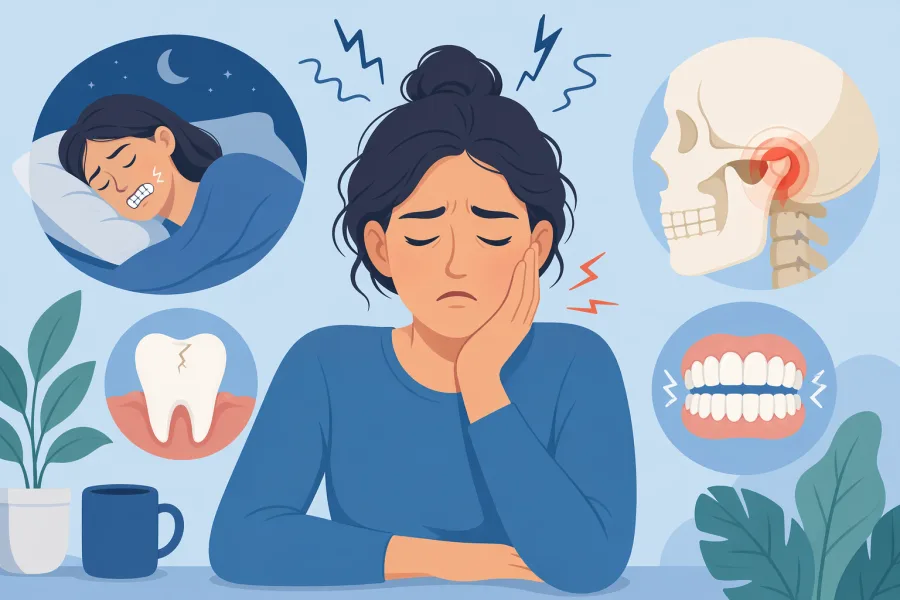
Modern life carries significant psychological demands, and while most people recognize the impact of stress on cardiovascular and mental wellness, its toll on the stomatognathic system is frequently overlooked. Chronic psychological stress manifests physically in the mouth through subconscious jaw clenching, intense nocturnal teeth grinding (bruxism), and acute temporomandibular joint (TMJ) strain. Left unmanaged, stress can shatter healthy enamel, trigger debilitating headaches, and permanently compromise jaw joints.
At Oral and Facial Surgery of Miami, board-certified oral and maxillofacial surgeon Dr. Johanny Caceres treats advanced facial pain syndromes, cracked tooth emergencies, and structural TMJ disorders. Understanding the physiological link between stress and oral biomechanics allows you to protect your teeth before irreversible destruction occurs.
The Stress-Bruxism Axis: Cortisol and Nocturnal Masseter Hyperactivity
When the brain perceives chronic stress, the hypothalamic-pituitary-adrenal (HPA) axis elevates circulating cortisol and adrenaline. These neuroendocrine hormones keep the central nervous system in a heightened state of sympathetic arousal.
During sleep, this nervous system tension discharges through involuntary contractions of the powerful masseter and temporalis muscles. Normal chewing exerts between twenty and forty pounds of pressure per square inch across dental arches. In contrast, nocturnal bruxism generates bite forces exceeding two hundred to three hundred pounds per square inch. Because protective conscious reflexes are suppressed during sleep, these crushing forces grind teeth together for hours, flattening cusps and straining cranial nerves.
| Stress Manifestation | Physiological Mechanism | Clinical Dental Symptom | Specialist Treatment at OFS Miami |
|---|---|---|---|
| Nocturnal Sleep Bruxism | Central nervous system sympathetic discharge | Flattened enamel cusps, chipped edges, morning jaw fatigue | Custom rigid acrylic night guard; masseter Botox relaxation |
| Vertical Tooth Fractures | Repetitive heavy cyclic loading exceeding enamel tensile limits | Sharp pain when releasing bite; localized bone pocketing | Atraumatic extraction, bone grafting, and dental implant placement |
| TMJ Internal Derangement | Anterior displacement of fibrocartilage articular disc | Clicking, popping, jaw locking, chronic tension headaches | TMJ joint arthrocentesis, lavage, and joint stabilization |
| Stress Gingivitis & Canker Sores | Cortisol-induced suppression of cell-mediated immunity | Painful aphthous ulcers, bleeding gums, dry mouth | Therapeutic mucosal debridement and targeted antimicrobial rinses |
Structural Dental Damage: Wear Facets, Micro-Fractures, and Abfractions
The consequences of unmitigated grinding are physically destructive. As the hard outer enamel wears away, softer yellow dentin is exposed. Dentin wears down six times faster than enamel, leading to cupped-out chewing surfaces, jagged front tooth edges, and acute thermal sensitivity.
Severe stress also produces abfraction lesions: wedge-shaped notches at the gumline where teeth flex under massive lateral forces. Even more concerning are vertical root fractures. When a molars splits from the crown down through the root into jawbone, the tooth cannot be saved with a filling, crown, or root canal. It requires surgical extraction to prevent catastrophic bone infection.
Temporomandibular Joint (TMJ) Dysfunction and Myofascial Pain
Beyond destroying teeth, chronic clenching damages the temporomandibular joints connecting your lower jaw to your skull. Prolonged compression can stretch and tear delicate joint ligaments, causing the protective cartilage disc to slip forward out of position.
Patients experience loud clicking, painful jaw popping, limited mouth opening, and episodes of jaw locking. Spasms from overworked masseter, pterygoid, and temporalis muscles radiate into the neck, shoulders, and temples, frequently misdiagnosed as chronic migraines.
Specialized Maxillofacial and Surgical Care at OFS Miami
Treating stress-related dental damage requires comprehensive clinical management. At our practice, Dr. Johanny Caceres provides advanced diagnostics, using 3D CBCT imaging to evaluate TMJ condylar morphology and detect hairline root fractures.
our surgical center offers multidisciplinary interventions, including custom night appliances, therapeutic Botox injections to relax hyperactive masseter muscles, and minimally invasive TMJ arthrocentesis to wash out joint inflammatory markers. If stress-induced fractures have compromised non-restorable teeth, Dr. Caceres restores permanent oral function with precision dental implants under comfortable IV twilight sedation.
Do not let stress compromise your smile and jaw function. Contact Oral and Facial Surgery of Miami at (305) 552-1193 or schedule your consultation online today.