
How Sugar Damages Teeth More Than You Think
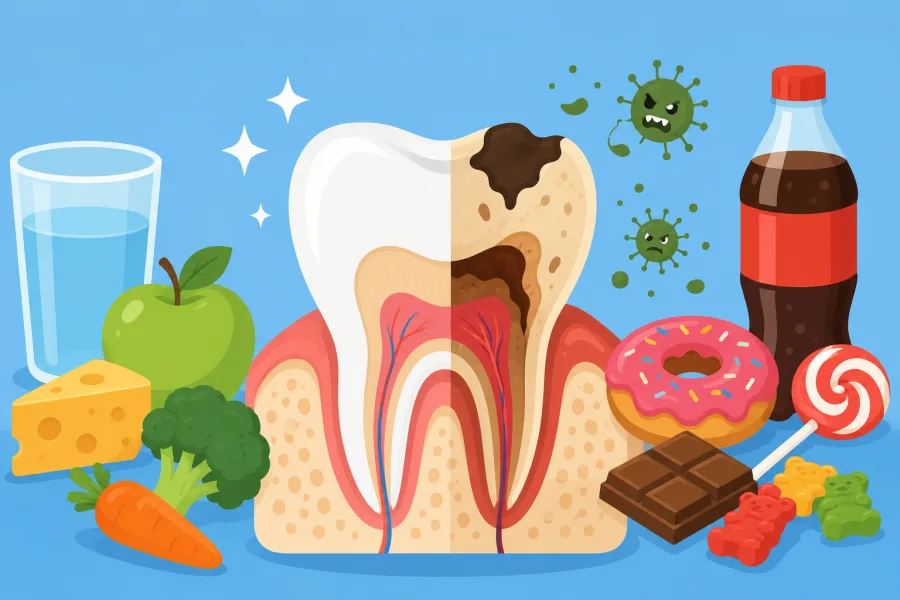
Sugar is widely recognized as the primary dietary contributor to dental cavities, yet many people misunderstand how the damage actually occurs. Sugar does not eat away at your teeth directly. Instead, dietary sugar acts as the primary fuel source for pathogenic bacterial colonies that reside in your mouth, triggering a chemical reaction that generates destructive acidic byproducts.
At Oral and Facial Surgery of Miami, board-certified oral and maxillofacial surgeon Dr. Johanny Caceres treats advanced dental breakdown, deep bone abscesses, and missing teeth resulting from long-term sugar damage. Understanding the biological mechanisms of sugar-induced decay helps you protect your teeth and take effective preventative measures in Coral Gables.
The Acidic Cascade: Bacterial Glycolysis and Critical Oral pH
The human mouth contains billions of bacteria organized into an adherent biofilm known as dental plaque. When you consume foods or drinks containing sucrose, glucose, or fructose, species such as Streptococcus mutans rapidly absorb these simple sugars through their cell membranes.
Through an anaerobic metabolic pathway called glycolysis, these bacteria ferment the sugar, excreting concentrated lactic acid directly onto your teeth. In a resting mouth, saliva maintains a neutral pH between 6.8 and 7.2. Within minutes of consuming sugar, localized oral pH plummets below 5.5. At this critical threshold, the calcium and phosphate ions that form tooth enamel begin dissolving into the surrounding fluid, a process known as demineralization.
| Sugar Source & Form | Oral Retention & Clearance Time | Acid Production Duration | Clinical Impact on Enamel & Gums |
|---|---|---|---|
| Liquid Sugars (Soda, Sweet Tea) | Rapid transit; washes over all surfaces | 20 to 30 minutes of acute acid depression | Generalized enamel thinning; smooth-surface decay |
| Sticky Sweets (Gummies, Caramels) | Extremely high; lodges in occlusal pits | Up to 60 to 90 minutes of localized acid | Deep pit and fissure cavities; interproximal breakdown |
| Refined Starches (Chips, Crackers) | Salivary amylase breaks starch to maltose | Prolonged continuous low-grade acid release | Cervical gumline decay and subgingival calculus |
Frequency vs Volume: The Prolonged Acid Bath Threat
When evaluating dietary damage to teeth, clinical research shows that frequency is substantially more destructive than total volume. If you eat a chocolate bar in five minutes, your mouth experiences a single twenty-minute acid attack before saliva neutralizes the environment and begins remineralization.
In contrast, if you sip an iced sweetened coffee or suck on hard candies over a four-hour work afternoon, your teeth remain submerged in a perpetual acid bath. Oral pH never recovers to neutral, completely blocking natural remineralization. This constant demineralization strips away enamel, exposing the porous, sensitive dentin beneath.
Hidden Sugars, Viscous Snacks, and Deep Periodontal Inflammation
Many consumers avoid candy but remain unaware of hidden sugars in savory foods like salad dressings, barbecue sauces, energy bars, and flavored yogurts. Processed starches, such as pretzels and crackers, are equally hazardous. As salivary enzymes break complex starches into simple sugars, a sticky paste forms that clings tenaciously between teeth.
In addition, high sugar intake fuels systemic inflammation. Elevated circulating blood glucose alters the composition of the gingival crevicular fluid, accelerating collagen degradation and feeding aggressive subgingival pathogens. This dual assault causes rapid progression from mild gingivitis to chronic periodontitis, dissolving the alveolar bone that anchors your teeth.
Advanced Restorative and Surgical Solutions at OFS Miami
While dietary adjustments and fluoridated toothpaste protect enamel early on, advanced sugar damage can destroy tooth structure past the point of conventional fillings or crowns. When deep decay reaches the root canals or splits a tooth vertically, preserving the tooth is no longer viable.
At our practice, Dr. Johanny Caceres provides atraumatic extractions with simultaneous socket bone preservation in Coral Gables. Compromised teeth are replaced with state-of-the-art dental implants placed under comfortable IV twilight sedation. Implants do not develop decay, halting bone loss and restoring full functional stability for a lifetime of confident smiles.
Overcome the long-term effects of tooth decay with specialized surgical care. Contact Oral and Facial Surgery of Miami at (305) 552-1193 or book your consultation online today.