
What Counts as a Dental Emergency?
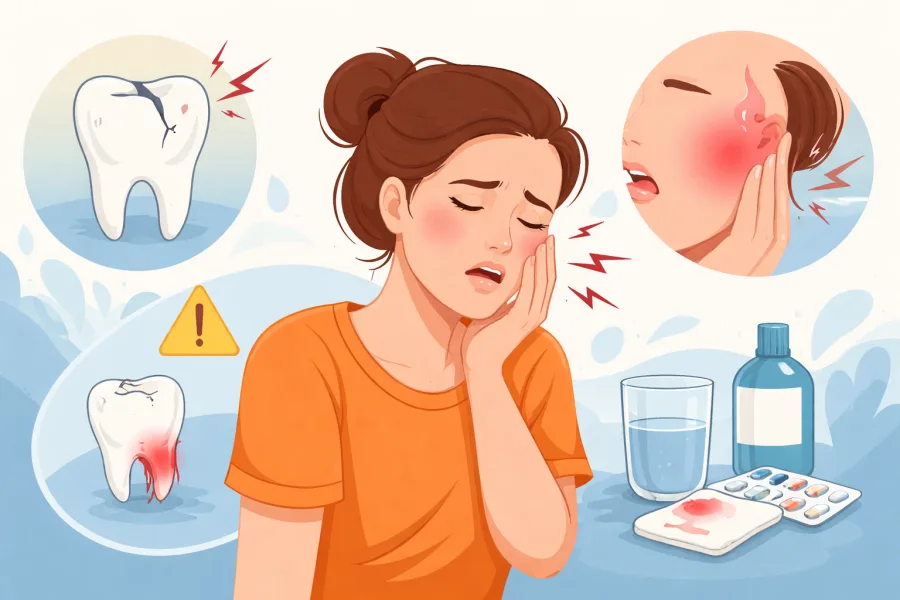
Dental emergencies rarely announce themselves during convenient office hours. A sharp crack during dinner, an elbow to the jaw on the basketball court, or an escalating throbbing that keeps you awake at 3:00 AM forces an immediate question: can this wait until Monday morning, or does it require emergency surgical intervention right now?
Understanding the distinction between routine dental discomfort and a true surgical emergency protects not only your teeth, but also your jawbone and general systemic health. When oral tissues experience severe trauma, vascular hemorrhage, or advancing bacterial invasion, minutes and hours matter. Here is how board-certified oral surgeons evaluate and triage acute dental conditions.
1. The Urgency Spectrum: Urgent Care vs. Elective Scheduling
Patients often hesitate to call an emergency surgeon because they worry about overreacting to tooth pain. Conversely, others ignore red-flag symptoms until an infection threatens their airway. Categorizing symptoms into distinct clinical tiers brings clarity:
| Emergency Category | Common Clinical Examples | Recommended Timeframe |
|---|---|---|
| Immediate Surgical Emergency (Tier 1) | Completely avulsed (knocked-out) permanent tooth, active hemorrhage from the mouth that saturates gauze in minutes, fractured jaw bones, or facial swelling impairing breathing or swallowing. | Immediate (within 30 to 60 minutes) |
| Urgent Dental Condition (Tier 2) | Severe throbbing toothache keeping you awake, acute wisdom tooth pericoronitis with restricted mouth opening (trismus), a fractured tooth with visible pink nerve tissue exposed, or a dislodged crown causing acute pain. | Same-day surgical or dental visit (within 12 to 24 hours) |
| Non-Urgent Dental Issue (Tier 3) | Minor enamel chip with no bleeding or nerve sensitivity, lost filling with mild temperature twinges, dull food-trap gum soreness, or loose bracket on an orthodontic wire. | Schedule during regular business hours within several days |
2. Time-Critical Dental Emergencies: The First 60 Minutes
Certain physical traumas create biological countdowns. If managed properly within the first hour, natural dentition and alveolar bone can often be preserved. If mismanaged, permanent tooth loss and complex bone atrophy result.
- Avulsed (Knocked-Out) Permanent Tooth: When an adult tooth is ripped entirely from its socket, the microscopic periodontal ligament (PDL) cells clinging to the root begin to die from dehydration within 30 minutes. Never touch the root surface; handle the tooth strictly by the smooth white crown. Gently rinse debris with cold milk or saline (never scrub or use tap water), and if possible, gently slip the tooth back into its socket. If you cannot reinsert it, store it immersed in cold milk or a commercial cell preservation fluid (Hank's Balanced Salt Solution) and arrive at our surgical office within 60 minutes for splinting.
- Uncontrolled Post-Surgical Bleeding: Light pink oozing mixed with saliva is normal after oral surgery. However, steady dark red pooling or liver-like gelatinous blood clots filling the mouth indicate persistent active bleeding. Firm pressure with a damp gauze pad or a steeped black tea bag (tannic acid promotes local vasoconstriction and clotting) held constantly for 30 minutes without peeking should halt capillary bleeding. If blood continues to stream out, immediate surgical electrocautery or hemostatic suturing is required.
- Severe Tooth Fractures Involving the Pulp: If trauma snaps a tooth across the mid-crown and you observe a red or pink bleeding dot in the center of the fracture, the vascular nerve pulp is completely exposed. Without immediate coverage or pulpal therapy, bacterial invasion quickly causes agonizing pulpal necrosis and periapical abscess formation.
3. Acute Wisdom Tooth Pericoronitis and Deep Space Infections
One of the most frequent emergencies seen at Oral and Facial Surgery of Miami involves partially erupted mandibular third molars. When a lower wisdom tooth only partially clears the gum line, an operculum (a flap of fibrous gingival tissue) covers the rear of the crown.
This creates an ideal anaerobic incubator. Food particles and oral bacteria pack tightly under the flap where no toothbrush or floss can reach. What starts as mild gum soreness can rapidly mutate into an acute pericoronitis flare-up:
- Severe Trismus: The patient cannot open their mouth more than one or two centimeters because the infection inflames the adjacent medial pterygoid and masseter muscles.
- Radiating Dysphagia: Swallowing becomes intensely painful as inflammatory edema encroaches on the pharyngeal wall and tonsillar pillars.
- Systemic Toxicity: The patient develops a fever over 101 degrees Fahrenheit, tender cervical lymphadenopathy under the jaw angle, and profound malaise.
Simply taking a standard antibiotic pill rarely solves pericoronitis. Without surgical debridement, copious antimicrobial irrigation, and definitive removal of the impacted tooth once the acute flare settles, recurring episodes will progressively damage the neighboring second molar and risk deeper fascial space cellulitis.
4. Emergency Surgical Care at Oral & Facial Surgery of Miami
When a dental emergency strikes, walking into a hospital emergency department often results in long waits, a basic prescription for penicillin, and a referral to see a dental specialist later. Hospital ER doctors are experts in trauma resuscitation, but most do not have the specialized dental equipment or training to extract teeth, splint avulsions, or treat tooth fractures.
At our practice, board-certified oral and maxillofacial surgeon Dr. Johanny Caceres maintains dedicated surgical capability for urgent dental and facial conditions:
- In-Office 3D Cone Beam CT: Rapid three-dimensional reconstruction to diagnose hidden root fractures, alveolar wall fractures, and exact abscess margins.
- Full In-Office Anesthesia & Sedation: Severe dental emergencies are painful and stressful. Dr. Caceres provides safe IV sedation so acute extractions, incisions, and suturing are completed comfortably.
- Comprehensive Surgical Scope: From emergency wisdom tooth extractions to facial laceration repairs and complex bone preservation, we provide definitive resolution under one roof in Coral Gables.
If you are unsure whether your symptoms constitute a dental emergency, do not wait for pain or swelling to escalate. Call our surgical team directly at (305) 552-1193 or request an urgent surgical appointment.