
Laser-Assisted Apicoectomy: Future of Periapical Surgery?
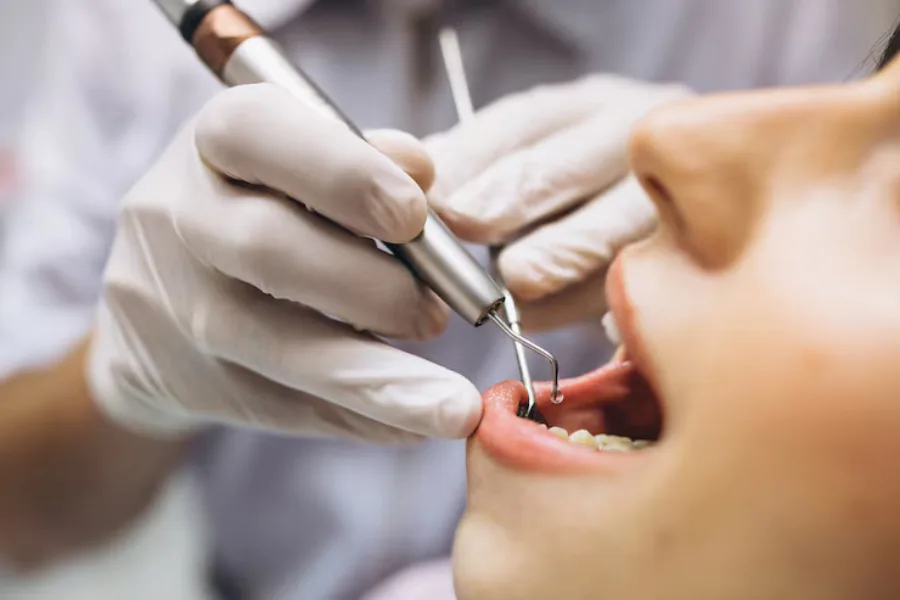
When a conventional endodontic root canal therapy fails to resolve persistent periapical inflammation, patients often face the difficult prospect of tooth extraction. Fortunately, microsurgical root end resection, clinically known as an apicoectomy, offers a proven way to preserve the natural tooth structure. In modern surgical practice, the integration of advanced dental laser technology has elevated standard periapical procedures, providing unparalleled precision, exceptional bacterial decontamination, and accelerated tissue healing.
At Oral and Facial Surgery of Miami, board-certified oral and maxillofacial surgeon Dr. Johanny Caceres performs advanced periapical surgeries to treat complex root apex infections. Understanding how laser-assisted apicoectomy functions, how it compares to conventional burs and ultrasonic tips, and what to expect during recovery allows South Florida patients to make confident decisions regarding tooth preservation.
The Surgical Mechanics of Root End Apicoectomy
A root canal can fail when complex microscopic anatomy, such as lateral accessory canals or calcified apical deltas, harbors persistent anaerobic bacteria. Over time, these bacteria release toxins into the periapical tissue, forming a localized abscess or granuloma that resorbs cortical bone at the root tip. Because repeating standard coronal retreatment cannot always reach these apical ramifications, surgical access through the gum tissue is necessary.
During an apicoectomy, the surgeon reflects a delicate mucoperiosteal flap, creates a small osteotomy in the alveolar bone to expose the diseased root tip, and resects the apical three millimeters of the root. This specific apical segment contains the vast majority of anatomical arborizations responsible for persistent infection. Once resected, the root canal terminus is prepared, sterilized, and hermetically sealed with a biocompatible retrofill material such as mineral trioxide aggregate to prevent bacterial recontamination.
The Clinical Advantages of Laser-Assisted Surgical Energy
Traditional apicoectomies rely on rotary surgical burs or high-frequency ultrasonic retro-tips. While effective, mechanical vibration can induce microscopic dentinal microfractures that compromise long-term apical seal integrity. Incorporating erbium hard-tissue lasers or specialized diode systems eliminates mechanical friction, allowing smooth, non-contact ablation of diseased bone and root structure without thermal damage to adjacent periodontal fibers.
In addition, laser wavelengths provide powerful photoacoustic debridement and bactericidal decontamination within complex dentinal tubules. The laser energy vaporizes bacterial biofilms and neutralizes resistant pathogens such as Enterococcus faecalis at depths conventional chemical irrigants cannot reach. Simultaneously, the coagulative properties of laser wavelengths seal microscopic capillaries, providing the surgeon with a dry, bloodless surgical field for flawless retrofill placement.
| Clinical Feature | Conventional Rotary or Ultrasonic Apicoectomy | Laser-Assisted Apicoectomy |
|---|---|---|
| Bacterial Sterilization | Mechanical clearing with standard chemical rinses | Deep photoacoustic bactericidal decontamination |
| Risk of Dentinal Microfractures | Moderate risk due to mechanical vibrations | Negligible risk due to non-contact laser energy |
| Hemostatic Control | Requires chemical hemostatic agents and sponges | Immediate vascular coagulation and dry surgical field |
| Post-Operative Discomfort | Standard swelling and inflammatory response | Reduced inflammation and faster cellular healing |
Patient Healing and Post-Surgical Recovery Timeline
Because laser energy minimizes trauma to adjacent soft tissues and periosteum, patients typically experience substantially less swelling and postoperative discomfort compared to aggressive rotary bone removal. Most individuals resume light daily tasks within twenty-four to forty-eight hours. Mild localized tenderness is easily controlled with over-the-counter pain relievers such as ibuprofen and acetaminophen.
During the first week of recovery, maintaining meticulous yet gentle oral hygiene is vital. Patients should rinse gently with warm salt water, avoid disturbing the surgical incision with toothbrush bristles, and consume soft, nutritious foods. Radiographic bone regeneration begins within several weeks, with complete trabecular bone infill typically visible on follow-up cone beam CT scans within six to twelve months.
Specialized Periapical Care at OFS Miami
Choosing between an apicoectomy and tooth extraction followed by a dental implant depends on multiple clinical factors, including remaining coronal tooth structure, periodontal stability, and root anatomy. When a natural tooth has adequate bone support and a high-quality existing crown, an apicoectomy represents an exceptional, cost-effective treatment that saves the natural dentition.
At Oral and Facial Surgery of Miami, Dr. Johanny Caceres utilizes advanced 3D diagnostic imaging and microsurgical techniques to determine the ideal course of care for failing root canals. If you are experiencing recurrent tenderness, gum swelling, or a periapical abscess beneath an existing root canal, contact our surgical office at (305) 552-1193 or schedule an appointment online.