
Signs You Might Need a Root Canal
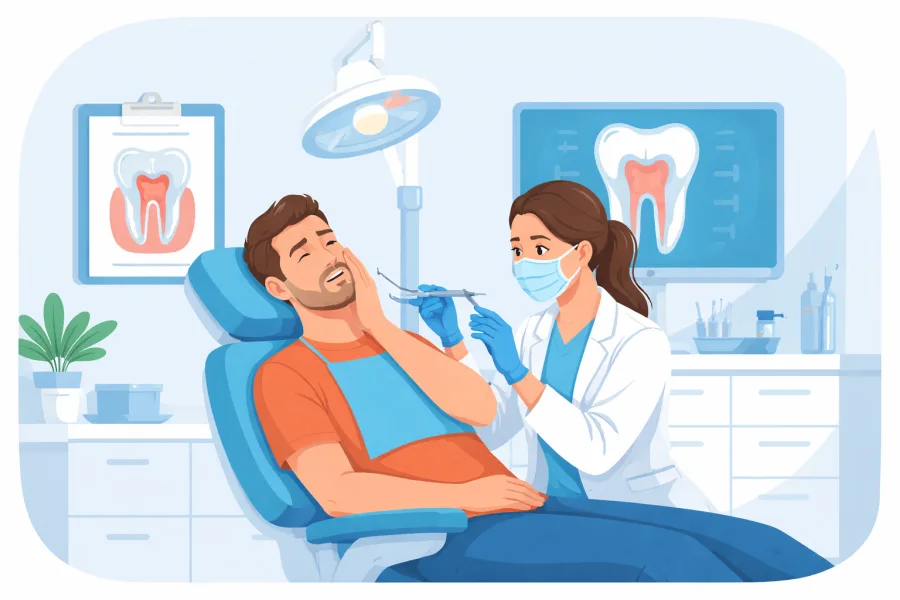
Severe dental pain is one of the most distressing sensations a person can encounter, often developing rapidly and disrupting sleep, work, and everyday life. When deep tooth decay, physical trauma, or repeated dental restorations compromise the innermost layer of a tooth, the living neurovascular pulp becomes inflamed or infected. Recognizing the specific biological warning signs that indicate internal pulpal death allows patients to seek timely intervention before localized infection spreads into the supporting alveolar bone.
At Oral and Facial Surgery of Miami, board-certified oral and maxillofacial surgeon Dr. Johanny Caceres evaluates patients with advanced dental pathology, failing endodontic therapies, and non-restorable teeth. Understanding the diagnostic signs of pulpal necrosis and knowing when a tooth can be saved with an endodontic root canal versus when surgical extraction is required helps South Florida patients make informed healthcare decisions.
The Physiology of Pulpal Infection and Persistent Pain
Beneath outer enamel and porous dentin lies the dental pulp chamber, containing sensory nerves, arterioles, venules, and lymphatic vessels. When bacterial toxins infiltrate the pulp chamber through deep carious lesions or structural cracks, the tissue mounts an inflammatory defense. Because the pulp is encased within rigid mineralized walls, expanding inflammatory edema increases internal hydrostatic pressure, compressing sensory nerve fibers.
This intense pressure manifests as spontaneous, persistent throbbing pain that frequently worsens when lying flat or during physical activity. Unlike transient dentinal sensitivity caused by mild gum recession, pulpal pain does not dissipate quickly. Lingering sensitivity to hot or cold temperatures that continues for thirty seconds or longer after removing the stimulus indicates irreversible pulpitis, signaling that the internal pulp tissue cannot recover on its own.
Visible Clinical Red Flags: Fistulas, Discoloration, and Swelling
When irreversible pulpitis progresses without treatment, the neurovascular tissue eventually undergoes complete necrosis. In some cases, the acute throbbing temporarily subsides as nerve endings die, leading patients to falsely assume the problem has resolved. However, anaerobic bacteria multiply within the dead canal space and migrate through the apical foramen into the surrounding jawbone.
This periapical infection generates localized bone resorption and purulent exudate. A common sign of this stage is a parulis, colloquially called a gum boil or fistula, which resembles a small pimple on the gum tissue near the infected root tip. Patients often notice intermittent drainage of foul-tasting fluid that provides temporary pressure relief. In addition, internal pulpal hemorrhage causes the compromised tooth to darken, turning a distinctive grey, brown, or purplish hue compared to adjacent healthy teeth.
| Clinical Symptom | Underlying Pathology | Endodontic Prognosis | Alternative Surgical Solution |
|---|---|---|---|
| Prolonged Thermal Sensitivity | Irreversible pulpitis with microvascular hyperemia | High success with conventional root canal | Extraction only if tooth structure is destroyed |
| Apical Parulis (Gum Boil) | Chronic periapical abscess draining through cortical bone | Favorable if sufficient coronal dentin remains | Apicoectomy or surgical extraction with bone graft |
| Vertical Root Fracture | Structural split extending subgingivally along root axis | Hopeless prognosis (cannot be sealed) | Surgical tooth extraction and dental implant |
| Severe Tooth Mobility | Extensive periodontal and apical bone destruction | Poor long-term retention | Surgical removal, ridge augmentation, implant |
Root Canal vs Surgical Extraction: Determining Restorability
Saving your natural tooth via a root canal procedure is always the primary objective when adequate healthy tooth structure remains. During a root canal, an endodontist or general dentist removes the necrotic pulp, cleanses and shapes the internal canal anatomy, and seals the space with biocompatible gutta-percha before placing a protective crown.
However, not every infected tooth can be saved. If extensive decay extends below the alveolar bone crest, the tooth possesses a vertical root fracture, or severe bone loss leaves the tooth hypermobile, attempting endodontic therapy often results in rapid failure. In these non-restorable cases, surgical extraction combined with socket preservation bone grafting and a permanent dental implant provides a more predictable, lasting functional outcome.
Comprehensive Oral Surgery Solutions in Coral Gables
Navigating dental infections requires careful clinical diagnostic assessment, high-resolution radiographic imaging, and expert restorative evaluation. If you are experiencing sharp bite pain, localized gum swelling, or persistent throbbing, seeking prompt professional attention shields you from acute facial space infections and irreversible bone loss.
At Oral and Facial Surgery of Miami, Dr. Johanny Caceres works collaboratively with general dentists and endodontists across South Florida to deliver optimal outcomes. Whether your tooth requires an apicoectomy to eliminate persistent apical infection or a gentle surgical extraction with immediate dental implant placement, our surgical team is here to help. Contact our office at (305) 552-1193 or book your consultation online.