
Is It Wisdom Tooth Pain or Just a Toothache? Here’s How to Know
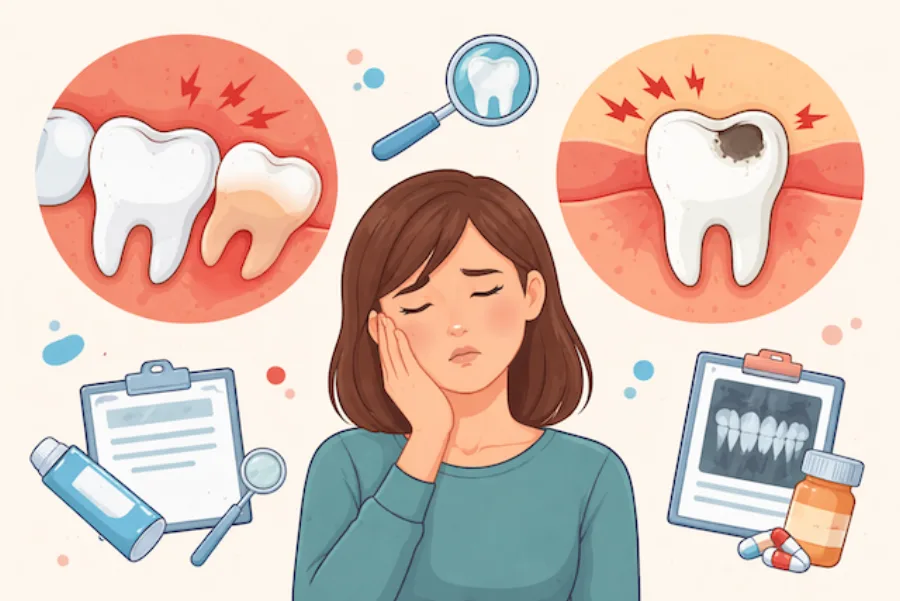
When oral pain strikes, distinguishing between a routine toothache and developing wisdom tooth complications is critical for receiving proper care. Because cranial nerves innervate teeth and jawbones through shared sensory pathways, intense discomfort in the back of your mouth can feel remarkably similar whether it originates from a deep cavity in a second molar or an impacted third molar beneath your gum line. Misinterpreting the source can result in ineffective remedies and progressive damage.
At Oral & Facial Surgery of Miami, board-certified oral and maxillofacial surgeon Dr. Johanny Caceres routinely diagnoses patients struggling with severe posterior jaw discomfort. Differentiating whether your symptoms stem from localized pulpal inflammation or mechanical third molar impaction allows for targeted treatment, saving adjacent teeth and restoring daily comfort.
1. Anatomical Origins: Pulpal Tooth Decay vs. Third Molar Retromolar Impaction
A classic dental toothache typically originates inside an erupted tooth (such as an incisor, premolar, or first molar). Enamel and dentin erosion from bacterial plaque allows acid to breach the pulp chamber, the vascular and neural core of the tooth. This initiates pulpitis, where the dental nerve swells within rigid mineralized walls. The pain is usually strictly pinpointed to that single tooth and responds dramatically to thermal stimuli such as cold water or hot coffee.
Conversely, wisdom tooth pain arises from an entirely different anatomical mechanism. Third molars are the last teeth to erupt, typically emerging between ages 17 and 25. Because the modern jawbone rarely possesses sufficient alveolar length to accommodate them, these teeth frequently become impacted against dense mandibular bone or the adjacent second molar. The resulting discomfort is not merely a nerve cavity ache. It is an expansive musculoskeletal pressure caused by bone remodeling, soft tissue displacement, and pericoronal inflammation in the retromolar trigone.
2. Symptom Clustering: Localized Sensitivity vs. Radiating Craniofacial Pressure
Paying close attention to how and where your discomfort presents provides valuable diagnostic clues. While standard tooth decay triggers sharp pain during biting or sugary meals, wisdom tooth pathology typically creates a dull, throbbing ache that radiates across the entire side of your face. Because lower third molars sit adjacent to the inferior alveolar nerve canal, impaction pressure regularly irradiates toward the ear canal, temple, and angle of the jaw.
Furthermore, partially erupted wisdom teeth produce pericoronitis (an infection of the gum tissue hood covering the crown). This manifests with distinct soft tissue symptoms that never occur with a typical enamel cavity, including tender submandibular lymph nodes, restricted mouth opening (trismus), a foul metallic taste, and localized swelling at the extreme back corner of the dental arch.
| Diagnostic Criteria | Standard Dental Toothache (Caries / Pulpitis) | Wisdom Tooth Impaction / Pericoronitis |
|---|---|---|
| Primary Location | Directly isolated to a single visible tooth | Deep posterior jaw, radiating to ear, temple, and neck |
| Thermal Response | Sharp, lingering sensitivity to hot, cold, or sweets | Minimal thermal response unless root resorption has breached adjacent molar |
| Soft Tissue Involvement | Generally normal gums until an apical abscess forms at root tip | Swollen, erythematous opercular gum flap behind last visible molar |
| Jaw Mobility Impact | Full range of mouth opening remains unobstructed | Trismus common; stiffness and pain when opening wide or chewing |
| Clinical Solution | Dental filling, dental crown, or endodontic root canal therapy | Surgical extraction and debridement by an oral and maxillofacial surgeon |
3. Clinical Risks of Delayed Diagnosis: Pulp Necrosis vs. Structural Root Resorption
Ignoring either condition carries substantial health risks, but the anatomical consequences diverge significantly. If an ordinary cavity is neglected, bacterial infection advances through the root apex, destroying the internal nerve and causing an acute periapical abscess that may eventually require tooth extraction or root canal treatment.
With impacted wisdom teeth, delayed intervention endangers not just the third molar, but adjacent healthy teeth as well. A mesioangular wisdom tooth (tilted forward at a 45-degree angle) constantly drives its crown into the distal root trunk of the neighboring second molar. This mechanical friction dissolves the protective enamel and cementum, producing external root resorption. By the time a patient experiences noticeable pain, both the wisdom tooth and the essential second molar may be irreparably compromised. In other cases, unerupted follicles form expanding dentigerous cysts, hollowing out the mandibular jawbone.
4. Advanced Diagnostics and Specialized Surgical Care at OFS Miami
Because visual examination alone cannot reveal what occurs beneath the cortical bone plate, comprehensive imaging is vital. At Oral & Facial Surgery of Miami, Dr. Johanny Caceres utilizes 3D Cone Beam Computed Tomography (CBCT) to evaluate the complete spatial relationship between your third molars, the roots of neighboring second molars, and critical neurovascular structures such as the inferior alveolar canal.
If your pain stems from an ordinary restorative issue, we coordinate closely with your general dentist for fillings or endodontic therapy. However, if third molar impaction, pericoronitis, or crowding is the primary cause, surgical extraction under comfortable outpatient IV sedation provides a permanent cure. Removing the problematic wisdom tooth eliminates retromolar bacterial niches, alleviates jaw strain, and protects your entire dental arch from progressive misalignment and root resorption.
Do not wait for intermittent posterior jaw pain to escalate into a severe infection or permanent molar damage. Contact our OFS Miami surgical practice today at (305) 552-1193 or book your consultation online for an accurate diagnosis and compassionate treatment.