
Why Wisdom Tooth Pain Gets Worse at Night
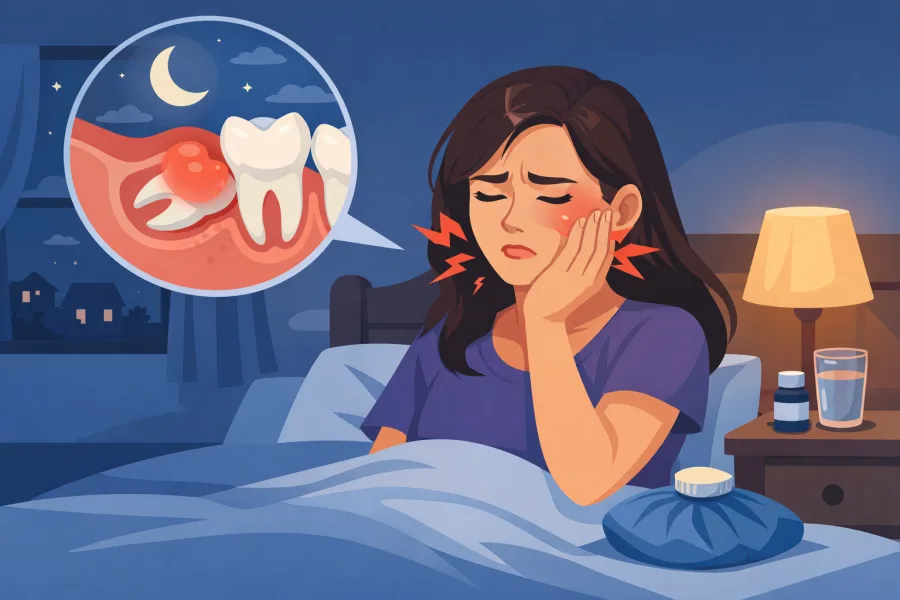
You may manage your day with manageable, dull soreness in the back of your jaw, only to find yourself jolted awake at 2:00 AM by severe, throbbing pain. This nocturnal exacerbation is one of the most consistent patterns observed in third molar complications. Patients frequently wonder whether they are imagining the heightened severity or if something physiological changes after nightfall. The reality is that human biology, posture, and neurological perception conspire to intensify dental inflammation during sleep.
At Oral & Facial Surgery of Miami, board-certified oral and maxillofacial surgeon Dr. Johanny Caceres frequently consults with sleep-deprived patients seeking relief from agonizing nighttime wisdom tooth flare-ups. Understanding the anatomical and circadian drivers behind nighttime toothaches is the first step toward reclaiming restorative sleep and resolving the underlying surgical issue.
1. Hemodynamic Shifts: Cephalic Vascular Pressure in the Supine Position
The most powerful physical driver of nighttime dental pain is simple gravity. Throughout the daylight hours, when you sit, stand, and move about upright, gravity draws venous blood downward away from the head and toward the extremities. When you recline flat on a mattress or pillow, your cardiovascular system redistributes systemic arterial and venous fluids horizontally.
This supine positioning increases cephalic hydrostatic pressure, dramatically elevating blood flow to the microvasculature of the head and jaws. In a healthy oral cavity, this pressure change is imperceptible. However, surrounding an impacted wisdom tooth or inside an actively inflamed opercular gum pocket (pericoronitis), the local tissues are already engorged with inflammatory exudate and dilated capillaries. The sudden surge in cranial blood volume exerts intense hydraulic pressure against rigid bony walls and sensitive nerve endings, converting a quiet daytime ache into an intolerable, synchronized vascular throb.
2. Neurosensory Dynamics: Circadian Cortisol Rhythms and Reduced Distraction
Human endocrinology also plays an influential role in nocturnal symptom severity. The body operates on a circadian hormonal schedule governed by the hypothalamus. Cortisol, your body's primary endogenous anti-inflammatory hormone, peaks in the early morning hours to prepare you for wakefulness and naturally declines to its lowest baseline level late at night. As systemic cortisol levels drop around midnight, systemic anti-inflammatory suppression weakens, allowing localized inflammatory cytokines (interleukins and prostaglandins) to surge around the impacted tooth.
Compounding this biochemical change is the dramatic reduction in environmental sensory input. During active daylight hours, visual stimulation, conversations, work tasks, and physical mobility occupy cognitive bandwidth, dampening peripheral pain awareness. In the silence of a dark bedroom, external sensory gating vanishes. Your central nervous system focuses intensely on internal nociceptive signals, causing the brain to amplify each pulse of wisdom tooth inflammation.
| Physiological Trigger | Biological Mechanism | Targeted Nighttime Countermeasure |
|---|---|---|
| Supine Posture | Elevated cephalic blood pressure expands inflamed facial capillaries | Elevate head with two or three pillows to maintain gravity-assisted venous drainage |
| Circadian Cortisol Dip | Drop in natural anti-inflammatory hormones allows cytokine cascade | Administer long-acting NSAIDs (ibuprofen) 45 minutes prior to bedtime |
| Nocturnal Bruxism | Subconscious clenching exerts up to 250 pounds of force onto erupting molars | Warm facial compress before sleep; gentle jaw massage to release masseter spasm |
| Trapped Food Debris | Anaerobic bacteria ferment carbohydrates under opercular flap during sleep | Warm saline rinse or chlorhexidine irrigation directly before turning out lights |
| Definitive Resolution | Impaction and chronic pericoronitis remain mechanically trapped | Surgical extraction by a board-certified oral surgeon |
3. Nocturnal Bruxism, Clenching, and Masticatory Muscle Overload
Another major cause of midnight agony is sleep-related bruxism (involuntary clenching and grinding). Many patients subconsciously clench their jaws when experiencing dental irritation or generalized stress. While daytime biting forces rarely exceed 50 to 70 pounds per square inch, nocturnal clenching episodes can exert upwards of 250 pounds of direct vertical force.
When an impacted or partially erupted wisdom tooth is already pressing against adjacent roots or tilting toward the cheek mucosa, this enormous mechanical force drives the upper and lower teeth into direct conflict. The surrounding periodontal ligament, rich in pain receptors, becomes acutely traumatized. By the time you wake up, the temporalis and masseter muscles are in intense spasm, resulting in widespread temple headaches, ear pain, and profound posterior jaw stiffness.
4. Immediate Nighttime Relief Protocols and Definitive Coral Gables Care
If you are enduring an agonizing night before you can reach an oral surgeon, specific supportive measures can help calm your symptoms. First, elevate your torso and head with two to three pillows or sleep in a recliner to prevent fluid pooling in your facial tissues. Second, rinse thoroughly with warm salt water (one-half teaspoon of salt in eight ounces of warm water) to draw out bacterial fluid and dislodge trapped food particles from around the gum flap. Third, apply a targeted anti-inflammatory regimen like ibuprofen under medical advice. Avoid placing aspirin directly against the gum tissue, as this causes painful chemical mucosal burns.
While these palliative measures can help you survive the night, they do not resolve the structural pathology. Severe nighttime pain is a clear clinical warning sign that an impacted tooth has caused active pericoronitis, bone resorption, or deep decay. At Oral & Facial Surgery of Miami, Dr. Johanny Caceres provides comprehensive clinical evaluations using high-resolution 3D CBCT imaging to identify the precise anatomical cause. Under gentle, customized IV sedation, third molar extraction provides definitive, permanent relief from nocturnal throbbing.
Do not spend another night suffering in pain. Contact our surgical team today at (305) 552-1193 or book your consultation online to restore uninterrupted sleep and protect your oral health.