
Wisdom Tooth Removal During Pregnancy: Is It Safe?
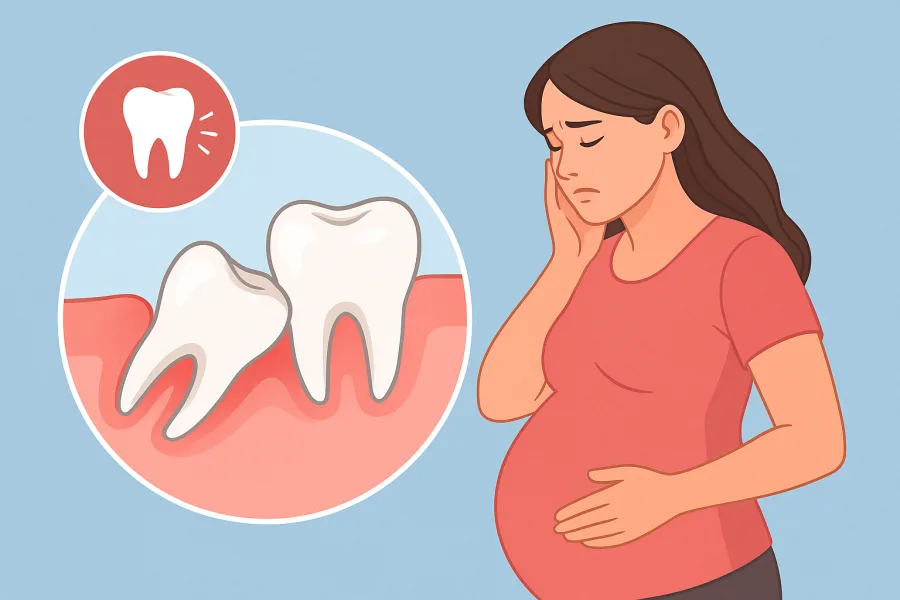
Experiencing acute wisdom tooth pain while pregnant introduces unique concerns for expectant mothers. Balancing maternal comfort against fetal health requires meticulous clinical decision-making. While elective cosmetic and surgical procedures are typically deferred until after delivery, untreated severe dental infections pose genuine risks to both mother and baby.
At Oral and Facial Surgery of Miami, board-certified oral and maxillofacial surgeon Dr. Johanny Caceres collaborates closely with your obstetrician. Following evidence-based guidelines from the American College of Obstetricians and Gynecologists (ACOG) and the American Dental Association (ADA), our practice provides safe, specialized care for expectant mothers in Coral Gables.
Hormonal Shifts, Pregnancy Gingivitis, and Wisdom Teeth
During pregnancy, dramatic increases in circulating estrogen and progesterone alter the vascular response of gingival tissues. This hormonal surge frequently precipitates pregnancy gingivitis, characterized by hyper-reactive, swollen gum tissues that bleed readily upon brushing.
If you have a partially erupted wisdom tooth, the operculum flap becomes especially vulnerable to acute inflammation. Plaque and food trapped beneath this swollen mucosal flap can rapidly trigger pericoronitis. If left untreated, oral bacteria and systemic inflammatory mediators can enter the maternal bloodstream, elevating the risk of systemic bacteremia and low birth weight.
| Trimester Window | Surgical Recommendation | Primary Anesthesia Approach | Maternal & Fetal Considerations |
|---|---|---|---|
| First Trimester (Weeks 1 to 13) | Avoid non-emergency surgery; manage with conservative local debridement | Local anesthesia with lidocaine only for urgent drainage | Critical organogenesis phase; minimize pharmacological exposure |
| Second Trimester (Weeks 14 to 27) | Safest window for necessary surgical extractions | Local anesthesia (Lidocaine 2% with 1:100,000 epinephrine) | Fetal organs fully formed; maternal positioning comfortable |
| Third Trimester (Weeks 28+) | Defer elective extraction until post-delivery if possible | Targeted local anesthesia for acute emergencies only | Avoid supine hypotensive syndrome; position on left side |
Trimester-Specific Surgical Timing and Safety Windows
Timing is everything when planning oral surgical procedures during pregnancy. The first trimester represents the phase of critical fetal organogenesis, when vital organs and structures are forming. Unless a mother presents with a spreading, life-threatening facial infection, surgical extractions are postponed during these initial twelve weeks.
The second trimester (weeks fourteen through twenty-seven) is widely recognized as the safest surgical window. During this phase, fetal organ development is complete, and the uterus has not expanded to the point of compromising maternal circulation. In the third trimester, prolonged supine positioning in a dental chair can compress the inferior vena cava, causing sudden drops in maternal blood pressure. When urgent surgery is necessary in late pregnancy, our surgical team tilts the chair to the left lateral decubitus position.
Maternal-Fetal Anesthesia and Medication Protocols
Protecting developing babies requires specialized pharmacological choices. For pregnant patients, intravenous deep sedation and general anesthesia are avoided for elective extractions. Instead, procedures are performed under profound local anesthesia using lidocaine with dilute epinephrine, an FDA Category B medication proven safe during gestation.
Digital diagnostic radiographs are performed only when strictly necessary to guide safe extraction, utilizing high-speed digital sensors, collimated beams, and protective double lead thyroid shields. Post-operative analgesics focus on acetaminophen, strictly avoiding nonsteroidal anti-inflammatory drugs (NSAIDs) like ibuprofen that can prematurely close the fetal ductus arteriosus. If antibiotics are required, pregnancy-safe penicillins, amoxicillin, or cephalosporins are prescribed.
Multidisciplinary Surgical Care at OFS Miami
At our practice, Dr. Johanny Caceres believes maternal health care requires collaborative medical planning. Prior to performing an extraction on an expectant patient, our team consults directly with your OB-GYN physician to align on surgical timing, vital sign stability, and post-operative medications.
our surgical suite provides a gentle, reassuring setting designed to minimize maternal stress and elevate comfort. By removing the source of severe dental infection safely, we safeguard both your well-being and the health of your baby.
Receive safe, coordinated oral surgical care during pregnancy. Contact Oral and Facial Surgery of Miami at (305) 552-1193 or request your maternal consultation online at our practice today.