
Signs It’s Time to Remove Your Third Molars
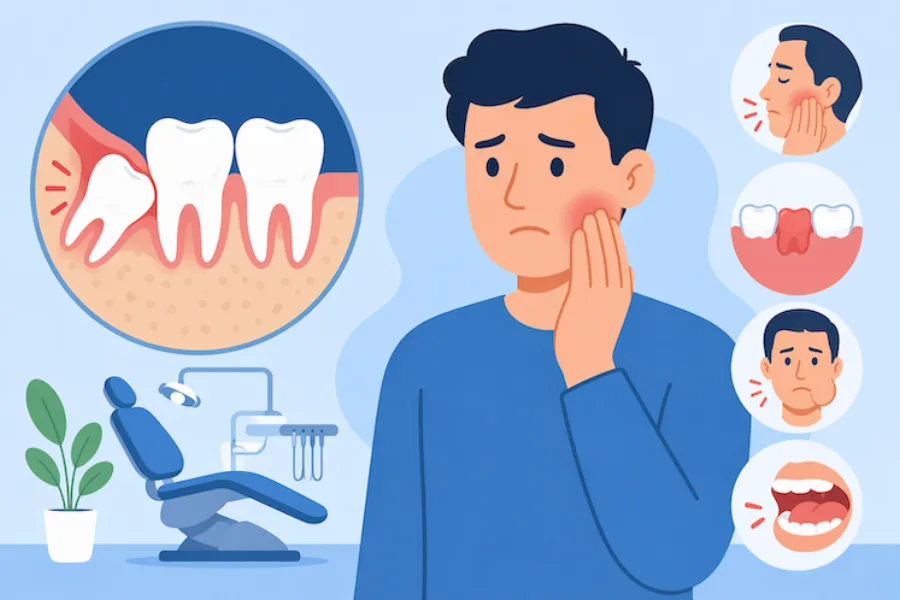
Third molars, commonly called wisdom teeth, are the final permanent teeth to develop, typically attempting to erupt between the ages of 17 and 25. Because human jawbones have evolved to be smaller than those of our ancestors, the dental arch rarely possesses adequate room to accommodate these four late arrivals. As a consequence, third molars frequently emerge sideways, remain trapped beneath the gum line, or only partially pierce through the bone.
At Oral and Facial Surgery of Miami, board-certified oral and maxillofacial surgeon Dr. Johanny Caceres emphasizes the importance of recognizing the subtle early indicators of third molar dysfunction. Catching these warning signs before severe infections or bone destruction take hold allows for conservative outpatient extraction under gentle IV sedation, sparing you emergency room visits and irreversible damage to neighboring teeth.
Primary Early Warning Signs of Problematic Third Molars
Many people expect a troubled wisdom tooth to scream with intense, unbearable agony right away. In clinical reality, third molars usually telegraph their failure to erupt through intermittent, low-grade symptoms that are easily overlooked or mistaken for simple gum irritation:
- Dull Posterior Aching: A persistent, throbbing sensation localized at the very rear corners of your upper or lower jaw, especially noticeable when chewing firm foods or resting at night.
- Pericoronal Gum Inflammation: Redness, tenderness, and swelling around the tissue flap covering a partially erupted tooth. This vulnerable condition, known as pericoronitis, traps food debris and anaerobic bacteria that cannot be cleaned with routine brushing.
- Foul Taste and Chronic Halitosis: A persistent unpleasant or salty taste in your mouth accompanied by bad breath that lingers even immediately after thorough brushing and mouthwash rinses. This indicates microscopic pus drainage from beneath inflamed gum tissue.
- Bite Tenderness on Adjacent Molars: Pressure against the second molars when your jaws close, making it feel as though your back bite no longer aligns comfortably.
| Symptom Category | Normal Eruption Pattern | Surgical Warning Sign |
|---|---|---|
| Gum Tissue Changes | Mild pink tightness as cusp breaks through smoothly | Puffy red operculum flap with purulent exudate and bleeding |
| Pain Quality | Mild teething ache resolving in 2 to 3 weeks | Deep bone throbbing radiating into ear, temple, or neck |
| Jaw Mobility | Full range of motion without stiffness | Trismus with inability to open mouth wider than two fingers |
| Second Molar Impact | Parallel emergence preserving healthy enamel contact | Mesioangular impaction causing interproximal decay and bone crater |
Referred Discomfort: Headaches, Earaches, and Jaw Stiffness
Because the sensory nerves of the lower jaw, upper jaw, ears, and temples are interconnected branches of the fifth cranial nerve (the trigeminal nerve), pain generated by a trapped third molar rarely stays contained to a single tooth. Patients routinely consult medical doctors for recurrent tension headaches, deep temple throbbing, or unexplainable ear fullness before discovering that an impacted wisdom tooth is the true culprit.
In addition, when acute inflammation irritates the nearby masseter and pterygoid muscles responsible for mastication, patients frequently develop trismus, a painful muscle contracture that severely restricts how wide they can open their mouth. If you experience morning jaw tightness, painful chewing, or difficulty yawning combined with posterior gum tenderness, the inflammatory cascade has already begun spreading into muscular fascial spaces.
Hidden Complications of Delayed Third Molar Extraction
Adopting a wait-and-see attitude until wisdom teeth cause agonizing emergency pain often leads to preventable structural oral damage. When third molars are not evaluated in a timely manner, several serious biological complications frequently occur:
- Adjacent Second Molar Destruction: Angled third molars push directly against the roots of healthy second molars. Over time, pressure leads to external root resorption and deep cervical decay that can necessitate root canal therapy or the eventual loss of both teeth.
- Dentigerous Cysts and Jaw Weakening: Every impacted tooth develops inside a fluid-filled sac called a dental follicle. When the tooth fails to erupt, this follicle can enlarge into a benign cyst that expands silently, eroding healthy mandibular bone and compromising structural jaw strength.
- Spreading Facial Cellulitis: A localized pericoronitis infection can breach tissue barriers, spreading bacteria into the submandibular and parapharyngeal spaces. This medical emergency causes visible neck swelling, fever, and airway compromise.
- Sinus Infiltration: Upper wisdom teeth develop directly below the maxillary sinus floor. Impaction or infection can penetrate the sinus membrane, triggering chronic sinusitis, nasal discharge, and facial pressure.
Comprehensive Diagnostic Evaluation and Surgical Care at OFS Miami
You do not have to wait until you are in severe distress to take control of your oral health. At our practice, Dr. Caceres utilizes low-dose 3D Cone Beam Computed Tomography (CBCT) imaging to visualize the exact spatial orientation, root curvature, and nerve proximity of your third molars before deciding on an intervention.
If extraction is indicated, our surgical facility provides a serene, comfortable environment equipped with advanced monitoring and gentle IV sedation. This approach ensures you sleep comfortably through the entire procedure and awaken with minimal memory of the surgery.
If you are noticing early signs of wisdom tooth tenderness, jaw stiffness, or gum swelling, schedule an evaluation today. Contact Oral and Facial Surgery of Miami at (305) 552-1193 or reserve your consultation online to protect your smile in Coral Gables.