
How Long Do Dental Implants Really Last?
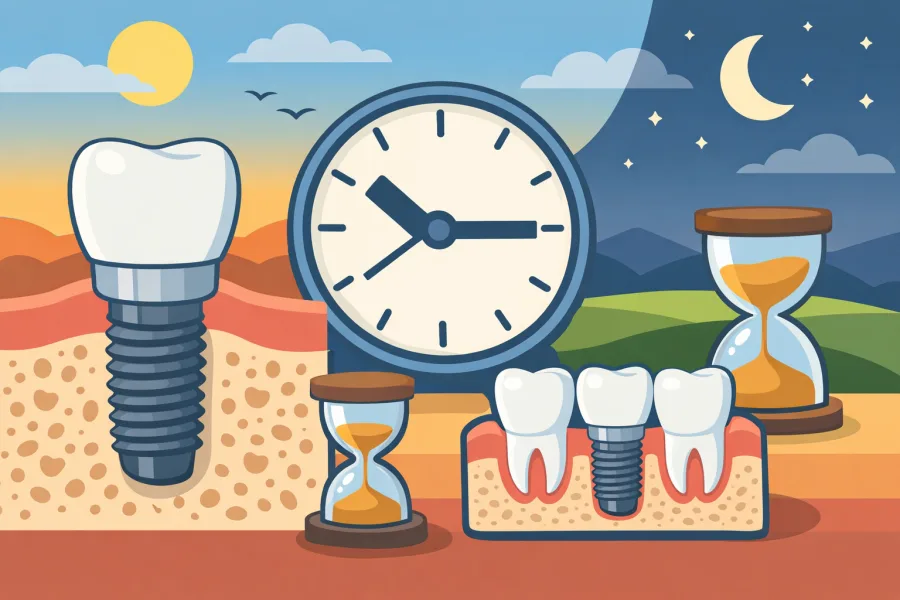
When considering dental implants to replace missing teeth, the most pressing question patients ask is practical: how long do they actually last? Given the financial and personal investment involved, you want to know whether you are choosing a permanent solution or a temporary fix that will require replacement in five or ten years.
Here is the clear answer from decades of oral surgery research: dental implants are designed to be a permanent, lifelong restoration. While traditional bridges and dentures require replacement every few years, a properly integrated dental implant has a documented clinical success rate above 95% to 98% and can easily last 25 years to a lifetime. To understand why implants last so long, it helps to look at the two distinct parts of an implant restoration and what keeps the foundation strong.
The Two-Part Structure: Post Lifespan vs. Crown Lifespan
Many patients assume a dental implant is a single piece. In reality, your restoration consists of two separate components, each with its own lifespan expectations:
- The Titanium Implant Post (Lifelong Foundation): The post is a medical-grade titanium screw surgically placed into your jawbone. Through the process of osseointegration, your living bone cells fuse directly to the post, treating it like a natural tooth root. Because titanium cannot develop cavities or decay, this internal foundation is permanent and rarely needs replacement.
- The Ceramic Crown (10 to 15+ Years): The custom crown is the visible tooth that attaches to the implant post via a small connector called an abutment. Made from high-strength monolithic zirconia or porcelain, crowns endure thousands of pounds of chewing friction each day. A crown typically lasts 10 to 15 years before normal wear may suggest replacement. Importantly, replacing an exterior crown is simple and leaves the bone-fused implant post untouched.
Implants vs. Bridges and Dentures: A Long-Term Comparison
Comparing implants with traditional restorative options highlights why implants deliver superior long-term value:
- Dental Bridges (Average Lifespan: 7 to 10 Years): A bridge relies on cutting down and crowning healthy neighboring teeth to anchor an artificial tooth. Over time, bacteria often penetrate the margins of these supporting teeth, causing decay beneath the bridge and requiring root canals or total replacement.
- Removable Dentures (Average Lifespan: 5 to 7 Years): Dentures sit directly on top of the gums without stimulating the underlying bone. As the jawbone naturally shrinks away beneath them, dentures become loose, click when speaking, and require frequent relining or replacement.
- Dental Implants (Lifelong): Implants stand 100% independently without touching adjacent teeth. By transmitting chewing forces directly into the jawbone, they prevent bone resorption and preserve your youthful facial contours.
The Key Factors that Determine Implant Longevity
While dental implants are engineered for durability, their long-term health depends on several essential clinical factors:
- Surgical Placement Precision: Proper angulation and depth ensure that biting forces are distributed evenly down the long axis of the bone. Board-certified oral surgeons use 3D cone-beam CT scans to map out bone density and nerve pathways before surgery.
- Protection Against Peri-Implantitis: Although implants cannot get cavities, the surrounding gum tissue can still harbor plaque bacteria. Daily brushing, water flossing, and professional cleanings keep the gum collar healthy and prevent bone loss.
- Tobacco and Nicotine Avoidance: Smoking restricts blood flow to the gums, doubling the risk of bone loss around implants. Ceasing tobacco use significantly improves tissue vitality.
- Night Guard Protection for Teeth Grinding: Heavy nighttime clenching (bruxism) places extreme lateral force on restorations. Wearing a custom night guard shields the crown and bone from micro-fractures.
Routine Maintenance: How We Protect Your Investment
Caring for an implant is virtually identical to caring for natural teeth. Visiting your dental team every six months allows for professional maintenance that extends the life of your smile:
- Specialized Cleaning Instruments: Hygienists use non-scratching titanium or ultrasonic scalers designed specifically to clean around implant crowns without scratching the smooth collar.
- Annual Radiographic Checks: Low-dose digital X-rays allow your doctor to measure crestal bone levels around the implant threads, catching any minor inflammation long before it causes symptoms.
- Bite Verification: Your surgeon checks your bite alignment to confirm that no unbalanced chewing pressure is straining the implant foundation.
Lifelong Dental Implant Expertise in Coral Gables
A dental implant is more than a replacement tooth; it is an investment in your health, nutrition, and self-confidence that can last the rest of your life. At Oral & Facial Surgery of Miami, board-certified oral and maxillofacial surgeon Dr. Johanny Caceres provides advanced, digitally guided implant surgery tailored to your unique bone anatomy.
If you are ready to explore permanent tooth replacement or want an expert evaluation for an existing restoration, our compassionate team is here to help. Call Oral and Facial Surgery of Miami today at (305) 552-1193 or schedule an implant consultation online to protect and restore your smile.
Dental implants remain the gold standard in restorative dentistry. With precise surgical placement, diligent daily hygiene, and routine clinical checkups, they provide a strong, natural-feeling bite that can comfortably serve you for decades to come.