
Smoking and Wisdom Tooth Recovery: Risks Explained
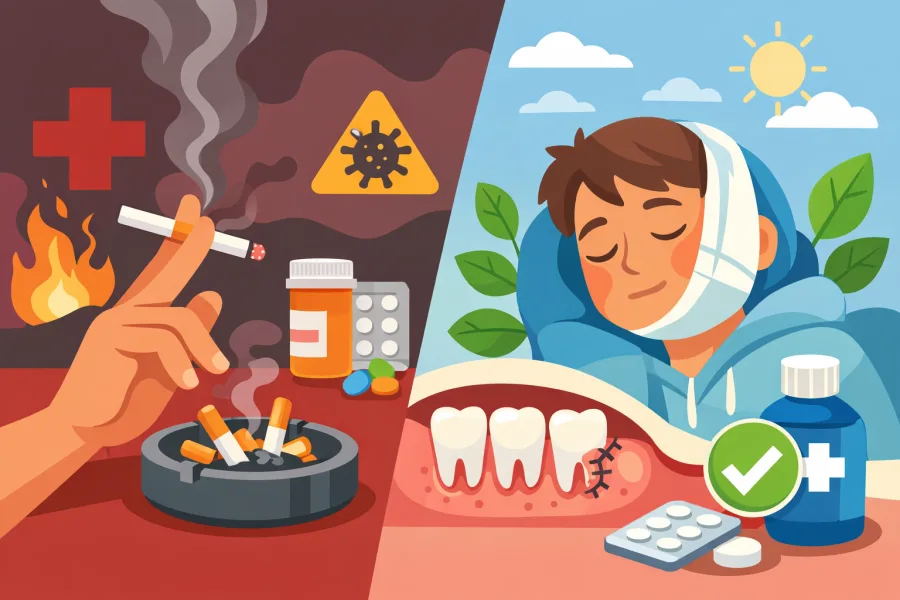
Undergoing wisdom tooth surgery requires careful attention to your body as delicate oral tissues repair themselves. For patients who smoke cigarettes, vape e-cigarettes, or consume cannabis products, managing nicotine cravings during post-operative recovery can feel challenging. However, inhaling smoke or chemical vapor during the immediate healing period is one of the most hazardous choices you can make after oral surgery, drastically raising the risk of agonizing complications.
At Oral and Facial Surgery of Miami, board-certified oral and maxillofacial surgeon Dr. Johanny Caceres prioritizes your comfort and seamless recovery. Understanding the biological and physical mechanisms through which smoking damages extraction sites empowers you to protect your healing blood clots, avoid dry sockets, and return to normal wellness quickly.
The Biological Impact of Nicotine and Smoke on Surgical Sockets
The harmful effects of smoking on surgical recovery stem from two distinct physiological insults: chemical toxicity and systemic vasoconstriction. When you inhale nicotine, it enters the bloodstream and triggers rapid constriction of microscopic peripheral blood vessels throughout your oral tissues. This reduced microvascular circulation starves the surgical socket of oxygen, immune antibodies, and vital nutrients essential for cell regeneration.
Simultaneously, carbon monoxide introduced from combustion binds to your hemoglobin, directly reducing oxygen saturation in circulating red blood cells. In addition, toxic combustion byproducts including cyanide, acrolein, and free radicals paralyze fibroblast cells and impair collagen synthesis. Deprived of oxygen and cellular fuel, socket healing stalls, leaving raw alveolar bone defenseless against oral bacteria.
| Inhalation Product | Primary Risk Mechanism | Dry Socket Risk Multiplier |
|---|---|---|
| Combustible Cigarettes | Intense physical suction, toxic heat, systemic vasoconstriction | Over 400% higher risk compared to non-smokers |
| Vape Pens & E-Cigarettes | Negative pressure suction, aerosol chemical irritation | 300% higher risk; suction dislodges protective clot |
| Cannabis (Smoked) | Deep inhalation suction, severe xerostomia (dry mouth) | Substantially elevated; dry oral environment inhibits healing |
| Transdermal Nicotine Patch | Systemic nicotine only; zero intraoral suction or heat | Safest nicotine bridge during the critical 72-hour window |
The Physics of Inhalation: Why Suction Dislodges Blood Clots (Dry Socket)
Beyond chemical toxicity, smoking introduces a mechanical hazard: negative intraoral pressure. Immediately following extraction, your body forms a delicate fibrin blood clot inside the empty bone socket. This clot serves as a living biological seal, protecting the exposed alveolar bone and sensory nerve endings while serving as the scaffolding for new gum and bone tissue.
When you draw on a cigarette, vape device, pipe, or drinking straw, your cheek muscles create strong negative suction inside your mouth. This suction acts like a vacuum, readily dislodging the fragile blood clot. Once the clot is pulled free, the patient develops alveolar osteitis, commonly called dry socket. Dry socket exposes bare bone directly to air, liquids, and oral bacteria, triggering severe, throbbing pain that radiates into the ear, jaw, and temple and does not respond to standard over-the-counter painkillers.
Vaping, E-Cigarettes, Marijuana, and Nicotine Patches: What Is Truly Safe?
Many patients ask whether switching from traditional tobacco cigarettes to electronic vape pens or cannabis products is safe after oral surgery. The clinical answer is straightforward:
- Vaping Is Not Safe: While vape devices eliminate tobacco tar, they still require strong inhalation suction that dislodges clots just as easily as traditional cigarettes. In addition, propylene glycol and concentrated nicotine aerosols irritate healing surgical margins.
- Cannabis Smoking Carries Identical Risks: Smoking marijuana involves deep, prolonged lung inhalations that generate high intraoral vacuum pressures. Additionally, THC induces significant dry mouth (xerostomia), depriving sockets of antibacterial saliva.
- Transdermal Patches as a Safer Bridge: If you struggle with severe nicotine withdrawal, transdermal nicotine patches applied to your arm or shoulder are far safer than inhaling smoke. Patches completely eliminate intraoral suction, hot smoke, and particulate irritants.
Safe Healing Timelines and Complication Management at OFS Miami
To protect your recovery, Dr. Johanny Caceres recommends abstaining from all smoking and vaping for a bare minimum of 72 hours following surgery, with five to seven days being the optimal window. The first three days are when your blood clot is at its most fragile state.
If you suspect you have dislodged a clot and notice an empty-looking socket accompanied by a foul taste, bad breath, and severe throbbing pain, do not suffer in silence. Contact our surgical center immediately. Dr. Caceres can gently clean the socket and place a soothing medicated dressing that relieves agonizing dry socket symptoms within minutes.
Take control of a smooth, painless surgical recovery. Contact Oral and Facial Surgery of Miami today at (305) 552-1193 or schedule your consultation online today.