
Oral Pathology: When a Biopsy Is Required and What to Expect
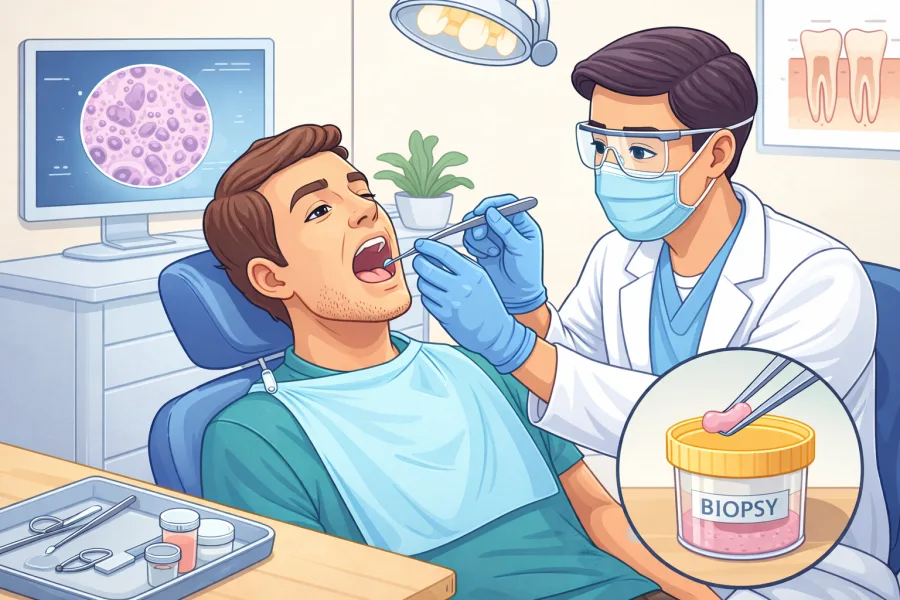
Hearing that you need an oral biopsy can trigger immediate anxiety. For most people, the word itself brings up worst-case fears about cancer. Here is the reality that oral surgeons see every single day: more than 80 percent of oral biopsies return completely benign.
Whether your family dentist noticed an unusual patch during your routine cleaning or you have felt a stubborn bump on your cheek for weeks, a biopsy is simply the gold standard diagnostic tool to get clear answers. It takes the guesswork off the table so you and your doctor know exactly what is going on.
The Two-Week Rule: When an Oral Sore Needs Evaluation
The tissue inside your mouth (the oral mucosa) is among the fastest-healing tissue in the human body. Common canker sores, cheek bites, and burns from hot food typically heal within 7 to 10 days. When an oral sore, ulcer, or swelling lasts longer than two full weeks without improving, that is the universal medical threshold to have an oral surgeon examine it.
The majority of persistent oral lesions turn out to be harmless, everyday conditions that simply require diagnosis or removal:
- Irritation Fibromas: Smooth, firm, pink nodules caused by chronic friction, such as repeatedly biting the inside of your cheek or irritation from a sharp tooth edge.
- Mucoceles: Harmless fluid-filled cysts that form on the lower lip or under the tongue when a tiny salivary duct is nicked or blocked.
- Oral Lichen Planus: A common, non-contagious inflammatory condition that creates lacy white streaks or red tender patches across the inner cheeks or gums.
- Leukoplakia and Erythroplakia: Flat white (leukoplakia) or velvety red (erythroplakia) patches on the tongue, floor of the mouth, or gums. While often benign, red patches in particular carry a higher risk of cellular changes (dysplasia) and always warrant a microscopic evaluation.
The Three Types of Oral Biopsies
Depending on the size, appearance, and location of the tissue, your oral surgeon will select the most gentle and precise approach:
- Excisional Biopsy (Complete Removal): Recommended for smaller lesions (typically under 1 centimeter), such as irritation fibromas or small lip mucoceles. The surgeon numbs the area, gently removes the entire growth, and closes the small site with one or two dissolvable stitches. This approach diagnoses and treats the issue in a single visit.
- Incisional Biopsy (Targeted Sample): Used when a suspicious patch or swelling is larger, widespread, or located in a sensitive area. The surgeon takes a small representative piece of the tissue for laboratory analysis so an accurate treatment plan can be designed before any larger procedure is considered.
- Fine Needle Aspiration (FNA): Applied primarily for deeper lumps under the jaw, in the neck, or within the major salivary glands. A very fine needle draws a tiny sample of fluid and cells without requiring an incision.
What the In-Office Appointment Actually Feels Like
Patients are often surprised by how straightforward an oral biopsy actually is. In our office, the procedure takes approximately 15 to 20 minutes from start to finish:
- Complete Numbing: Your surgeon applies a topical numbing gel, followed by a gentle local anesthetic (lidocaine), exactly like what you receive for a standard dental filling. You will feel a small pinch, and within minutes the entire area is completely numb.
- Painless Tissue Sampling: During the biopsy itself, you will feel slight pressure or vibration, but zero sharpness and zero cutting pain. For anxious patients, nitrous oxide (laughing gas) or light conscious sedation can also be arranged.
- Dissolvable Stitches: If needed, tiny stitches are placed that dissolve on their own over 5 to 7 days, meaning you do not have to return just to have sutures pulled out.
- Driving Home: Because local anesthesia does not impair your reflexes or thinking, you can drive yourself home immediately after your appointment and resume light, normal activities the same day.
Recovery and What Your Pathology Results Mean
Post-procedure healing inside the mouth is remarkably fast. Mild soreness can easily be managed with over-the-counter ibuprofen or acetaminophen for the first 24 to 48 hours. Stick to cool, soft foods (yogurt, smoothies, eggs, pasta) and avoid anything hot, spicy, crunchy, or acidic like citrus and tomatoes that might sting the site. Avoid drinking through straws or smoking, as both can disturb early healing.
The tissue sample is sent directly to a board-certified oral and maxillofacial pathologist, a medical specialist trained specifically in diseases of the mouth and jaws. Laboratory analysis takes roughly 5 to 7 business days.
Once the report arrives, your surgeon reviews every detail with you:
- Benign Diagnosis (Over 80% of Cases): The lesion was non-cancerous. If it was already fully removed during an excisional biopsy, no further treatment is needed beyond checking that the tissue has healed cleanly.
- Pre-Cancerous Changes (Dysplasia): The cells show abnormal growth patterns. Catching dysplasia early is the greatest benefit of an oral biopsy because it allows your surgeon to remove the remaining margins conservatively before the cells have any opportunity to become malignant.
- Malignancy: In the rare event that cancerous cells are found, early detection dramatically improves treatment success rates. Your surgeon immediately coordinates with an oncologic team to outline clear, decisive next steps.
Compassionate Oral Pathology Care at OFS Miami
Living with an undiagnosed mouth sore causes unnecessary worry and stress. At Oral & Facial Surgery of Miami, Dr. Johanny Caceres provides gentle, comprehensive oral pathology examinations in a calm, modern environment. If you or your dentist have noticed a spot that has lasted longer than two weeks, schedule a consultation with our team.
Call Oral and Facial Surgery of Miami today at (305) 552-1193 or request an appointment online to get definitive answers and peace of mind.