
Signs Your Wisdom Teeth Are Coming In
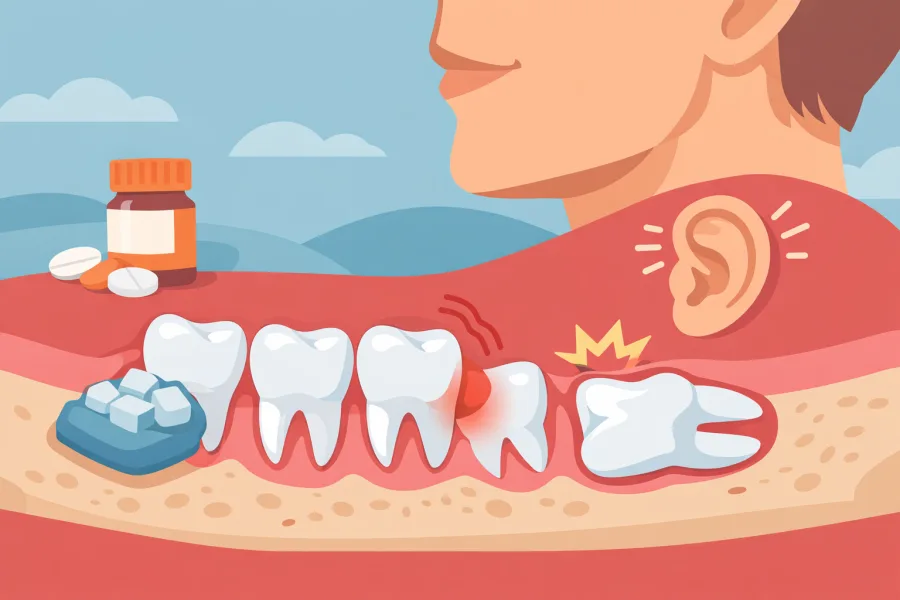
Third molars, commonly called wisdom teeth, typically attempt to emerge between the ages of 17 and 25. Because they are the final set of permanent teeth to arrive, they often find the jaw already occupied by fully developed dentition. Recognizing the physical sensations that signal their emergence helps teens and young adults take proactive action before painful complications take hold.
At Oral and Facial Surgery of Miami, board-certified oral and maxillofacial surgeon Dr. Johanny Caceres frequently evaluates erupting wisdom teeth. Understanding the difference between normal developmental pressure and problematic impaction protects your natural dental alignment and long-term oral wellness.
Primary Physical Symptoms of Erupting Third Molars
When wisdom teeth begin to move toward the surface of the gums, they exert physical force on surrounding bone and mucosal tissues. One of the earliest indicators is persistent tenderness or a dull ache at the back corners of the jaw. This ache often intensifies when chewing tough foods or brushing around the retro-molar pad.
As the tooth crown pierces the surface, you may feel a hard, sharp bump beneath the gum tissue. Surrounding gums often appear red, swollen, and puffy. In the upper jaw, erupting roots can push against the floor of the maxillary sinuses, causing nasal congestion, sinus pressure, or referred headaches around the eyes and temples. In the lower jaw, pressure against the dense mandibular bone can radiate toward the ear and neck.
| Eruption Phase | Physical Symptoms | Anatomical Event | Clinical Recommendation |
|---|---|---|---|
| Early Bone Passage | Deep, dull pressure at the angle of the jaw | Crown resorbs overlying bone to advance | Baseline 3D CBCT scan to assess growth vector |
| Gum Penetration | Redness, swollen gum flap, bleeding on brushing | Crown breaches mucosa, establishing an operculum | Warm saline rinses; monitor for pericoronitis |
| Active Eruption | Cheek irritation, bite misalignment, facial stiffness | Tooth pushes against adjacent second molar | Prompt extraction if arch width is deficient |
| Pathological Impaction | Severe throbbing, foul breath, jaw lock (trismus) | Trapped bacteria create acute localized infection | Urgent surgical intervention under IV sedation |
Differentiating Normal Eruption from Impaction
Some mild discomfort is expected whenever a large molar moves through tissue. However, healthy eruption should proceed steadily, culminating in a straight, fully functional tooth that aligns cleanly with the opposing bite.
Impaction occurs when physical barriers, such as adjacent tooth roots, insufficient jaw length, or dense cortical bone, block normal eruption. If a tooth remains partially exposed for months without further progress, it has almost certainly encountered impaction. Partially erupted teeth create a persistent tissue shelf that harbors food debris, leading to chronic pericoronitis and bad breath.
Potential Oral Health Hazards of Delayed Intervention
Ignoring the early signs of problematic wisdom teeth invites significant long-term dental hazards. When an impacted wisdom tooth angles forward, its hard enamel crown pushes against the fragile root trunk of the second molar. This contact creates an un-cleanable trap that rots the second molar from below the gumline.
Additionally, retained un-erupted teeth can trigger odontogenic cysts. Expanding fluid-filled sacs hollow out surrounding jawbone, weakening mandibular integrity and increasing fracture susceptibility. In young adulthood, wisdom tooth roots are only two-thirds formed and the surrounding bone is pliable, making early removal significantly easier with faster recovery.
Advanced 3D Diagnostics and Treatment at OFS Miami
If you notice early signs of wisdom tooth eruption, an evaluation with an oral surgeon provides clear answers. At our practice, Dr. Johanny Caceres uses low-dose 3D Cone Beam CT scans to map the exact trajectory of third molars and their relationship to major sensory nerves.
If extraction is indicated, our surgical center offers comfortable outpatient IV twilight sedation. You can rest comfortably while your wisdom teeth are removed gently and accurately, protecting your smile for years to come.
Are your wisdom teeth starting to emerge? Contact Oral and Facial Surgery of Miami today at (305) 552-1193 or book your 3D evaluation online today.