
What’s Normal vs. Not Normal After Wisdom Tooth Surgery
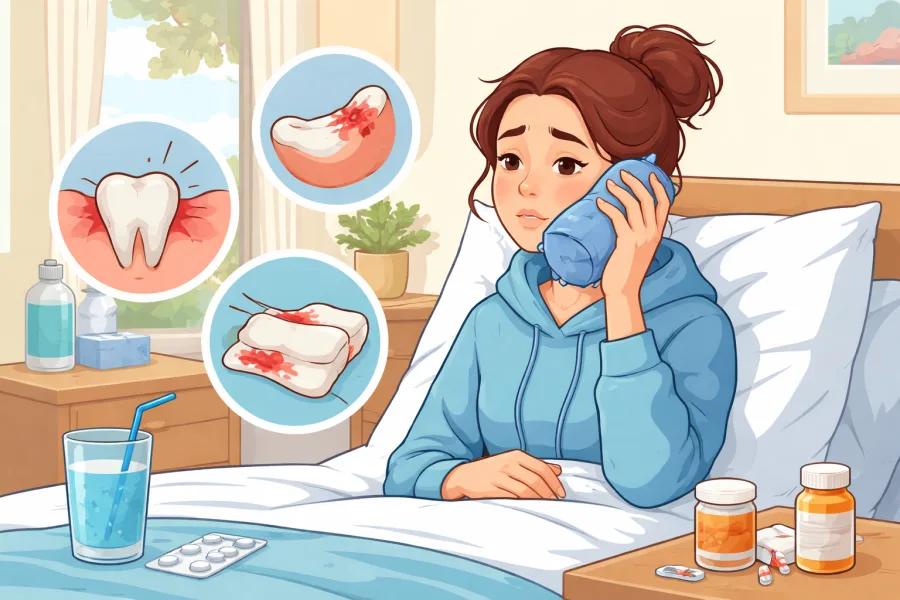
Following wisdom tooth surgery, experiencing unfamiliar sensations in your mouth, jaw, and face is completely expected. Your body is orchestrating a complex biological healing cascade to repair bone and soft tissues. However, when you feel localized throbbing or notice cheek swelling, it is natural to wonder whether what you are experiencing is part of standard recovery or a warning sign of an emerging complication.
At Oral and Facial Surgery of Miami, board-certified oral and maxillofacial surgeon Dr. Johanny Caceres prioritizes continuous patient support. Learning to distinguish normal post-operative healing milestones from true complications allows you to navigate recovery with total confidence.
Normal Post-Surgical Milestones: Swelling, Bruising, and Minor Bleeding
Certain physical symptoms are universal benchmarks of healthy tissue repair. In the first 24 hours, slight oozing from the extraction sockets that tinges your saliva pink is entirely standard. Biting firmly on clean gauze pads controls this initial oozing.
Facial swelling is also normal. Biologically, tissue edema increases gradually over the first 48 to 72 hours, peaking on the third morning before steadily subsiding. Skin bruising along the jawline or upper neck may also develop, shifting in color from purple to yellow-green as red blood cells are reabsorbed. Mild jaw stiffness (trismus) and difficulty opening your mouth widely are natural responses to surgical muscle manipulation and resolve with time and gentle warm compresses.
| Recovery Symptom | Normal Healing Presentation | Abnormal Sign Requiring Attention |
|---|---|---|
| Oral Bleeding | Pink-tinged saliva, minor oozing easily stopped with gauze | Continuous bright red pooling that saturates gauze within 20 minutes |
| Facial Swelling | Moderate puffiness peaking at day 3, then resolving | Rapidly worsening swelling after day 4 spreading into throat |
| Pain Level | Dull ache well-managed with prescribed medications | Sudden, severe radiating earache appearing day 3 or 4 (Dry Socket) |
| Body Temperature | Mild low-grade elevation (<100°F) in first 24 hours | Persistent fever exceeding 101°F with chills and malaise |
Warning Signs: Dry Socket, Spreading Infection, and Neural Paresthesia
While most recoveries proceed smoothly, specific red-flag symptoms require prompt specialist evaluation. The most frequent complication is alveolar osteitis, commonly called dry socket. This occurs when the protective blood clot is dislodged prematurely from the socket.
Dry socket manifests not immediately, but between days three and five as an intense, deep throbbing pain that radiates toward the ear, temple, or neck and fails to respond to normal pain relievers. Another warning sign is infection, marked by expanding facial swelling after day four, persistent fever over 101 degrees Fahrenheit, foul-smelling yellow pus weeping from the gums, or difficulty swallowing. Finally, if numbness in your lower lip or chin persists beyond the initial numbing window, your oral surgeon should evaluate the inferior alveolar nerve.
Day-by-Day Symptom Trajectory and Benchmarks
Tracking your recovery along an expected clinical timeline provides reassurance:
Days 1 to 2: Peak drowsiness and numbness transitioning to mild soreness. Minor oozing stops. Cool liquid diet and head elevation are critical.
Days 3 to 4: Facial swelling reaches maximum volume and plateaus. Pain should stabilize or decrease. You transition to soft solid foods and gentle warm salt water rinses.
Days 5 to 7: Swelling noticeably recedes, jaw mobility improves, and pain diminishes significantly. Most patients discontinue prescription analgesics and resume light daily routines.
Emergency Protocols and Surgeon Availability at OFS Miami
At our practice, our commitment to your health never ends when you leave the operatory. Dr. Johanny Caceres and our surgical staff provide clear, detailed written instructions and remain accessible if unexpected concerns arise.
If you suspect dry socket or experience abnormal swelling, our team offers prompt same-day evaluation. A quick, soothing application of medicated dressing into the socket delivers near-instant pain relief and gets your healing right back on track.
Have questions about your post-operative healing? Contact Oral and Facial Surgery of Miami at (305) 552-1193 or request your follow-up appointment online today.