
Dry Socket After Wisdom Teeth Removal: Symptoms and Prevention
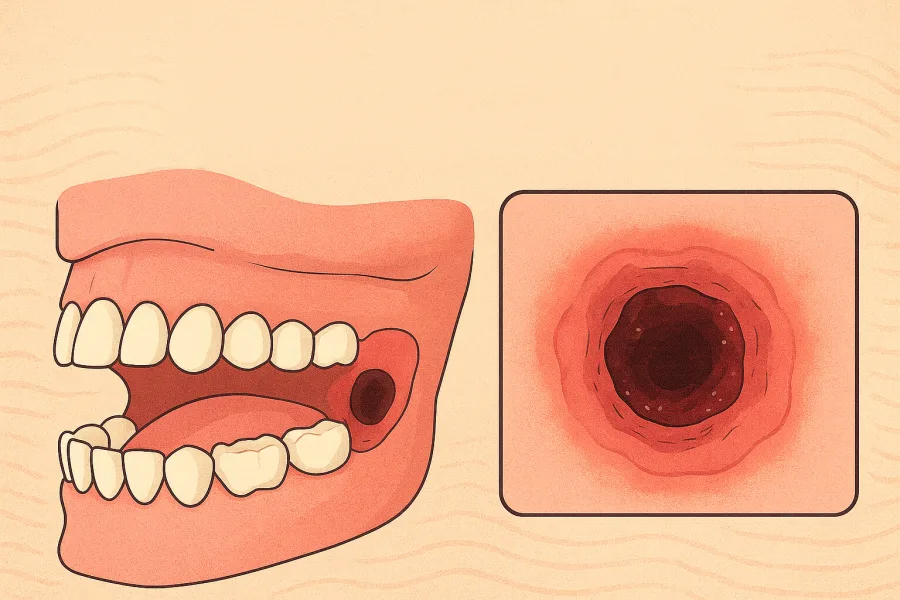
If you are 3 to 5 days out from having your wisdom teeth removed and suddenly find yourself dealing with intense, throbbing jaw pain that over-the-counter medication barely touches, you are likely wondering if something has gone wrong. For most patients, this sharp return of pain triggers immediate worry that they have developed a severe infection.
Here is the reassuring reality that oral surgeons see every week: you are almost certainly experiencing alveolar osteitis, commonly known as dry socket. While dry socket is notoriously uncomfortable, it is not an infection, it does not cause permanent damage, and it can be completely relieved with a gentle 10-minute in-office treatment. Here is an honest clinical look at what actually happens inside the socket, how to distinguish dry socket from normal surgical healing, and how we provide rapid relief.
The Biology of Dry Socket: What Actually Happens to the Clot
When a wisdom tooth is extracted, your body immediately initiates a critical biological defense mechanism: a dense blood clot forms inside the empty bony socket (alveolus). This clot functions as a living bandage. It seals the exposed nerve endings and bare mandibular bone, shielding them from air, saliva, temperature changes, and bacteria while new tissue and bone gradually form beneath it.
Dry socket occurs when this protective blood clot is either physically dislodged or breaks down prematurely through a process called fibrinolysis before the wound has organized into granulation tissue. Without that biological shield, the raw, sensitive alveolar bone walls and underlying sensory nerve fibers are left completely exposed to the oral cavity.
Alveolar osteitis affects roughly 2% to 5% of routine tooth extractions, but the rate rises to between 15% and 25% for deeply impacted lower third molars. Lower wisdom teeth carry a substantially higher risk because the mandible is composed of dense cortical bone with a more limited localized blood supply compared to the highly vascular, spongy bone of the upper jaw (maxilla).
Normal Post-Op Recovery vs. Dry Socket: How to Spot the Red Flags
Distinguishing between expected surgical soreness and a true dry socket comes down to timing, pain pattern, and visual signs:
- The Pain Trajectory (The Day 3 Reversal): Normal post-surgical inflammation peaks within the first 48 hours and then steadily subsides with each passing day. Dry socket does the exact opposite: you may feel significantly better on days 1 and 2, only to experience an abrupt, dramatic spike in deep, throbbing pain on day 3, 4, or 5.
- Radiating Pain to the Ear and Temple: Because the inferior alveolar nerve branch runs through the lower jawbone directly beneath the tooth roots, pain from an exposed lower socket frequently radiates upward along the nerve pathway into your ear, temple, eye, or neck on the same side of your face.
- Visible Empty Socket or Whitish Bone: If you gently illuminate the extraction site with a flashlight, a healthy socket looks dark and filled with a red or whitish-yellow healing clot. In a dry socket, the opening often looks completely empty, or you may distinctly see the dry, creamy-white surface of the exposed jawbone.
- Persistent Foul Taste and Halitosis: An open socket naturally traps microscopic food particles and oral fluids. When bacteria interact with this debris without a protective clot, patients experience a foul, sour taste in the mouth and noticeably bad breath that cannot be rinsed away.
The Primary Causes: Why the Clot Dislodges or Dissolves
Most blood clot disruptions are preventable and stem from everyday post-operative habits or specific biological risk factors:
- Negative Intraoral Suction: Any mechanical action that creates negative pressure inside the mouth (such as drinking through a straw, smoking cigarettes, vaping, or spitting forcefully into a sink) acts like a vacuum plunger that can easily suction the early clot out of its socket.
- Smoking, Vaping, and Nicotine: Tobacco and nicotine are among the strongest statistical drivers of dry socket. Beyond the physical suction of inhaling, nicotine causes peripheral vasoconstriction, significantly reducing blood circulation to healing gum and bone. Furthermore, chemical toxins in smoke impair cellular fibroblast activity and immune response.
- Oral Contraceptives and Estrogen: Women taking oral contraceptives with high estrogen levels have a measurably higher rate of dry socket because estrogen accelerates fibrinolytic activity, causing the body's natural enzymes to dissolve the blood clot prematurely.
- Complex Bony Impactions: Difficult extractions that require bone removal or surgical sectioning cause greater localized tissue trauma, triggering natural tissue plasminogen activators that can prematurely break down early fibrin clots.
What In-Office Treatment Actually Feels Like
If you suspect you have a dry socket, do not try to tough it out at home with escalating doses of painkillers. Dry socket does not respond well to oral NSAIDs or narcotics alone because the problem is raw, physically exposed bone.
At our practice, treating a dry socket is quick, gentle, and delivers almost instantaneous relief:
- Gentle Irrigation: Your oral surgeon gently rinses the socket with warm, sterile saline or an antimicrobial solution to clear out any trapped food particles and cellular debris that are irritating the bone.
- Medicated Sedative Dressing: The surgeon carefully places a specialized medicated paste or soothing resorbable dressing containing eugenol (oil of clove) and topical analgesic ingredients directly against the exposed bone walls.
- Rapid Pain Relief: The medicated paste acts as an artificial biological shield, calming the hyperactive nerve endings immediately. Most patients experience dramatic pain relief within 15 to 30 minutes of dressing placement.
- Healing Timeline: The socket typically requires 7 to 10 days to fill in with healthy pink granulation tissue over the bone. In most cases, one or two dressing changes are all that is needed to keep you completely comfortable while your body completes the healing process.
Compassionate Oral Surgery Recovery in Coral Gables
Complications like dry socket can make wisdom tooth recovery stressful, but you do not have to suffer through unmanageable pain. At Oral & Facial Surgery of Miami, board-certified oral and maxillofacial surgeon Dr. Johanny Caceres prioritizes patient comfort and provides prompt, compassionate evaluation for all post-operative concerns.
If you are experiencing worsening pain, a bad taste, or think your blood clot has dislodged after an extraction, contact Oral and Facial Surgery of Miami immediately at (305) 552-1193 or schedule a follow-up consultation online. We will get you out of pain quickly and safely.