
How Safe Is Modern Oral Surgery? What Patients Need to Know
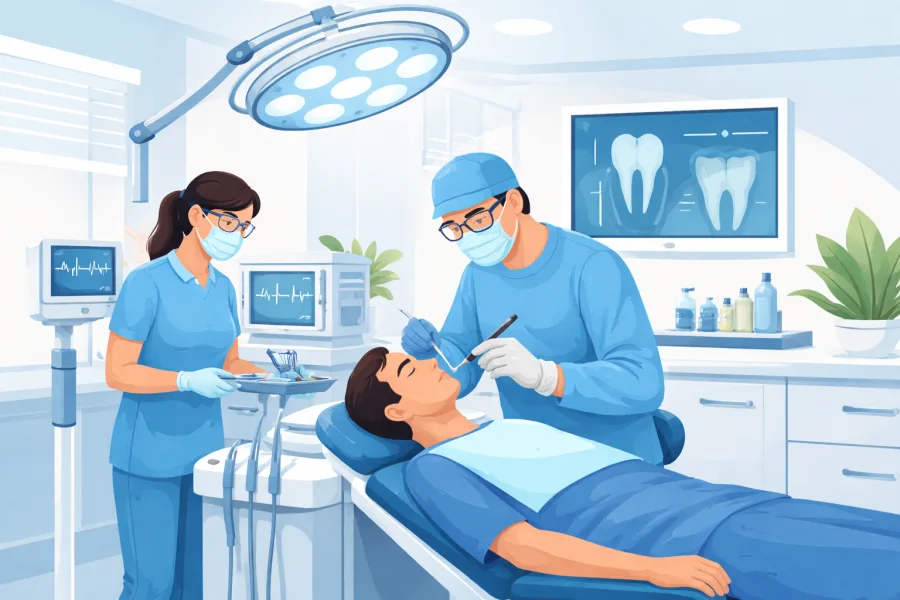
Undergoing any surgical procedure naturally prompts questions regarding safety, clinical oversight, and recovery risks. When patients are told they need oral and maxillofacial surgery, whether for impacted wisdom teeth, bone grafting, dental implants, or reconstructive jaw alignment, concerns about anesthesia, surgical pain, and infection are completely normal. Fortunately, oral surgery has advanced into one of the safest, most predictable disciplines in contemporary outpatient medicine.
At Oral and Facial Surgery of Miami, board-certified oral and maxillofacial surgeon Dr. Johanny Caceres upholds the highest hospital-grade safety standards within a private surgical environment. Exploring modern sterilization protocols, digital diagnostics, and multi-parameter sedation monitoring provides deep peace of mind as you prepare for your procedure.
Modern Safety Standards and Board-Certified Surgical Training
The foundation of patient safety begins with specialized surgical qualifications. Oral and maxillofacial surgeons complete four to six years of rigorous, hospital-based surgical residency following four years of dental school. During this intensive medical training, they work alongside medical doctors and anesthesiologists in operating rooms, trauma centers, and intensive care units.
This deep medical training ensures that oral surgeons are uniquely licensed and qualified to administer intravenous anesthesia, manage complicated systemic medical histories (such as hypertension, diabetes, and heart disease), and handle emergencies with poise. at Oral and Facial Surgery of Miami, our clinical staff maintains active certifications in Advanced Cardiac Life Support (ACLS), Pediatric Advanced Life Support (PALS), and Basic Life Support (BLS).
| Safety Dimension | Modern Clinical Protocol | Patient Protection Benefit |
|---|---|---|
| Pre-Surgical Imaging | Ultra-low dose 3D Cone Beam CT mapping | Sub-millimeter nerve and sinus localization eliminates anatomical blind spots |
| Sedation Monitoring | Continuous capnography, EKG, pulse ox, blood pressure | Instant detection of respiratory or cardiovascular shifts in real time |
| Infection Control | Hospital-grade autoclave sterilization, single-use barriers | Virtually eliminates risk of cross-contamination and nosocomial infection |
| Emergency Readiness | Full emergency crash cart, reversal agents, oxygen systems | Immediate pharmacological and airway management capability on site |
Advanced Diagnostic Technology: 3D CBCT and Guided Surgery
Decades ago, oral surgery relied on flat two-dimensional panoramic films that superimposed anatomical structures, creating blind spots around vital nerves and blood vessels. Today, modern 3D Cone Beam Computed Tomography (CBCT) captures high-resolution volumetric scans in seconds with minimal radiation exposure.
With 3D CBCT imaging, Dr. Caceres rotates your facial skeleton on all spatial axes, accurately mapping the inferior alveolar nerve canal, lingual plate boundaries, and maxillary sinus floors down to fractions of a millimeter. This diagnostic precision eliminates guesswork during complex wisdom tooth extractions and enables computer-guided dental implant placement, dramatically reducing procedural trauma and post-operative swelling.
Sedation Safety Protocols and Hemodynamic Monitoring
Patient safety during intravenous sedation is reinforced by strict pharmacological and monitoring safeguards. In our dedicated surgical operatory, your vital signs are continuously tracked by modern multi-parameter hospital monitors:
- End-Tidal CO2 Capnography: Continuous breath-by-breath monitoring of exhaled carbon dioxide provides immediate feedback on respiratory ventilation, alerting the surgeon to any airway change seconds before oxygen levels could shift.
- Electrocardiography (EKG): Continuous electrical cardiac rhythm tracking monitors heart rate stability throughout your procedure.
- Automated Hemodynamics: Non-invasive blood pressure and high-sensitivity pulse oximetry continuously confirm blood pressure and systemic tissue oxygenation.
- Rapid Reversal Medications: Immediate on-site access to specific pharmacological antagonists (such as naloxone and flumazenil) allows the surgical team to reverse sedative medications instantly if needed.
Patient-Centered Safety Culture at OFS Miami
Safety at Oral and Facial Surgery of Miami extends beyond equipment; it is a philosophy embedded into every patient interaction. Before scheduling surgery, Dr. Caceres conducts an exhaustive medical review, coordinating with your primary physician or cardiologist when necessary to adjust blood thinners, insulin, or blood pressure therapies safely.
Following your outpatient procedure, our team provides clear verbal and written recovery instructions, high-grade surgical dressings, and direct post-operative contact support, ensuring your healing process is as smooth and worry-free as the surgery itself.
Choose surgical care where your safety, comfort, and clinical outcome are vital. Contact Oral and Facial Surgery of Miami today at (305) 552-1193 or reserve your surgical consultation online today.